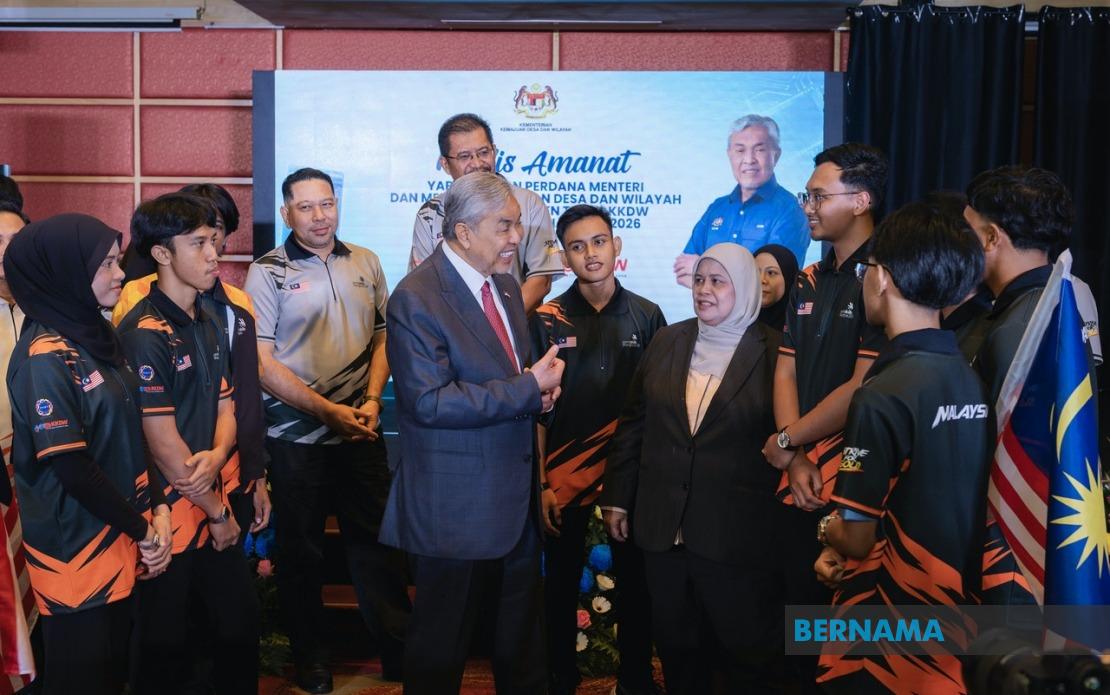
Deputy Prime Minister Datuk Seri Dr Ahmad Zahid Hamidi has made an unprecedented personal commitment to reward Malaysia's technical vocational talent, pledging to fund umrah pilgrimages for all gold medallists competing at the WorldSkills Competition 2026 in Shanghai from September 22 to 27. The initiative underscores the government's investment in recognising and celebrating TVET excellence among younger workers, a sector Malaysia continues to develop as part of its broader human capital strategy.
Ahmad Zahid, who concurrently serves as Rural and Regional Development Minister, announced the sponsorship during an address to the nine-member TVET@KKDW contingent preparing for the international competition. He emphasised that the rewards would flow exclusively from his personal resources, positioning the gesture as an individual token of appreciation rather than an official ministerial allocation. This distinction carries weight in Malaysian political culture, where ministers frequently deploy personal wealth to demonstrate commitment to public causes.
The scope of the pledge extends beyond individual competitors. Ahmad Zahid committed to financing umrah journeys not only for medal-winning participants but also for their parents, effectively doubling the potential beneficiaries should multiple gold medals materialise. He stated plainly that if all nine Malaysian representatives returned with gold medals, he would personally arrange and finance umrah trips for the complete cohort of eighteen people—nine athletes and nine sets of parents.
Malaysia's representation at WorldSkills Shanghai 2026 spans nine distinct technical disciplines, reflecting the breadth of TVET training offered through the Ministry of Rural and Regional Development. The competing participants are Nadratulliyana Ab Malek in Fashion Technology, Haziq Syahmi Nazri in Automobile Painting, Amirul Sharif Sharifudin in Electronics, Mohammad Ezaly Iman Ramli in Cyber Security, and Wan Hamiz Ozai Wan Hamidzi in Rail Vehicle Technology. The remaining four competitors are Khairul Idham Bahari representing Cabinetmaking, Muhamad Nashrul Zulkifli in Digital Construction, Muhammad Haziq Lailla Zamri in Electrical Installations, and Muhammad Huzairy Mohamad Thes in Mechanical Engineering CAD.
WorldSkills competitions serve as critical international platforms where nations benchmark their vocational training systems against global peers. For Malaysia, participation at this level demonstrates the maturation of its TVET sector, which has historically received less attention than academic pathways despite demographic and economic imperatives favouring skilled trades. The nine categories represented align with regional and global labour market demands, particularly in emerging fields such as cyber security and digital construction.
The umrah sponsorship strategy operates as a multifaceted incentive mechanism. By tying financial rewards to tangible achievement at an international stage, Ahmad Zahid creates motivation layers beyond conventional recognition. The pilgrimage component carries particular resonance within Malaysia's Muslim-majority context, where umrah holds significant spiritual value. For many participants from modest TVET backgrounds, such a sponsored journey might otherwise remain financially inaccessible, amplifying the motivational impact of the promise.
This announcement reflects broader government positioning on TVET development following years of policy emphasis on skills training as a pillar of economic resilience. Southeast Asia faces persistent skills shortages in technical fields, and Malaysia's commitment to grooming TVET talent intersects with regional competitiveness. Success at WorldSkills 2026 would validate training methodologies and international credibility, potentially attracting greater employer investment in vocational graduates.
The participation of Deputy Rural and Regional Development Minister Datuk Rubiah Wang at the contingent's send-off underscores institutional backing for the initiative. Her presence signals ministerial-level commitment to TVET advancement, complementing Ahmad Zahid's personal sponsorship gesture. Such symbolic alignment amplifies messaging around government prioritisation of technical skills development.
Malaysia's contingent preparation for Shanghai will likely intensify over coming months as competitors refine their capabilities across disciplines ranging from traditional crafts to cutting-edge digital domains. The pledge mechanism creates reciprocal accountability: Ahmad Zahid's personal commitment becomes a public record of expectations, while participants gain tangible motivation tied to medals rather than merely participation.
For Malaysian readers, the initiative illustrates how senior political figures strategically deploy personal resources to champion policy priorities. It simultaneously reveals the TVET sector's growing prominence within development discourse and government resource allocation. The umrah component particularly resonates domestically, blending achievement recognition with spiritual fulfilment in a culturally consonant manner.
WorldSkills 2026 will test whether Malaysia's nine representatives can translate intensive training into medal performances. Should they succeed, Ahmad Zahid's pledge would elevate both individual participants and Malaysia's international vocational standing while generating domestic goodwill around TVET careers. Conversely, if gold medals prove elusive, the commitment's non-realisation would still underscore serious government investment in technical talent development—a signal Malaysia continues broadcasting to its labour market and regional competitors.

