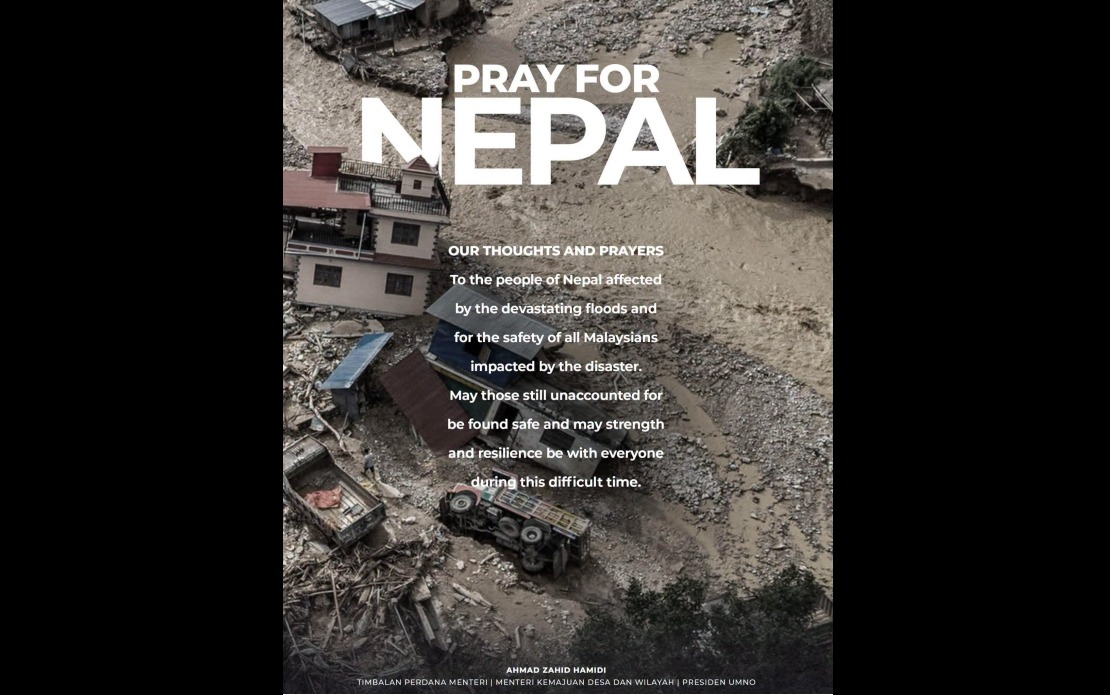
Deputy Prime Minister Datuk Seri Dr Ahmad Zahid Hamidi has voiced deep concern regarding the welfare and security of Malaysian citizens caught in the unprecedented flooding disaster unfolding across Nepal, expressing hope that those still missing will be located and returned to their families unharmed.
Addressing the catastrophe through a Facebook statement on Tuesday, Ahmad Zahid extended sympathies to bereaved families who have lost relatives in the natural disaster while emphasising Malaysia's solidarity with the Nepali people during this period of crisis. His remarks underscore the broader Malaysian government's awareness of the cross-border humanitarian implications of the disaster, particularly as it affects citizens travelling or working in the affected South Asian nation.
The scale of the flooding represents one of Nepal's most severe weather-related disasters in recent years. Official tallies released by Nepal's tourism board indicated that by Thursday evening at 5.30 pm local time, the confirmed death toll had reached 359, with the true magnitude of the tragedy likely to expand as rescue teams continue their work in remote and inaccessible areas. The floods have fundamentally disrupted normal life across multiple districts, displacing thousands of families and destroying critical infrastructure including bridges, roads, and agricultural land.
In his statement, Ahmad Zahid articulated the gravity of the situation, describing the flash flooding as devastation that has claimed lives and displaced entire communities whilst causing extensive destruction across affected regions. He underscored that his thoughts and prayers remain focused on the Nepali population, particularly those grieving lost family members or awaiting news of relatives still unaccounted for in the aftermath of the floods. This personalised approach to expressing diplomatic concern reflects the Malaysian government's understanding of the human cost of natural disasters.
The Deputy Prime Minister specifically appealed for divine intervention to facilitate ongoing search and rescue operations, requesting that authorities be granted the capability to bring those remaining in danger to places of safety. Such prayers for operational success are particularly pertinent given the challenging terrain that rescue teams must navigate in mountainous Nepal, where landslides triggered by the flooding have complicated access to isolated communities and rendered some areas temporarily unreachable.
For Malaysian expatriates, workers, students, and tourists who were in Nepal when the floods struck, the situation presented immediate challenges in terms of communication, evacuation, and reunification with family members in Malaysia. The Malaysian government's articulated concern through senior ministerial statements serves to reassure both these affected individuals and their anxious relatives back home that official channels are actively monitoring developments and coordinating assistance where necessary.
The broader context of the Nepal floods highlights the increasing vulnerability of South and Southeast Asian regions to climate-related extreme weather events. In recent years, devastating monsoon floods have become more frequent across the Hindu Kush Himalayan region, a pattern that development experts attribute to climate change and environmental degradation. For Malaysia and other ASEAN nations, the Nepal situation serves as a sobering reminder of the potential scale and impact of such disasters, prompting reflection on disaster preparedness and regional cooperation frameworks.
Ahmad Zahid's statement reflects established diplomatic protocols wherein governments issue public expressions of solidarity with affected nations during major humanitarian crises. Such gestures, while partly ceremonial, also signal to affected citizens that their government is aware of their predicament and remains engaged in their welfare. In the immediate aftermath of disasters, these communications can provide psychological reassurance to those caught in dangerous circumstances.
The Malaysian government typically coordinates with its diplomatic missions in affected countries to assess the situation, verify the status of citizens, and facilitate assistance where required. The Foreign Ministry would work in conjunction with relevant authorities in Nepal to compile information about Malaysian nationals and provide consular support to those requiring evacuation or emergency assistance. Beyond individual case assistance, Malaysia may also consider providing humanitarian aid through relevant international channels.
Ahmad Zahid concluded his remarks by invoking blessings for all families affected by the tragedy, hoping they would find strength and perseverance as they navigate the difficult recovery period ahead. This emphasis on spiritual and emotional resilience reflects recognition that post-disaster recovery extends far beyond immediate rescue operations to encompass the long process of rebuilding lives and communities. For those who lost loved ones or homes, the path forward requires sustained support from both governmental and non-governmental organisations.
The Nepal flooding underscores the shared vulnerability of Asian nations to natural disasters and reinforces the importance of regional disaster management cooperation. As Malaysia continues to develop its own climate resilience and disaster response capabilities, experiences from major regional disasters such as the Nepal floods provide valuable lessons in preparedness, coordination, and humanitarian response. The incident also highlights the interconnectedness of Asian nations and the ways major disasters in one country inevitably touch the lives of citizens from neighbouring and distant nations with various ties and presence in affected regions.

