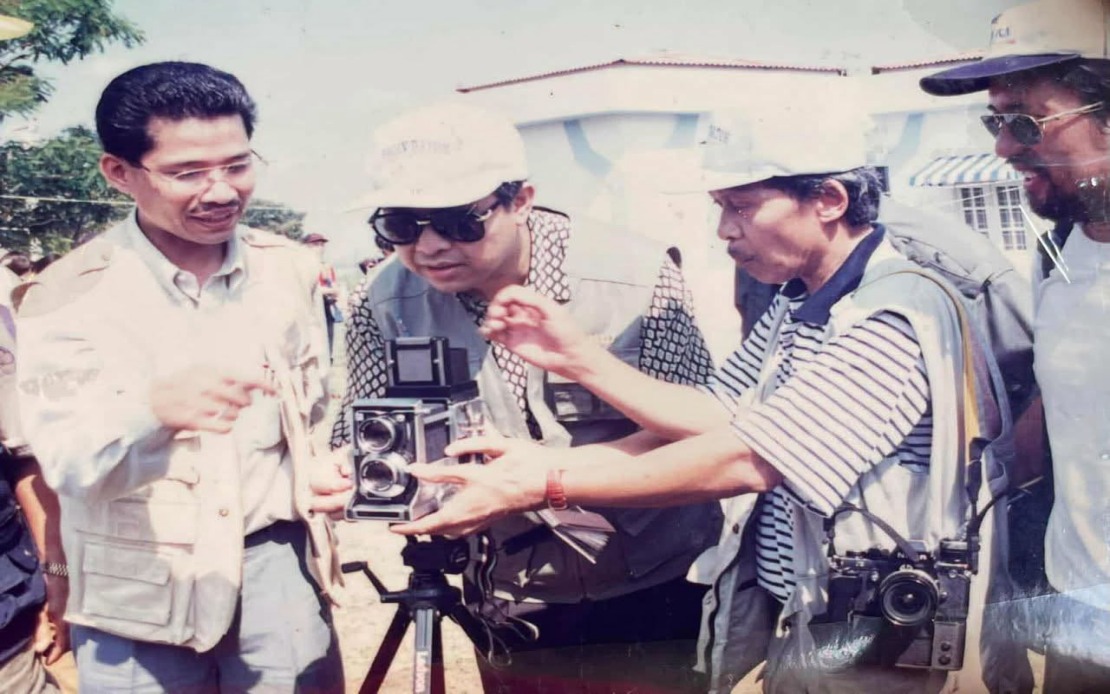
Deputy Prime Minister Datuk Seri Dr Ahmad Zahid Hamidi has extended World Photography Day greetings to photographers across the globe, recognising the profound cultural and social significance of their profession in an age increasingly defined by visual storytelling. Speaking on the occasion of World Photography Day 2026, Ahmad Zahid highlighted how the craft of photography extends far beyond commercial or professional boundaries, touching the lives of millions who rely on images to document their most meaningful moments.
In his tribute, Ahmad Zahid acknowledged that the photography community encompasses a remarkably diverse range of practitioners, each bringing unique perspectives and skills to their work. Professional photographers who dedicate their careers to visual arts share common ground with media professionals who shape public discourse through news imagery, event photographers who immortalise celebrations and milestones, and the countless amateur enthusiasts within families and social circles who serve as custodians of personal and collective memories. This recognition underscores how photography has democratised throughout history, transforming from an exclusive medium into a universal language accessible to virtually anyone with a camera.
The Deputy Prime Minister's remarks touched on the emotional and psychological dimensions of photography that often go unexamined in public discourse. He observed that most people possess a personal relationship with photographs that transcends their technical or artistic merit. Many households maintain collections of framed images that serve as focal points in homes, creating visual narratives of family history and personal identity. Others maintain private collections of photographs that trigger memories and nostalgic reflection, functioning as personal archives of moments that might otherwise fade from conscious recollection as time passes.
Ahmad Zahid drew particular attention to the historical importance of photography, noting that certain images eventually transcend their original context to become foundational documents for society. Photographs frequently serve as primary historical records that shape collective understanding of past events, social conditions, and cultural moments. These images often function as visual references that scholars, historians, and the general public consult when seeking to understand how previous generations lived, what they valued, and how they experienced major historical turning points. In this capacity, photography serves a custodial function that extends well beyond entertainment or personal remembrance.
A central theme in Ahmad Zahid's message was the technical and artistic discipline required to produce meaningful photographs. He emphasised that while the act of taking a photograph might appear instantaneous, the actual process involves deliberate observation, strategic patience, and precise timing. Professional and amateur photographers alike must develop an intuitive sense of composition, lighting, and subject matter, often waiting for extended periods to capture the precise instant when all elements align to create a powerful image. This combination of technical skill and artistic vision, Ahmad Zahid suggested, deserves recognition and celebration from society.
The timing of Ahmad Zahid's message reflects broader global acknowledgment of photography's role in contemporary culture. World Photography Day, observed internationally, serves as an annual occasion to celebrate the medium's technical achievements, artistic contributions, and social impact. For Malaysia specifically, the occasion provides an opportunity to reflect on how local photographers have documented the nation's development, social transformations, and cultural diversity over recent decades.
Photography's relevance extends into several critical contemporary domains. In journalism and media, photographers serve as vital observers who provide visual evidence of events, social conditions, and human experiences that words alone cannot fully convey. In cultural documentation, photographers preserve endangered traditions, architectural heritage, and community practices that might otherwise disappear from public memory. In personal and family contexts, photography remains one of the most accessible and meaningful ways for ordinary people to construct and share their life narratives.
Ahmad Zahid's explicit recognition of family photographers and amateur enthusiasts carries particular significance in an era of smartphone photography and social media. By honouring those who take on informal roles as documentarians of family and community events, he acknowledged that photography's cultural value is not confined to professional practitioners or celebrated artists. Instead, he recognised that the collective photographic effort of ordinary people constitutes a massive archive of contemporary life, capturing perspectives and moments that official or professional documentation might overlook.
The message also carries implications for how societies value visual literacy and creative expression. By elevating the status of photographers through official recognition, Ahmad Zahid implicitly endorsed the importance of encouraging visual communication skills and artistic development across demographic groups. In educational contexts, photography offers accessible pathways for young people to develop observational skills, creative thinking, and technical competence while engaging meaningfully with their environments.
Moving forward, Ahmad Zahid's tribute serves as a reminder that photography occupies a unique position in the intersection of art, technology, documentation, and personal expression. As digital tools continue evolving and becoming ever more accessible, the fundamental human impulse to capture and preserve meaningful moments through imagery shows no signs of diminishing. His acknowledgment of this continuing importance suggests official recognition that photographers, in all their diverse forms and contexts, deserve appreciation for contributing to individual happiness, collective memory, and historical understanding.

