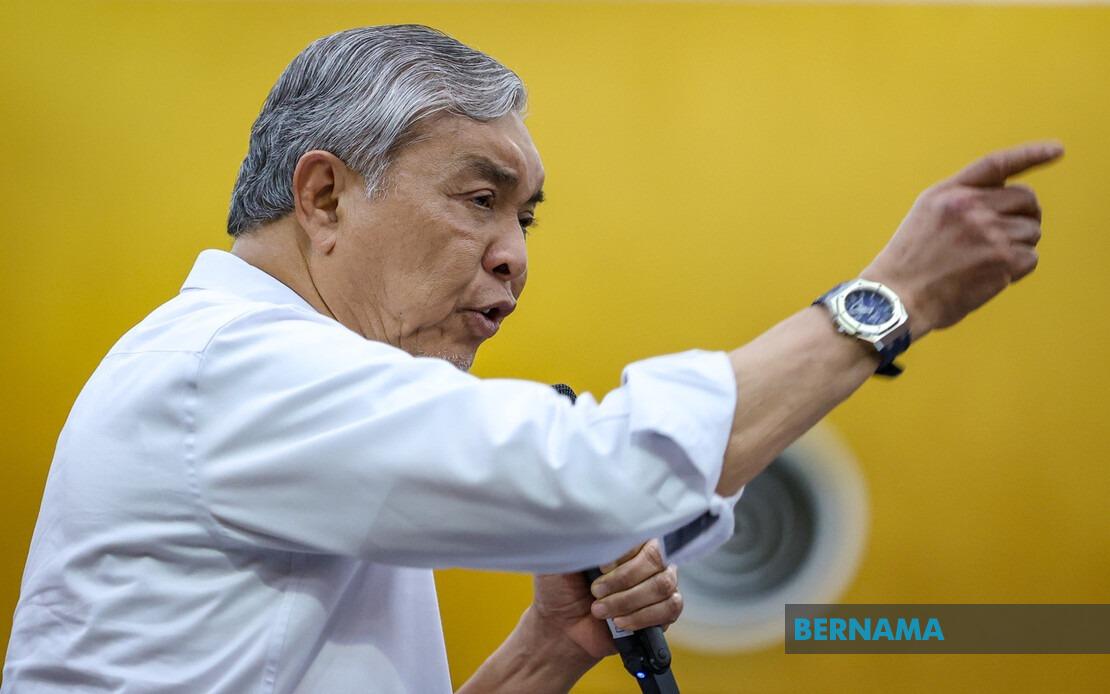
Deputy Prime Minister Datuk Seri Dr Ahmad Zahid Hamidi has put forward a proposal aimed at strengthening political literacy among Malaysia's university-based student leaders. Speaking in Johor Bahru on July 9, he advocated for Student Representative Councils (MPP) across the nation's higher education sector to participate in structured programmes focused on leadership development and political education. The initiative seeks to build a cohort of young leaders equipped with substantive knowledge of democratic principles and the contemporary political environment shaping Malaysia's trajectory.
The rationale underpinning Ahmad Zahid's proposal centres on the conviction that today's student leaders represent a critical bridge between campus activism and national civic engagement. By exposing university representatives to formal instruction on political processes, electoral systems, and governance structures, the government aims to cultivate a generation capable of grappling meaningfully with the nation's complex policy challenges. This educational intervention reflects broader concerns about ensuring that those occupying leadership positions within student bodies possess not merely rhetorical skills but substantive understanding of how political institutions function and how they shape societal outcomes.
Financially, Ahmad Zahid indicated the government stands ready to shoulder the costs of such programmes, contingent upon requests from MPPs nationwide and formal endorsement from Higher Education Minister Datuk Seri Dr Zambry Abd Kadir. This commitment of public resources underscores the perceived importance attached to the initiative at the highest levels of the executive branch. By removing financial barriers to participation, the proposal seeks to ensure accessibility across institutions of varying means, preventing resource constraints from limiting the reach of political education to only the most affluent campuses.
Among Malaysian observers, the proposal reflects a deliberate strategy to shape youth political engagement during a formative period. Ahmad Zahid himself drew upon personal experience, noting that his own political journey began during university years at Universiti Malaya (UM). This biographical reference serves to legitimize the concept of early political involvement while simultaneously emphasizing that direct partisan engagement remains optional rather than prescriptive for younger citizens.
Crucially, Ahmad Zahid articulated a distinction between passive political awareness and active party membership. He stressed that eighteen-year-old first-time voters and younger citizens need not necessarily pursue careers in politics or join political organizations to benefit from understanding the political landscape. Rather, the emphasis falls upon ensuring that Malaysia's youth electorate makes informed voting decisions grounded in substantive comprehension rather than superficial familiarity or inherited partisan loyalties. This framing acknowledges growing youth voter participation while simultaneously cautioning against the risks of political apathy or uninformed electoral choices.
The deputy prime minister, who holds the concurrent position of Barisan Nasional (BN) chairman, stressed the significance of every ballot cast in determining both party leadership and broader national political direction. This message carries particular weight given Malaysia's history of closely contested elections where youth turnout fluctuations have occasionally swung marginal constituencies. By emphasizing the power residing within each individual vote, Ahmad Zahid seeks to motivate electoral participation while grounding that motivation in comprehension of democratic mechanics rather than purely partisan affiliation.
The timing of these remarks merits consideration within the immediate political context. Johor, Malaysia's second-largest state by population and a traditional Barisan Nasional stronghold, was preparing for state elections scheduled for Saturday following Ahmad Zahid's statement, with fifty-six state assembly seats subject to contest. Positioning the government as an advocate for youth political education and voter engagement carries electoral implications, particularly if younger voters perceive the initiative as genuine rather than purely instrumental. The proposal thus operates simultaneously as policy advocacy and political messaging to constituencies being mobilized for imminent polling.
From a regional perspective, Malaysia's approach to youth political socialization reflects concerns shared across Southeast Asia regarding democratic participation and informed citizenship. As digital platforms accelerate information dissemination while simultaneously facilitating misinformation, governments throughout the region grapple with questions about how to equip younger voters with critical analytical capacities. Ahmad Zahid's proposal positions structured institutional education as a counterweight to unmediated online discourse, offering alternative frameworks through which students might evaluate political claims and policies.
The institutional mechanisms for implementing such programmes remain partly undefined. Whether these courses would operate through formal curricular structures, voluntary seminars, or other pedagogical arrangements remains subject to determination. Questions about curriculum content, instructional approaches, and mechanisms for ensuring academic independence from partisan influence will likely emerge as the proposal advances from pronouncement toward implementation. The potential for such programmes to enhance democratic literacy must be weighed against concerns about state influence over student political consciousness, a perennial tension in higher education contexts globally.
For Malaysian universities already grappling with questions about academic freedom and institutional autonomy, Ahmad Zahid's proposal introduces both opportunities and complications. Enhanced resources dedicated to political education could strengthen social sciences curricula and expose students to diverse analytical frameworks. Simultaneously, government-funded initiatives targeting student representative bodies merit scrutiny regarding their design, governance, and susceptibility to partisan influence. Institutions will require careful consideration of how to accept support for legitimate educational objectives while maintaining institutional independence in curricular decisions.
The proposal also carries implications for student movement dynamics within Malaysia's universities. Student Representative Councils have historically served as forums for diverse political perspectives, from reformist agendas to establishment positions. Formal political education programmes could enhance the sophistication of debate within these bodies while potentially channelling student activism toward more institutionalized forms of engagement. Whether this represents democratization or cooptation may depend substantially upon how programmes balance exposure to multiple political ideologies and analytical frameworks with any implicit governmental preferences regarding student political orientation.
Moving forward, the success of Ahmad Zahid's initiative will be measured not merely through enrolment figures but through observable impacts on student political engagement quality and electoral participation rates. If programmes genuinely enhance critical thinking about political processes and encourage informed voting across diverse ideological preferences, the initiative could strengthen Malaysian democratic practice. Conversely, if programmes become mechanisms for partisan recruitment or indoctrination, they risk undermining institutional credibility and student trust. The distinction between these outcomes hinges substantially upon implementation details and institutional autonomy protections that remain to be established.

