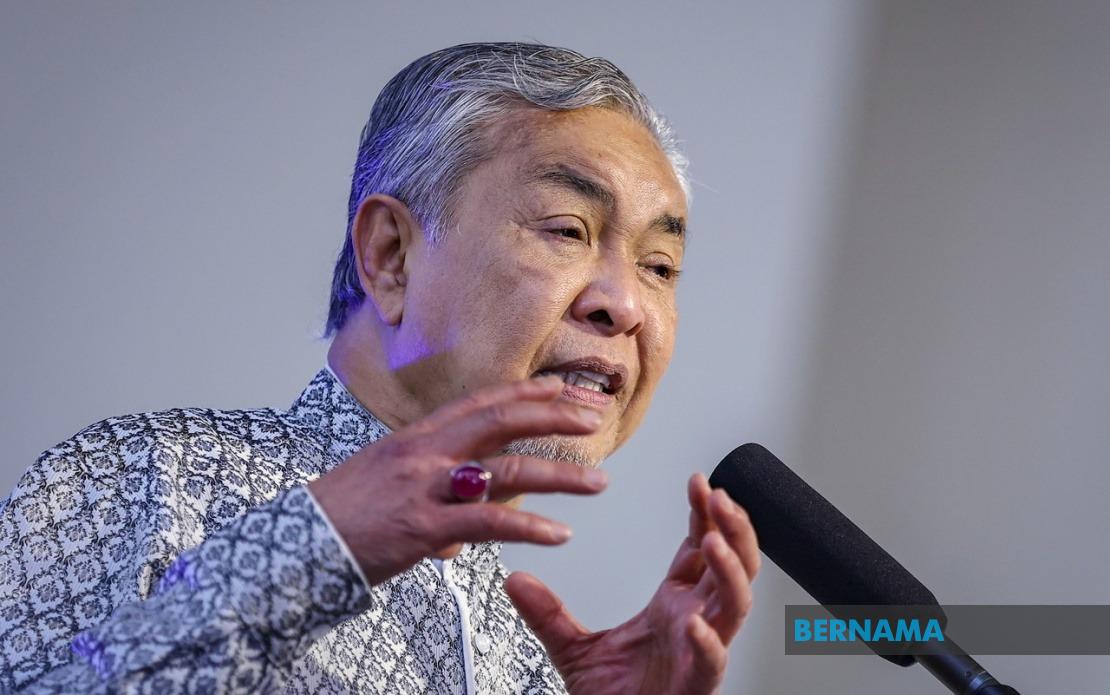
Datuk Seri Dr Ahmad Zahid Hamidi, the Barisan Nasional chairman and Deputy Prime Minister, has made a plea for political maturity in the Johor state election campaign, urging contesting parties to set aside historical grievances and concentrate on substantive policy discussions. Speaking after a community event in the Kempas constituency on July 3, Ahmad Zahid expressed concern that some competing parties have been resurrecting old disputes involving UMNO and BN, arguments he believes are counterproductive to a constructive electoral process.
The timing of Ahmad Zahid's statement underscores the delicate political dynamics at play in Johor, where several organisations cooperating with BN at the federal government level are simultaneously competing against it at the state level. This dual arrangement creates inherent tension, as parties must balance aggressive campaigning for state power with the need to maintain working relationships in ministerial committees and federal decision-making forums. Ahmad Zahid's intervention suggests that some of these tensions have surfaced publicly during campaigning, threatening the collaborative architecture that holds together Malaysia's current governing coalition.
Ahmad Zahid's specific concern about Cabinet-level relationships reflects the practical challenge of coalition politics in Malaysia's system. He highlighted that when political opponents share ministerial responsibilities, awkwardness inevitably develops if campaign rhetoric becomes too personalised or dredges up historical controversies. His remark that senior officials meet weekly at Cabinet sessions underscores how campaign behaviour can undermine the professional collegiality required for effective governance at the federal level.
In a noteworthy departure from typical campaign messaging, BN's leadership characterised itself as the underdog in the Johor contest, citing shifts in the state's political landscape as justification for this assessment. This positioning stands in sharp contrast to BN's historical dominance in Johor and represents a calculated acknowledgment that the party faces headwinds in attracting voters. The statement serves dual purposes: it can energise supporters who might otherwise feel overconfident, while simultaneously tempering expectations should BN's performance prove weaker than previous elections.
BN's 2023 performance in Johor, when it captured 40 seats in the 56-seat state assembly, provides the benchmark against which the party's next result will be judged. For BN to claim success in the July 11 election, it must either maintain or improve upon this tally. The party's apparent anxiety about youth voters reflects deeper demographic realities—more than half of Johor's electorate is now young people, a cohort that has traditionally proven less reliably aligned with BN compared to older generations. This shifting voter composition creates structural vulnerability that cannot be addressed through campaign strategy alone.
Menteri Besar Datuk Onn Hafiz Ghazi's manifesto, as described by Ahmad Zahid, centres on addressing youth employment and skills development through technical and vocational training initiatives. This policy emphasis addresses genuine economic concerns among younger Malaysians who worry about job availability and wage prospects despite overall improvements in aggregate employment figures. The focus on technical and vocational education represents an attempt to position BN as attuned to the real anxieties of young voters rather than dismissive of their concerns.
Ahmad Zahid highlighted that Malaysia's unemployment rate has declined to 2.9 per cent, a statistic he presented as evidence of government economic competence. However, he acknowledged that headline employment statistics mask deeper problems—specifically, the scarcity of premium-wage positions that young people aspire to secure. This nuanced reading of the labour market reflects recognition that joblessness alone cannot explain youth alienation from BN; young voters are seeking meaningful career pathways and financial security, not merely employment at any wage level.
The emphasis on skills training in BN's campaign messaging reveals the party's strategic calculation about how to reconnect with younger voters. By positioning technical and vocational education as a pathway to high-wage employment, BN attempts to offer tangible economic benefits rather than relying on traditional patronage networks or appeals to stability and experience that have previously motivated older voters. Whether this approach resonates with Johor's youth will substantially influence the party's performance in the July 11 polling.
BN's decision to contest all 56 seats in the sixteenth Johor state election demonstrates the party's determination to compete comprehensively rather than cede constituencies to coalition partners. This strategic choice has implications for BN's relationship with partner parties and sets a demanding expectation for the party's organisational machinery. Contesting every seat requires substantial financial resources, candidate recruitment across diverse demographics, and coordinated campaign efforts across the state.
The election campaign period runs until July 11, with early voting scheduled for July 7. The compressed timeline means that Ahmad Zahid's appeal for elevated campaign discourse must compete with traditional election fervour and increasingly combative political messaging. Whether his call for maturity and focus on policy rather than historical disputes actually influences campaign conduct remains uncertain, though the fact that BN's leadership felt obliged to issue such a statement suggests that boundary-crossing has already begun.
For Malaysian voters and observers, Ahmad Zahid's commentary reveals internal tensions within the BN coalition and broader anxieties about the party's electoral prospects in a changing demographic landscape. The Johor election serves as an important test case for whether BN can successfully appeal to younger voters through policy-focused campaigning, or whether historical patterns of voting behaviour will reassert themselves. The outcome will carry implications not only for Johor's state government composition but also for federal coalition dynamics and BN's broader electoral strategy ahead of the next general election.

