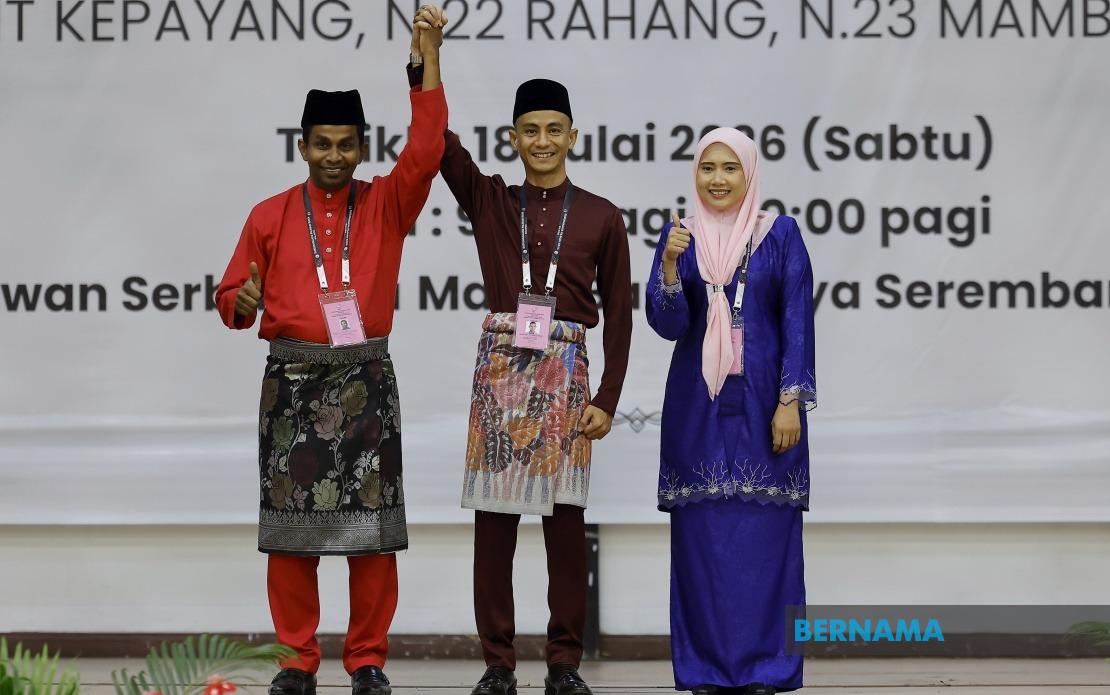
Datuk Ahmad Faez Abdul Razak is stepping into the electoral arena for the first time as Pakatan Harapan's candidate for the Labu state seat in the forthcoming Negeri Sembilan state election, shouldering what he describes as a crucial mission to reclaim the constituency for the coalition. The PKR nominee, speaking to reporters after the nomination process in Seremban, expressed a complex blend of enthusiasm and apprehension about his political baptism, yet exuded confidence in his prospects following nearly three years of grassroots engagement with voters across the constituency.
With almost two years and eight months of preparatory work in Labu behind him, Ahmad Faez believes he has built sufficient momentum to secure public backing. He attributes part of this growing support to the alignment between state government initiatives and federal policies under the current administration, which he argues has bolstered public trust in the ruling coalition's direction. His entry into formal politics represents a strategic move by PH to recapture a seat that slipped from the coalition's grasp in the 2023 election, when incumbent Mohamad Hanifah Abu Baker of Bersatu won with a relatively narrow 1,640-vote majority over PH-PKR's Datuk Ismail Ahmad, who garnered 10,021 votes.
As a property developer by profession, Ahmad Faez is positioning his commercial expertise as a distinctive asset he brings to constituency representation. He argues that his experience navigating the complexities of real estate development equips him to manage the delicate equilibrium between economic growth and community welfare—a balance increasingly critical as Labu transforms into one of Negeri Sembilan's fastest-expanding constituencies. His campaign manifesto prioritises the establishment of a dedicated community centre and youth recreational facilities, addressing what he identifies as a significant gap in existing amenities within the constituency, particularly for younger residents seeking meaningful spaces for engagement and development.
The Labu constituency sits within the expansive Malaysia Vision Valley development corridor, a sprawling industrial and residential zone encompassing approximately 11,000 to 12,000 hectares. This mega-project presents both considerable opportunity and substantial risk for the area. While the development is projected to generate numerous employment opportunities for local residents, Ahmad Faez has been careful to underscore the importance of prudent management to protect community interests. His campaign messaging reflects an understanding that unchecked development can erode the social fabric and environmental quality of constituencies, a concern that resonates with Malaysian voters increasingly wary of urbanisation's externalities.
The competitive landscape in Labu will test Ahmad Faez's appeal. He faces a three-way contest against Mohamad Hanifah, who seeks re-election under Bersatu's banner as a BN component party, and Siti Nur Umaira Hasim, the BN-endorsed challenger. This configuration reflects the fragmentation of Malay-Muslim politics in Negeri Sembilan, where the split between Bersatu and traditional BN components remains a defining feature of electoral competition. The 1,640-vote margin between Mohamad Hanifah and Datuk Ismail Ahmad in 2023 suggests the seat remains genuinely competitive, with no single candidate enjoying an insurmountable advantage.
The electoral roll for Labu comprises 32,884 registered voters as of May 31, 2026, a figure that encompasses 32,869 ordinary voters alongside 15 police personnel and their spouses. This voter base establishes the parameters within which all three candidates must operate, and shifts in voter turnout or demographic composition could significantly influence the outcome. The relatively modest absolute numbers involved mean that ground-level campaigning, community engagement, and local issue resonance carry particular weight in determining electoral success.
The timing of the Negeri Sembilan state election reflects broader political calculations at both state and federal levels. With early voting scheduled for July 28 and polling day set for August 1, the compressed campaign window gives limited time for candidates to consolidate support or shift voter perceptions. For Ahmad Faez, the window presents both opportunity and constraint—his narrative about development stewardship must crystallise quickly among constituents, while his opponents will similarly emphasise their own credentials and vision for the constituency.
Ahmad Faez's emphasis on balancing development with community needs speaks to a growing preoccupation among Southeast Asian voters about the quality of growth. Across the region, constituencies undergoing rapid economic transformation frequently experience tensions between landowners and developers seeking maximum returns and residents concerned about livelihood disruption, environmental degradation, and social cohesion. The Malaysian Vision Valley project, while economically significant, exemplifies this dynamic. Ahmad Faez's positioning suggests he recognises that electoral success increasingly depends not merely on delivering growth, but on ensuring that growth benefits are distributed equitably and social costs are minimised.
The broader context of Negeri Sembilan politics adds complexity to the Labu contest. The state has experienced significant political volatility in recent years, with voters demonstrating willingness to shift allegiances based on perceived performance and integrity. The incumbent state government's record in implementing initiatives aligned with federal policy will feature prominently in campaign messaging from all sides. For Ahmad Faez, reinforcing the narrative of competent, balanced governance offers a pathway to overcoming his status as an electoral newcomer and the institutional advantages enjoyed by incumbency.
Ultimately, Ahmad Faez's campaign in Labu serves as a microcosm of larger tensions within contemporary Malaysian politics. The contest between managed development and community preservation, between coalition loyalty and individual merit, between political experience and professional expertise—these themes will resonate across multiple constituencies as the state election unfolds. His performance in this three-cornered contest will provide meaningful indicators about voter appetite for fresh faces and fresh approaches to longstanding governance challenges in constituencies experiencing rapid transformation.

