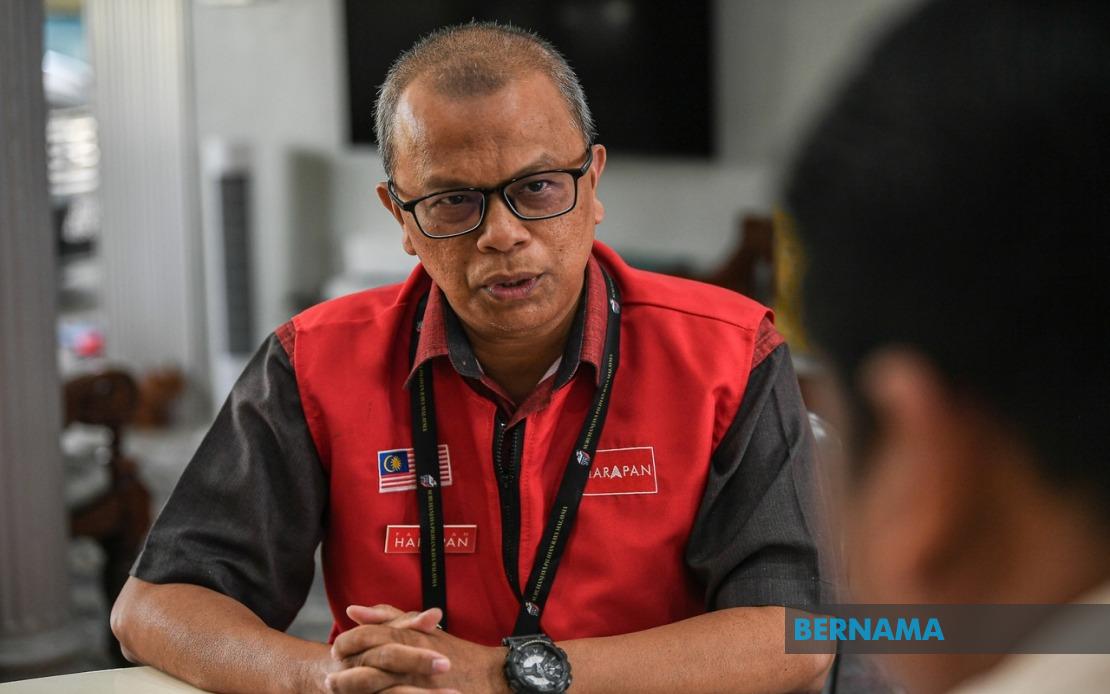
The Panti state seat in Johor holds significant untapped potential as an eco-tourism destination, according to Pakatan Harapan candidate Ahmad Daniel Sharudin, who is banking on a comprehensive development strategy centred on natural heritage preservation to secure the mandate in Saturday's state election. The 54-year-old contender believes that unlocking the constituency's ecological assets—particularly the pristine rapids at Kampung Temenin—could fundamentally reshape the local economy while maintaining environmental integrity.
Ahmad Daniel's approach to regional development reflects a growing recognition across Malaysia that rural constituencies possess valuable natural resources capable of generating sustainable income streams. Unlike more densely populated urban areas, Panti's geographical isolation and abundance of undeveloped natural features position it uniquely for carefully managed tourism expansion. The former Kota Tinggi District Council member argues that such development need not come at the expense of conservation, a critical concern for environmentally conscious voters in an era of increasing climate awareness.
The engineering background of the PH candidate informs his specific focus on infrastructure upgrades that would enhance visitor accessibility without degrading the ecosystem. By drawing parallels to the established waterfall tourism circuit in neighbouring Kota Tinggi, Ahmad Daniel highlights how Panti's distinct offering—natural rapids rather than cascading falls—could occupy a distinct niche within the broader Johor tourism landscape. This differentiation strategy positions Panti as complementary to rather than competitive with existing attractions, potentially benefiting the entire district's visitor economy.
Beyond the immediate tourism agenda lies a deeper concern about youth migration from the constituency. The economic stagnation that characterises many rural parliamentary seats in Malaysia has compelled younger residents to seek opportunities in larger urban centres or across international borders, including the nearby corridor into Singapore. Ahmad Daniel frames eco-tourism development as a solution to this demographic drain, arguing that ancillary industries such as hospitality services, food and beverage operations, and guide services would naturally emerge alongside primary tourism infrastructure, creating employment pathways for locals across varying skill levels.
The candidate's manifesto extends beyond tourism to address interconnected constituency challenges. Affordable housing provisions, industrial-sector employment creation, and public infrastructure modernisation form the supporting pillars of his broader vision. These complementary priorities suggest a comprehensive understanding that sustainable development requires multifaceted intervention rather than single-sector focus. The emphasis on housing and industrial employment particularly resonates with Malaysian constituencies facing twin pressures of urban migration and deindustrialisation.
Ahmad Daniel's alignment with the federal Pakatan Harapan administration potentially offers institutional advantages in translating campaign promises into concrete projects. Access to federal development funds, technical expertise, and coordinated policy frameworks represents a material advantage over opposition candidates competing without such governmental backing. This administrative alignment has become increasingly significant in Malaysian electoral politics, where voters increasingly evaluate candidates partly on their capacity to deliver tangible infrastructure and services rather than ideology alone.
The campaign mechanics reveal both the opportunities and constraints facing rural candidates in contemporary Malaysian elections. Having reached nearly eighty percent of the Panti constituency through ground-level engagement, Ahmad Daniel's team confronts the familiar challenge of geographical spread typical of rural seats. The approximately four thousand square kilometres encompassed by Panti's boundaries demand substantial resources to achieve comprehensive voter contact, necessitating compensatory digital strategies in the final campaign phase.
Social media deployment represents Ahmad Daniel's response to the distance and dispersal challenges inherent to rural campaigning. By leveraging digital platforms, his team aims to transcend geographical limitations and reach voters across demographic segments. This blend of traditional face-to-face engagement supplemented by social media outreach reflects contemporary Malaysian campaign methodology, particularly relevant for constituencies where digital adoption varies significantly across age cohorts.
The three-cornered contest involving Ahmad Daniel, Barisan Nasional's Dr Muhammad Naqib Md Ghazali, and Perikatan Nasional's Alias Rasman exemplifies the fragmented political landscape across Malaysian state elections. This triangular structure potentially advantages the candidate who most effectively consolidates core voter support while capturing swing constituencies. Ahmad Daniel's emphasis on practical governance and development delivery, rather than ideological positioning, suggests a calculated strategy to appeal beyond traditional PH constituencies.
The broader 16th Johor state election context—involving 172 candidates competing for 56 seats before 2.7 million voters—positions individual constituencies like Panti within statewide dynamics that may transcend localised campaign messaging. State-level issues, incumbent performance, and coalition-wide popularity trends inevitably influence outcomes in individual races, meaning Ahmad Daniel's grassroots effectiveness may ultimately prove secondary to macro-electoral currents.
Panti's development pathway articulated by Ahmad Daniel resonates with broader Southeast Asian trends toward sustainable tourism and rural economic diversification. As Malaysia positions itself within regional competition for eco-tourism markets alongside Thailand, Indonesia, and Vietnam, constituencies like Panti represent potential contributors to national tourism revenue expansion. The election result will ultimately determine whether the Panti electorate endorses this development vision or prefers alternative governance approaches.

