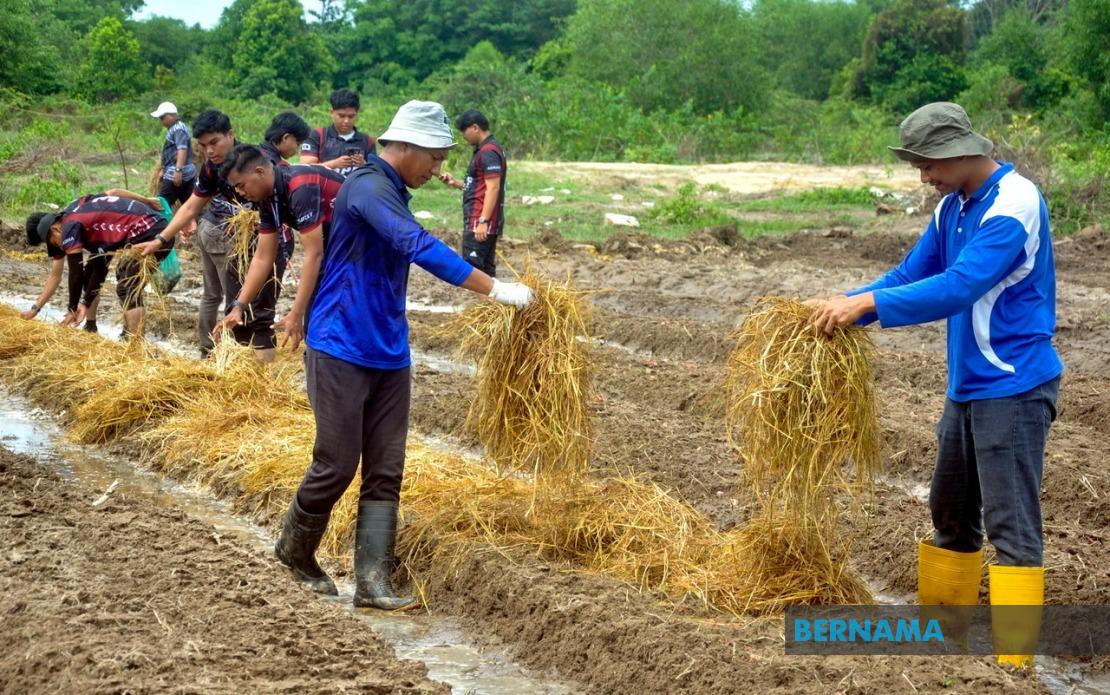
Malaysia's agricultural technical and vocational education programme has made substantial progress in placing graduates into employment, with the latest data showing a 15-percentage-point increase over the past six years. The Ministry of Agriculture and Food Security reported that 76 per cent of TVET graduates in agriculture secured jobs in 2024, a marked improvement from the 61 per cent employment rate recorded in 2018. However, this figure still trails significantly behind the national TVET average of 95 per cent, suggesting that agriculture continues to struggle in attracting qualified school leavers compared to other vocational sectors.
The findings emerged from a comprehensive Graduate Outcomes of Agricultural TVET in Malaysia report, released during a presentation ceremony and stakeholder engagement session held in Putrajaya. The Ministry collaborated with PNB Research Institute to produce the study, which draws on data accumulated over several years to paint a detailed picture of how agricultural TVET graduates fare in the labour market. This partnership, formalised through a Memorandum of Understanding, reflects broader government commitment to strengthening vocational pathways in agriculture amid concerns about long-term food security and declining youth participation in farming.
Beyond employment figures, the research uncovered encouraging findings about earnings potential in the agricultural sector. Graduates who chose to work within agriculture earned approximately RM100 more per month than peers employed in non-agricultural industries, suggesting that career progression and remuneration can be competitive. More notably, those who became agro-entrepreneurs—establishing their own agricultural ventures—reported substantially higher incomes than graduates running non-agricultural businesses. These insights challenge negative perceptions about farming as a low-income occupation and indicate that the sector offers viable pathways to middle-class livelihoods for educated young people.
Yet demographic headwinds pose a serious threat to the sector's viability and sustainability. The study identified a critical aging problem in Malaysia's agricultural workforce, with one in two farm workers now aged 40 or older. This demographic skew reflects decades of youth migration from rural to urban areas in pursuit of perceived better opportunities in manufacturing, services, and technology sectors. The alarming decline in young people entering agriculture over the past decade suggests that without intervention, Malaysia risks a generational rupture in farming expertise and capacity.
Geographic analysis reveals highly uneven distribution of agricultural TVET graduate participation across the country. Sabah leads with 15 per cent of graduates, followed by Kedah at 14 per cent and Sarawak at 13 per cent. These concentrations reflect both the agricultural prominence of these regions and their labour market dynamics. Notably, major agricultural states including Johor, Pahang, and Perak have not been fully leveraged, indicating untapped potential for programme expansion and graduate placement in some of Malaysia's most productive farming regions. This geographic imbalance suggests that tailored, state-specific approaches to vocational education promotion could yield significant improvements.
To address these structural challenges, the Ministry outlined six strategic policy directions derived from the study's findings. First, programme expansion should be calibrated to meet the specific needs and agricultural profiles of individual states rather than pursued through uniform national templates. Second, success metrics should be grounded in outcomes directly relevant to agriculture, moving beyond generic employment statistics. Third, the Ministry recognises that entrepreneurship in agriculture carries inherent risks and that young farmers require better support mechanisms and risk mitigation frameworks. Fourth, all agricultural TVET programmes should embed entrepreneurial and market-facing skills alongside technical agricultural knowledge, preparing graduates to be business operators as well as skilled workers.
The remaining policy directions emphasise systemic and partnership dimensions. Strengthening exposure to the entire agricultural value chain—from input supply through production, processing, distribution, and retail—would help graduates understand diverse career pathways and entrepreneurial opportunities beyond traditional farming. Additionally, building stronger collaboration between educational institutions and agricultural industries could improve curriculum relevance, facilitate apprenticeships and internships, and create direct pipelines from classrooms to employment.
These policy recommendations have gained institutional traction at senior levels. The Ministry presented the study's findings to the National Technical and Vocational Education and Training Council during a June meeting chaired by Deputy Prime Minister Datuk Seri Dr Ahmad Zahid Hamidi, signalling high-level government awareness of agricultural TVET challenges. This alignment with national policy frameworks demonstrates how the research connects to broader government priorities, particularly the National Food Security Policy 2030 and the National Agro-Food Policy 2021-2030, also known as DAN 2.0.
The timing of this report is strategically significant for Malaysia's food security agenda. As global supply chains become more volatile and Southeast Asia grapples with climate pressures, domestic agricultural capacity assumes greater importance. Building a skilled, engaged workforce in farming and related sectors becomes essential to maintaining food production and resilience. The relatively low employment rate among agricultural TVET graduates—despite improvements—signals that Malaysia has not yet convinced young people that farming offers compelling career prospects comparable to other sectors.
The earnings data suggesting agricultural work pays better than assumed could prove instrumental in reframing public perception. Malaysian policymakers and industry leaders must actively communicate these findings to secondary school students and their families, potentially through career fairs, media campaigns, and mentorship programmes featuring successful agricultural entrepreneurs and TVET graduates. Without a deliberate effort to shift attitudes, the graduation employment rate will likely remain stuck below the national TVET average, hampering efforts to rejuvenate Malaysia's agricultural workforce and secure long-term food production capacity.

