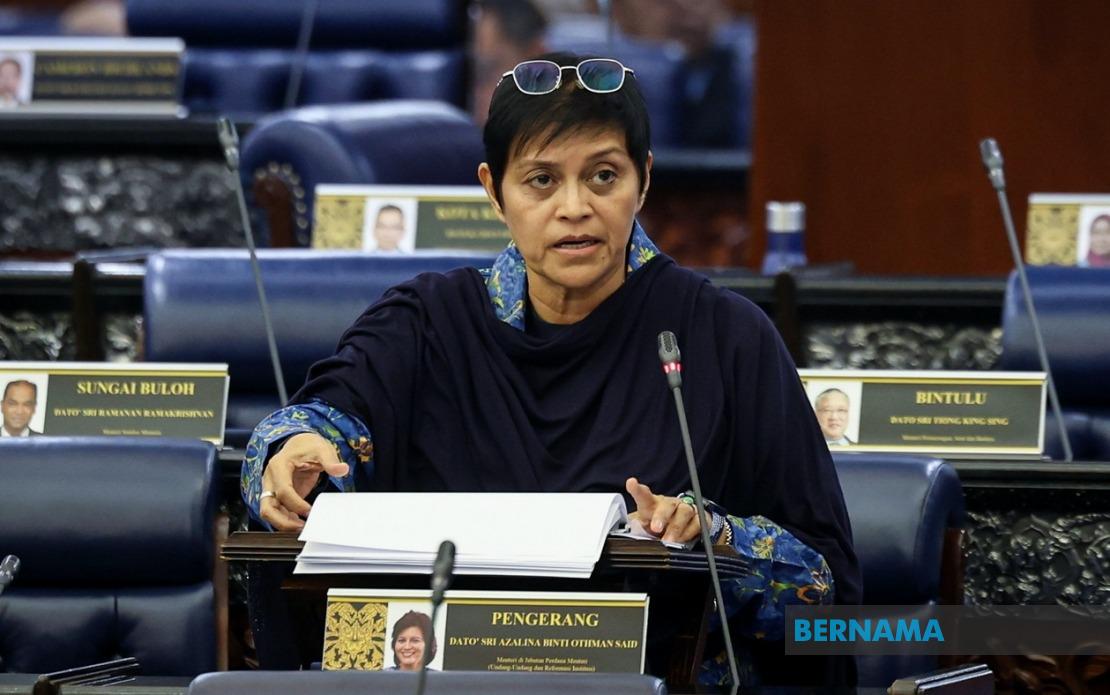
The Malaysian government is moving forward with a significant restructuring of its prosecutorial institutions, with a Special Select Committee report on separating the Attorney General and Public Prosecutor functions scheduled for presentation in Parliament. Minister in the Prime Minister's Department (Law and Institutional Reform) Datuk Seri Azalina Othman Said characterised the forthcoming debate as a watershed moment for Malaysia's judicial reform programme under the MADANI administration, underscoring how institutional separation reflects broader ambitions to strengthen rule of law and public trust in the justice system.
The proposed framework emerges from sustained deliberation, with the committee convening seven times to examine mechanisms for enhancing prosecutorial autonomy and accountability. At the heart of the recommendations lies a fundamental shift in how Malaysia appoints its top law enforcement official. Rather than prime ministerial discretion or Cabinet involvement, the Public Prosecutor would be named by the Yang di-Pertuan Agong following advice from the Judicial and Legal Service Commission—a structural change designed to insulate prosecutorial decisions from executive pressure.
Parliamentary oversight becomes the linchpin of this reformed appointment structure. Under the proposed constitutional amendment to Article 145A, Clause 18, the commission would submit a candidate to the Speaker for scrutiny by a House Select Committee before any recommendation returns to the commission. This layered vetting process aims to strengthen democratic accountability while respecting the monarch's constitutional prerogatives. The mechanism reflects international best practice in many Westminster-influenced jurisdictions, where legislative bodies play heightened roles in scrutinising senior judicial and law enforcement appointments.
Separation of the twin roles carries particular significance for Malaysia's prosecution landscape. Combining the Attorney General and Public Prosecutor positions has historically concentrated enormous power within a single office, potentially blurring the lines between government legal advocacy and independent criminal prosecution. By creating institutional distance, the proposed reforms seek to ensure that decisions to prosecute—and which cases merit investigation—reflect legal merit rather than political expediency.
The committee's seven-point reform package addresses multiple dimensions of prosecutorial governance. Beyond structural separation and changed appointment procedures, the reforms include establishing a fixed, non-renewable seven-year tenure for the Public Prosecutor. This term limit offers several advantages: it prevents indefinite incumbency that could breed complacency, provides clear succession planning, and signals to the public that the role rotates rather than becoming personalised to any single officeholder. The non-renewable element further prevents tactical extensions that might incentivise compromised decision-making towards the end of tenure.
An explicit Code of Ethics for Public Prosecutors represents another pillar of the proposed changes. Such a code would codify professional standards, conflict-of-interest protocols, and decision-making principles, making prosecutorial expectations transparent and enforceable. Malaysia's neighbours, including Singapore and Australia, maintain detailed prosecutorial codes that help maintain institutional credibility and provide guidelines when difficult cases present ethical complexities. A formal code also furnishes grounds for accountability if prosecutors deviate from established norms.
The reforms further empower Parliament to enact additional legislation strengthening the institution beyond constitutional amendment. This flexibility allows the legislature to respond to emerging governance challenges without requiring constitutional rewrites each time prosecutorial practice evolves. Such capacity for incremental improvement through ordinary law-making has proven valuable in other jurisdictions navigating changing public expectations around transparency and accountability.
For Malaysian readers and observers, these institutional changes merit careful attention because they touch the machinery of criminal justice. Public confidence in prosecution rests on perceptions of independence and impartiality. If citizens believe prosecutors are extensions of political will, public faith in the entire justice system corrodes. Conversely, a genuinely independent prosecutorial arm that pursues cases on legal grounds commands legitimacy even when acquittals disappoint particular constituencies.
Regionally, Malaysia's institutional reforms carry subtextual importance. Southeast Asia's prosecutorial systems have faced periodic criticism from international observers and civil society concerning executive influence over prosecutions and selective enforcement against political opponents. By moving toward structural separation and stronger parliamentary oversight, Malaysia positions itself among regional peers attempting to strengthen justice sector independence. Such reforms, if implemented conscientiously, could influence deliberations elsewhere in ASEAN about prosecutorial governance.
The government's framing emphasises that separation is not mere administrative restructuring but part of a broader legacy-building enterprise. Azalina's statements underscore that these institutions must outlast current office-holders and demonstrate resilience against future political pressures. This multigenerational perspective suggests the administration recognises that institutional strength cannot rest solely on individual integrity but requires structural safeguards that constrain even well-intentioned actors.
Implementation will prove crucial. Constitutional amendments and legislative reforms represent necessary foundations, but genuine independence requires institutional culture, personnel selection, and resource allocation aligned with reform objectives. The judiciary, the legal profession, and oversight bodies like the Parliamentary Services Commission will help determine whether these changes translate into practice or remain largely symbolic.
Parliamentary debate tomorrow will reveal how different political factions view these reforms. Opposition scrutiny may highlight perceived gaps or implementation risks, while government supporters will likely emphasise alignment with international standards and MADANI's institutional agenda. The substantive discussion should focus on whether the proposed mechanisms genuinely protect prosecutorial independence while maintaining accountability, rather than treating this as another partisan skirmish.

