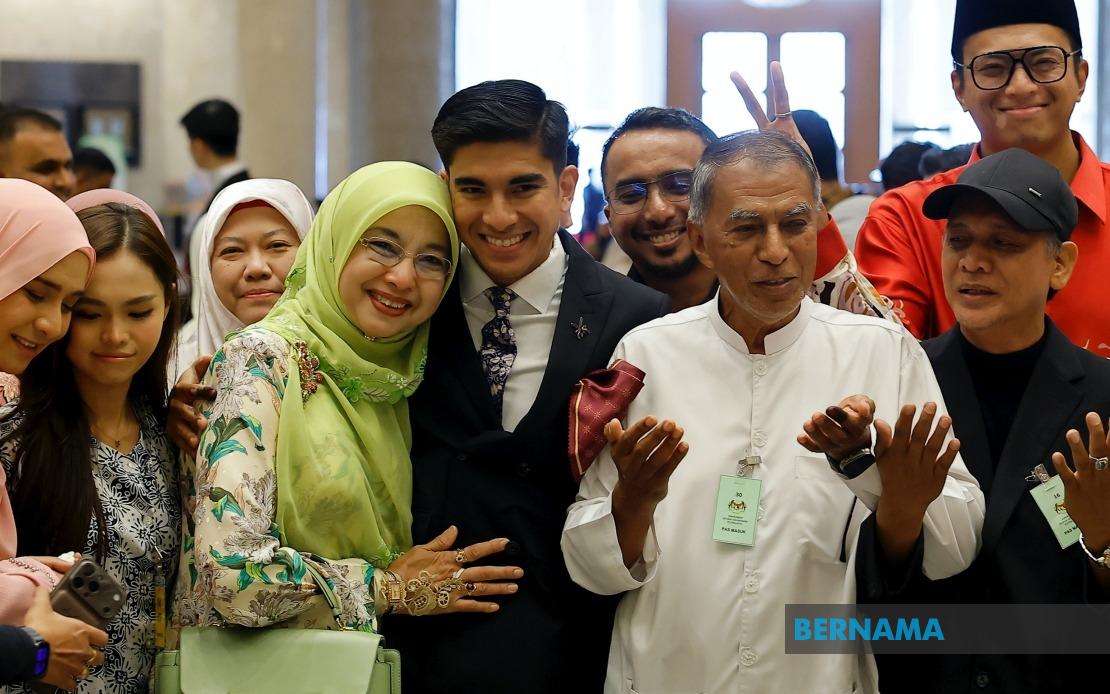
The Muar Member of Parliament Syed Saddiq Syed Abdul Rahman has emerged victorious from a protracted six-year legal battle, with the Federal Court today upholding his complete acquittal on all charges related to misappropriation of funds from youth movement Angkatan Bersatu Anak Muda (Armada). The 33-year-old politician, visibly moved by the ruling, performed a sujud syukur with his family at the Palace of Justice in Putrajaya before addressing waiting journalists, declaring that the verdict vindicated his unwavering conviction that truth and justice would ultimately triumph.
The charges against Syed Saddiq encompassed four criminal allegations: abetting criminal breach of trust, misappropriation of property, and money laundering offences allegedly involving Armada's financial resources. His persistence through the lengthy judicial process, despite mounting personal and political pressures, has now been formally validated by Malaysia's highest court. For the young politician and former youth and sports minister, the judgment represents far more than simple exoneration; it represents vindication of his principled stance throughout proceedings that tested both his resolve and family relationships.
Reflecting on the ordeal during his courtside statement, Syed Saddiq emphasised that the extended legal process had crystallised his fundamental beliefs about institutional strength and societal foundations. He articulated a conviction that Malaysia's justice system, despite the lengthy timeframe required to reach this conclusion, ultimately performs its constitutional function of protecting the innocent and upholding the rule of law. This perspective carries significance beyond his personal circumstances, touching on broader concerns about public confidence in judicial institutions at a time when Malaysia's political landscape has witnessed considerable turbulence and competing claims about institutional integrity.
The duration of the proceedings—spanning six years from initial charges through multiple court levels to final determination—has imposed substantial collateral damage extending well beyond the defendant himself. Syed Saddiq acknowledged that the ordeal profoundly affected not only his own wellbeing but also his parents, broader family circle, and political supporters who remained invested in his vindication. The extended uncertainty inherent in such prolonged litigation creates particular strain within family units and political constituencies, potentially affecting decision-making about future involvement in public life.
Having initially established himself as a prominent figure within youth politics and government portfolios, Syed Saddiq has signalled a deliberate pivot toward personal matters and family restoration following this court victory. He announced intentions to step back from immediate political engagements to concentrate on private affairs, though he emphasised his continued affiliation with the MUDA party. This repositioning reflects a conscious choice to prioritise domestic stability and personal recuperation after an exhausting legal marathon, with the politician noting that his parents have granted approval for him to proceed with planned wedding arrangements, suggesting a desire to rebuild normal personal milestones interrupted by the legal proceedings.
The politician's statement carries implications for understanding how prolonged legal battles affect political careers and individual wellbeing in Malaysia's competitive political environment. While his acquittal removes legal barriers to continued political participation, the psychological and relational toll of six years of legal uncertainty necessarily influences personal decision-making about future political trajectories. His choice to maintain parliamentary obligations while contemplating deeper involvement reflects a pragmatic approach to balancing constitutional duties with personal restoration needs.
Syed Saddiq's legal counsel, Datuk Hisyam Teh Poh Teik, expressed appreciation for the judicial panel's deliberation and acknowledged his client's trust throughout the challenging process. The defence team's navigation of the case through multiple court levels to achieve complete acquittal demonstrates the complexity of criminal charges involving organisational finance and the evidentiary challenges prosecutors face in establishing criminal intent and culpability in such matters. The successful outcome suggests the prosecution faced substantial difficulties in proving its allegations beyond reasonable doubt at the appellate level.
Meanwhile, the prosecution's response indicated measured acceptance of the Federal Court's determination. Deputy Public Prosecutor Datuk Wan Shaharuddin Wan Ladin stated that the prosecution has not yet determined whether to pursue a review application, pending guidance from the Attorney General's office. This measured stance suggests prosecutors recognised the strength of the appellate judgment and acknowledged appropriate deference to the Federal Court's reasoned conclusions regarding the evidence presented throughout the trial proceedings.
The acquittal holds broader significance for Malaysia's political ecosystem beyond individual vindication. The case occurred within a context of intense political competition between various coalitions and individuals, with some observers viewing criminal charges against political figures as potentially weaponised against rivals. Syed Saddiq's complete exoneration after such extensive proceedings may contribute to ongoing public conversations about the relationship between criminal justice processes and political competition, particularly regarding the appropriate standards for prosecuting political figures and the importance of protecting judicial independence from perceived partisan influence.
Furthermore, the resolution of this lengthy case removes uncertainty that had overshadowed discussions of Syed Saddiq's political future and MUDA's strategic direction. The party, which has sought to establish itself as a significant force in Malaysian politics distinct from traditional coalitions, had necessarily operated in the shadow of its prominent member's legal battles. With this uncertainty resolved, MUDA can potentially refocus organisational energy on substantive political positioning and policy development without the distraction of legal proceedings affecting a key party figure.
Syed Saddiq's emphasis on institutional faith and principled conduct despite seeming hopelessness resonates with broader Malaysian conversations about maintaining dignity and integrity under pressure. His articulation that individuals should never compromise principles for expedient resolutions, regardless of circumstances, presents a perspective on ethical conduct that extends beyond his specific legal situation to touch on wider questions about individual responsibility and institutional trust within Malaysian society.
The Federal Court's upholding of acquittal represents the culmination of a judicial process that, while extended, ultimately functioned according to constitutional design. Whether examining the timeframe required, evidentiary standards applied, or procedural protections afforded to the defendant, the case illustrates both the strengths and challenges within Malaysia's criminal justice framework. For a young politician seeking to recalibrate his life priorities following vindication, the path forward requires careful navigation of political ambitions against personal wellbeing considerations.

