Sudan's conflict has become increasingly entangled with external pressures, prompting the African Union to draw a stark line against international meddling. During talks in Khartoum on Sunday, the AU Peace and Security Council explicitly condemned any overseas intervention in the country's affairs, warning that such actions actively fuel ongoing violence between government forces and the paramilitary Rapid Support Forces. The diplomatic intervention underscores growing international concern about how external actors might further destabilise a nation already fracturing under the weight of civil war.
Sudan's Sovereignty Council Chairman Abdel Fattah al-Burhan hosted the AU delegation at the presidential palace, receiving their carefully calibrated message directly. The visiting team, led by Algerian diplomat Mohamed Khaled in his capacity as the council's rotating chair, presented a unified continental position that peace cannot be imposed from outside. This visit carries symbolic weight across Africa, where nations have repeatedly clashed over the question of whether continental bodies or external powers should determine outcomes in member states' domestic crises.
The AU's particular focus on preventing parallel governmental structures reveals a specific anxiety about Sudan's potential fragmentation. Rather than merely warning against foreign meddling in general terms, the council specifically rejected attempts to establish competing entities or shadow governments that could undermine national unity and sovereignty. This concern reflects real-world dangers: weakened central authority creates vacuums that external actors often exploit, whether to secure strategic interests, extract resources, or pursue ideological goals. The AU's stance suggests member states fear Sudan could splinter into zones of competing international influence.
Khaled characterised the meeting as productive while reinforcing the council's core message that only Sudanese-led processes can produce sustainable peace. He emphasised that dialogue, national reconciliation, and comprehensive political settlement must emerge from within Sudanese society rather than being imposed by external actors. This framing attempts to position the AU as a stabilising force committed to Sudanese ownership of their future, contrasting with concerns that various international powers have pursued narrow agendas in the conflict zone.
The timing of the AU's intervention appears connected to modest government progress in recent weeks. Khaled welcomed the Sudanese government's return to operating from Khartoum after earlier displacement, describing this as pivotal for restoring state institutions and delivering services to civilians. This restoration of capital-based governance holds significance beyond symbolism; it represents a functional state apparatus rather than a government operating in exile or from fragmented bases. The AU position rewards this development while encouraging further consolidation of legitimate authority.
Sudanese Prime Minister Kamil Idris seized the opportunity to announce that internal dialogue would commence soon, signalling some capacity for diplomatic engagement despite ongoing violence. This commitment, made directly to the AU delegation, suggests the government believes it can pursue political negotiations while military operations continue. Whether this optimism reflects actual capacity or merely political posturing remains unclear, but it indicates the government recognises international expectations for inclusive processes beyond military solutions.
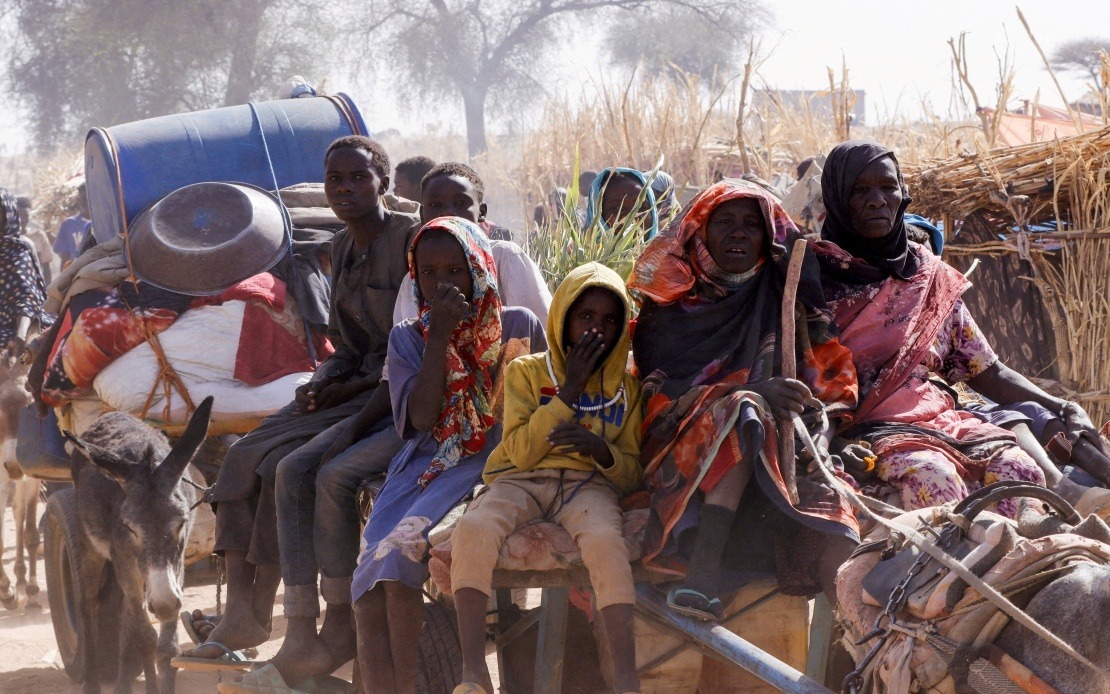
The conflict itself originated in April 2023 from disagreements over integrating the Rapid Support Forces into the regular armed forces. What began as an institutional dispute within the security apparatus rapidly metastasised into widespread civil conflict. The war has created a humanitarian catastrophe that now demands attention: tens of thousands have died while approximately 13 million people have been displaced from their homes, according to United Nations estimates. These figures position Sudan among the world's most severe ongoing humanitarian emergencies, comparable to conflicts receiving significantly more international attention.
For Malaysia and Southeast Asian observers, Sudan's trajectory holds instructive lessons about how state fragility can attract external interference and how competing international interests can complicate internal conflicts. The AU's pushback against foreign interference resonates with ASEAN's fundamental principle of non-interference, though the organisation applies this selectively. Sudan's experience demonstrates how asserting non-interference becomes difficult when powerful actors operate across borders and when humanitarian crises create pressure for intervention despite stated principles.
The AU's emphasis on inclusivity and national consensus building reflects broader African discussions about conflict resolution that prioritise legitimacy grounded in local ownership. Khaled explicitly urged the government and political forces to make the transitional process more inclusive and work toward constitutional government through free elections. This recommendation acknowledges that purely military or elite-negotiated solutions rarely produce durable peace, especially in societies as fractured as Sudan's has become. The challenge lies in implementing such aspirations amid ongoing violence and resource scarcity.
Longer-term implications of the AU's stance will depend on whether member states can sustain pressure against external interference while offering constructive alternatives. The council's reaffirmation of Sudan's unity and sovereignty rings firmly, but enforcement mechanisms remain unclear. Regional powers including Egypt, Saudi Arabia, and the United Arab Emirates have demonstrated deep interests in Sudan's trajectory, while global powers maintain their own strategic calculations. The AU's capacity to manage these competing interests while respecting Sudanese autonomy will determine whether this diplomatic effort catalyses genuine progress or remains largely declarative.

