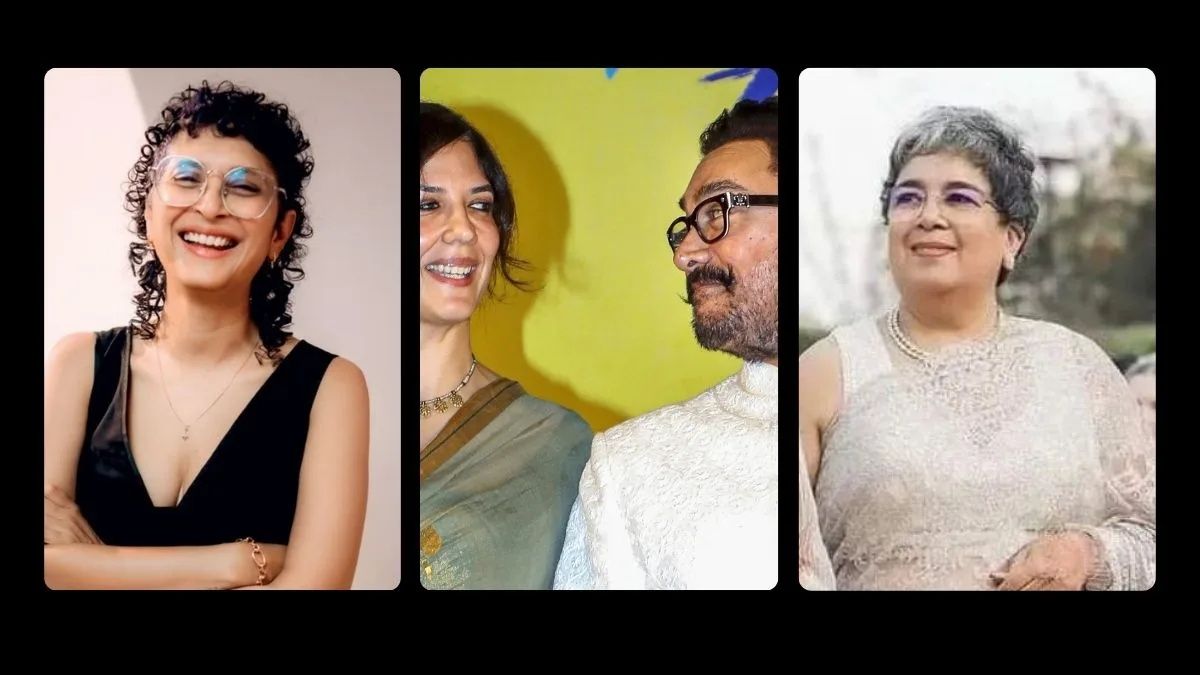
Bollywood actor Aamir Khan has broken his silence on allegations branding him a 'love jihad' promoter, using his recent marriage to longtime acquaintance Gauri Spratt as a platform to defend his family's approach toward relationships spanning different religious communities. In a detailed interview with Rediff, the 60-year-old actor categorically denied the claims and outlined how his household has consistently demonstrated acceptance of individuals from varying faith traditions without imposing any expectation of abandoning their beliefs.
The controversy centres on Khan's July wedding to Spratt, whom he had reconnected with over two years ago through his cousin Nuzhat Khan in Bengaluru following a gap of nearly 25 years since their initial acquaintance. Rather than allowing the accusations to persist unchallenged, Khan chose to articulate his family's long-standing philosophy on interfaith partnerships, presenting documented examples of relatives who have entered marriages across religious lines while maintaining their original faiths.
According to Khan's account, interfaith matrimony represents an established pattern within his extended family spanning generations. Both his sisters have married Hindu men, while his daughter has similarly chosen a Hindu husband. Beyond his immediate family circle, Khan referenced his cousin and filmmaker Mansoor Khan, whose marriage to a Christian woman demonstrates the family's broader openness to such unions. These examples collectively suggest that Khan's household operates according to principles of religious pluralism rather than conversion-based matrimonial frameworks.
When addressing his own personal matrimonial history, Khan made explicit that none of his three marriages involved religious conversion by any party. His first marriage to Reena Dutta, contracted in 1986 and dissolved through divorce in 2002, proceeded as a civil ceremony with both parties retaining their original religious identities. Similarly, his 2005 marriage to filmmaker Kiran Rao—which culminated in separation announcement in 2021 despite their continued professional collaboration and co-parenting arrangements—followed civil matrimonial procedures without any faith-based modifications.
Regarding his current wife Gauri Spratt, Khan clarified that she identifies as Christian though she maintains minimal active religious observance. The fact that their July 5 wedding ceremony at his Mumbai residence followed civil procedures rather than religious rites underscores the couple's secular approach to matrimonial formalities. Khan's willingness to specify these details suggests he views transparency about his marriages' civil rather than faith-based nature as essential to countering what he considers mischaracterisation.
The actor's characterisation of the 'love jihad' accusations as increasingly absurd reflects frustration with what he perceives as a pattern of baseless allegations. By remarking that life becomes "more comical as time passes," Khan appears to be expressing incredulity that his family's documented pattern of interfaith acceptance continues attracting scrutiny. This observation carries particular weight given that the family's track record spans decades across multiple generations, suggesting institutional rather than aberrant commitment to religious coexistence.
Khan's disclosure of his reconnection with Spratt provides additional context for understanding the relationship's development. Having initially known each other for approximately 25 years before losing contact, they reinitiated friendship through Khan's cousin in Bengaluru before their renewed connection gradually evolved into romantic partnership. The couple's decision to date for over two years before formalising their commitment through marriage on July 5 demonstrates a deliberately measured approach rather than hasty union, potentially contradicting narratives that might characterise the marriage as impulsive or suspect.
The actor's public introduction of Spratt during his 60th birthday celebrations in March represented a strategic moment for relationship visibility, occurring well before the actual wedding ceremony. This timeline suggests Khan operated transparently regarding his romantic circumstances, offering the public extended opportunity to become acquainted with his partner before their formal matrimonial commitment. Such transparency arguably undermines suggestions of secretive relationship dynamics or concealment.
The 'love jihad' controversy represents a particularly contentious contemporary discourse within certain segments of Indian society, where interfaith relationships—particularly those involving Muslim men and Hindu women—face organised scrutiny and activism. Khan's intervention into this debate by systematically documenting his family's interfaith marriages carries significance beyond his personal circumstances, implicitly challenging the ideological framework underlying such accusations. By presenting concrete familial examples spanning generations, Khan advances an alternative narrative depicting interfaith matrimony as ethically unremarkable rather than suspicious.
For Malaysian readers, Khan's situation resonates within regional contexts where interfaith relationships similarly attract varying degrees of social commentary and occasional institutional scrutiny depending on local legal and religious frameworks. Malaysia's plural society encompasses multiple communities with different approaches toward interfaith marriages, making Khan's defence of such unions potentially relevant to broader Southeast Asian conversations about religious coexistence and individual autonomy within matrimonial decisions.
The actor's decision to address accusations directly rather than remaining silent represents a notable departure from typical celebrity practices of ignoring such allegations. By granting a detailed interview and systematically countering each claim, Khan appears to have calculated that silence would permit misinformation to proliferate unchallenged. His willingness to discuss his ex-wives by name and detail his present marriage's civil nature demonstrates considerable personal transparency in defending what he evidently views as fundamental principles of religious acceptance within family structures.
Moving forward, Khan's articulation of his family's interfaith approach may influence broader conversations regarding the legitimacy of 'love jihad' narratives. By presenting documented evidence of his family's multi-generational commitment to religious pluralism without conversion expectations, Khan effectively shifts burden of proof toward those advancing accusations. Whether such interventions ultimately alter popular discourse surrounding interfaith relationships remains uncertain, but Khan's vocal engagement suggests he views the matter as sufficiently important to warrant public statement rather than acceptance of damaging allegations.

