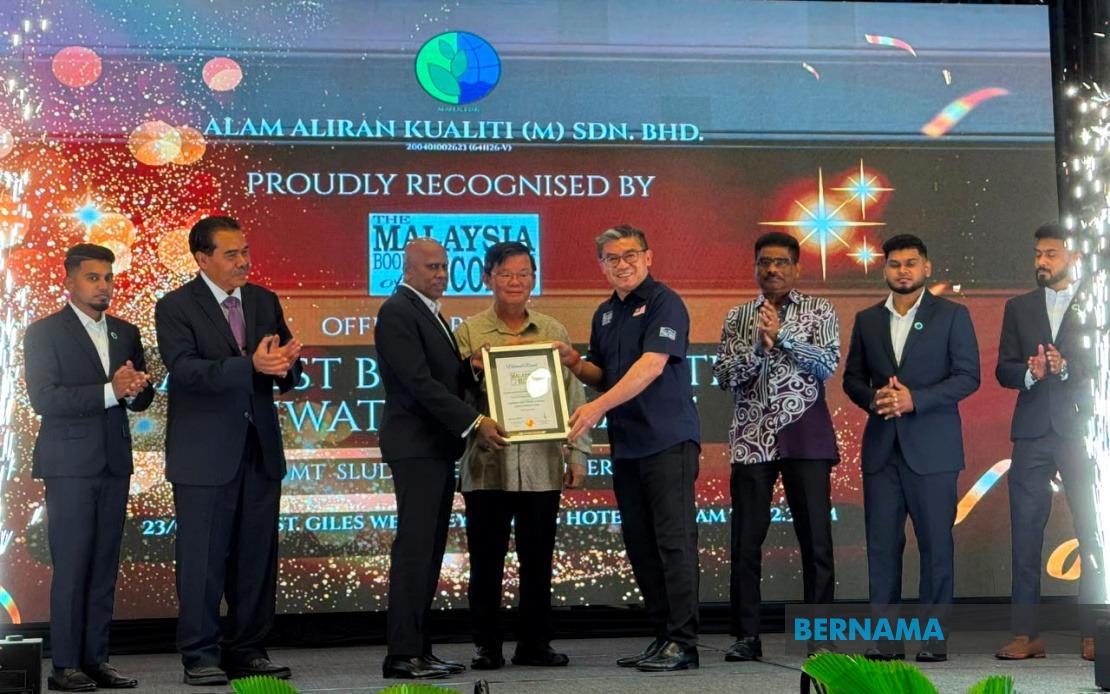
Alam Aliran Kualiti (M) Sdn Bhd has secured a place in the Malaysian Book of Records for constructing and operating the country's largest belt press dewatering plant, an achievement that underscores growing efforts across Southeast Asia to harness advanced water treatment technologies for sustainable infrastructure. The recognition, presented in George Town this month, celebrates the Sungai Dua Dewatering Plant—developed through partnership with Perbadanan Bekalan Air Pulau Pinang—as a benchmark in environmental engineering for the region.
The facility's daily throughput demonstrates the scale of Penang's water treatment operations. Designed to handle 10 million litres of treatment residuals each day, the plant simultaneously manages approximately 450 tonnes of water treatment sludge, converting waste streams that would traditionally burden landfills into reusable materials. This operational capacity reflects Malaysia's increasing sophistication in managing urban water infrastructure, a critical consideration as population growth and climate variability strain freshwater resources across the nation.
AAK director Gokulaan Balan framed the record not as a culmination but as motivation for sustained innovation, emphasising how the achievement validates Malaysian engineering capabilities against international standards. His remarks highlight an important shift in how the country's private sector positions itself within global environmental technology markets. For Malaysian readers, this represents tangible evidence that domestic expertise can compete internationally in specialised infrastructure sectors traditionally dominated by foreign firms.
The Sungai Dua plant exemplifies circular economy principles gaining traction throughout Asia. Rather than disposing of alum sludge and water treatment residuals, AAK converts these materials into Eco Green Cement Bricks—construction products with commercial value. This approach addresses dual challenges: it minimises landfill pressure while creating new supply chains for building materials. For property developers and construction firms across Malaysia, such initiatives present opportunities to source sustainable materials and reduce environmental compliance costs simultaneously.
Penang Chief Minister Chow Kon Yeow positioned the project within broader state-level water security strategies, noting that recovered treated water fed back into the treatment process reduces overall system losses. This operational integration proves particularly relevant for Malaysian states grappling with aging water infrastructure and rising demand. Penang's experience offers a replicable model for other water authorities managing rapid urban expansion or seasonal scarcity. The chief minister's emphasis on economic value alongside environmental benefit suggests growing political recognition that sustainability investments yield financial returns, potentially influencing budget allocations across other Malaysian states.
The collaborative structure between AAK and PBAPP illustrates how public-private partnerships can deliver large-scale environmental infrastructure in Malaysia. Such arrangements distribute financial risk while leveraging specialised private sector expertise, a framework increasingly adopted for toll roads, waste management, and energy projects. The involvement of Pengurusan Aset Air Berhad and state leadership suggests government backing for technological advancement in water treatment, indicating policy momentum toward modernising the sector.
AAK's two-decade operational history, dating from 2004, reflects the maturation of Malaysia's environmental services industry. The company's specialisation in scheduled waste management and environmental engineering places it within a niche but growing sector. For investors monitoring industrial services or waste management opportunities, AAK's record recognition signals market confidence in circular economy solutions and suggests expanding demand for facilities processing scheduled waste—particularly SW204 classification materials derived from water treatment.
The plant's integration of multiple functions—dewatering, sludge treatment, water recovery, and brick manufacturing—represents engineering efficiency increasingly demanded in constrained urban environments. George Town's geographic and infrastructure constraints made this multi-purpose facility especially valuable, yet the design principles underlying the Sungai Dua plant are transferable to other Malaysian cities facing similar pressures. Kuala Lumpur, Johor Bahru, and other major urban centres could potentially benefit from comparable facilities, expanding the addressable market for companies offering such solutions.
From a Southeast Asian perspective, Malaysia's advancement in water treatment technology carries regional implications. As neighbouring countries develop their own water infrastructure, Malaysian firms with proven track records and records recognition may attract consulting or implementation contracts. The MBOR recognition, while domestic in origin, serves as marketing collateral for regional expansion—particularly in Indonesia, Thailand, and Vietnam, where rapid urbanisation creates urgent water treatment demands.
The emphasis on sustainability and circular economy principles reflects shifting corporate messaging across Malaysian industry. Yet the Sungai Dua facility demonstrates substantive operational integration of these concepts rather than rhetorical commitment. Processing 450 tonnes of sludge daily while converting it into marketable products represents genuine resource productivity, the quantifiable outcome regulators and investors increasingly scrutinise.
For water authorities and municipal governments across Malaysia evaluating infrastructure upgrades, the Sungai Dua model presents a compelling case study combining treatment capacity, waste valorisation, and water recovery. The facility's proven performance removes technological risk from adoption decisions, potentially accelerating similar projects in other regions. Government agencies reviewing tender specifications for water treatment facilities may now reference MBOR-recognised standards, creating competitive advantages for established operators while raising baseline requirements across the sector.
Looking ahead, the recognition positions AAK favourably for tender participation in regional water infrastructure projects and potential expansion into other Malaysian states. The convergence of environmental regulation, circular economy policy, and urban infrastructure demand creates expanding opportunities for companies demonstrating technological leadership. AAK's achievement illustrates how specialised environmental engineering firms can capture significant value by solving acute infrastructure challenges with innovative solutions, a lesson resonating across Malaysia's industrial services landscape as the economy transitions toward higher-value manufacturing and services sectors.

