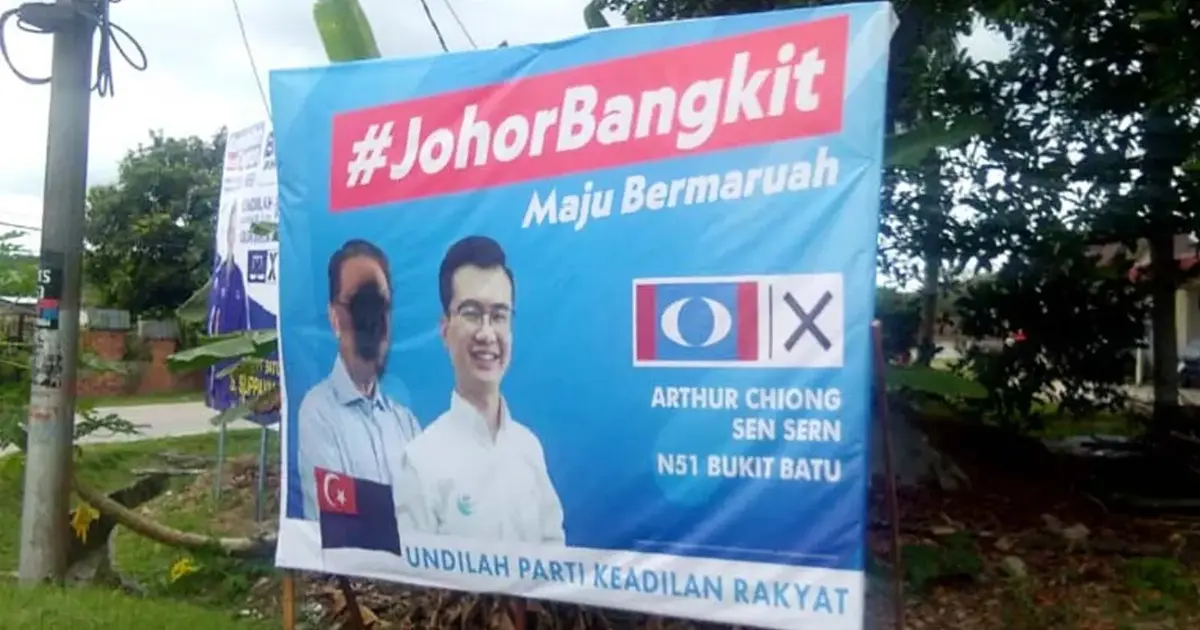
Malaysia's police force documented 90 incident reports throughout the most recent election campaign period, with investigators formally opening case files on 25 of those matters, according to Inspector-General of Police Khalid Ismail. The disclosure provides a rare statistical snapshot of law enforcement activity during a politically charged timeframe, when monitoring compliance and maintaining order becomes particularly critical.
Khalid Ismail has characterised the reported violations as largely minor in their scope and gravity. The bulk of these incidents appear to involve acts of vandalism rather than serious criminal conduct, the police chief indicated. This framing is significant because it distinguishes between petty transgressions and systemic attempts to disrupt the electoral process or target specific political movements. Such a distinction carries weight in Malaysian political discourse, where accusations of biased law enforcement toward particular parties frequently surface during campaign seasons.
Crucially, the Inspector-General's statement emphasises that the cases do not directly implicate the political parties or their officially endorsed candidates as perpetrators or victims of targeted offences. This assertion attempts to counter narratives that might emerge portraying the police as selectively enforcing rules against particular political formations. By stating plainly that investigations are not focused on party structures themselves, Khalid Ismail signals an attempt to maintain institutional neutrality and public confidence in police impartiality during elections.
The campaign period represents one of the most legally sensitive phases of Malaysia's electoral cycle. Electoral offences range from illegal campaign finance and false statements to unauthorised public rallies and breach of electoral advertising guidelines. Against this complex regulatory backdrop, differentiating between minor administrative violations and genuine electoral infractions becomes both a technical and political exercise. The police must balance enforcement with proportionality, ensuring that trivial breaches do not overshadow investigations into more substantive wrongdoing.
Vandalism specifically presents a persistent enforcement challenge during campaigns. Political posters and signage frequently become targets of destruction, whether motivated by partisan antagonism, property disputes, or general disregard for public order. Quantifying and responding to such incidents requires significant police resources, yet these cases rarely culminate in serious prosecutions. The prevalence of vandalism-related reports suggests either heightened vigilance by authorities or increased incidence of such conduct during campaign periods when political emotions run higher than usual.
The decision to publicly release these figures reflects a broader push toward transparency in election administration across Southeast Asia. Malaysian authorities have increasingly recognised that disclosure of enforcement statistics, provided they come with contextual explanation, can actually reinforce rather than undermine confidence in institutional impartiality. By volunteering this information unprompted, the police attempt to preempt claims of hidden irregularities or selective prosecution. However, such disclosure invites scrutiny regarding which cases were accepted for investigation and which were dismissed.
For Malaysian voters and political observers, these statistics carry implications for understanding how election rules operate in practice. A ratio of approximately 25 investigation files opened from 90 reports suggests a preliminary filtering process where police apply discretion in determining which complaints warrant formal investigation. This gatekeeping function inevitably leaves room for questions about consistency and fairness, particularly if one political camp perceives its complaints receiving more rigorous attention than those against its opponents.
The relatively modest number of probes opened—25 out of 90 reports—might indicate either that most complaints lack evidentiary foundation or that police apply a high threshold before escalating matters to formal investigation stage. International election observers have previously commented that election dispute resolution in Malaysia sometimes lacks the detailed public accounting found in other democracies. The provision of aggregate statistics like these, while not fully transparent, represents modest progress in that direction.
Campaign period enforcement also reveals broader questions about how Malaysia's diverse population interprets and respects electoral rules. Different communities may hold varying expectations about acceptable campaign conduct, permissible speech, and the distinction between vigorous political expression and actionable offences. Police must navigate these cultural and communal sensitivities while maintaining consistent application of law across urban and rural areas, and across constituencies with different demographic compositions.
The 90 reports filed throughout the campaign underscore that despite elaborate regulatory frameworks, elections inherently generate frictions and complaints that move through law enforcement and judicial channels. Each report represents a complaint that someone believed rules were violated, whether or not that perception ultimately proved correct upon investigation. Aggregating these into public statistics allows observers to assess whether the election proceeded with relative peace or whether violations reached concerning levels.
Moving forward, Malaysian electoral administrators face the challenge of ensuring that campaign-period policing remains responsive to genuine public safety and electoral integrity concerns while resisting politicisation. The distinction Khalid Ismail drew—between minor offences and attacks on specific political formations—provides a framework for interpretation but does not entirely resolve underlying questions about consistency and appropriateness. As Malaysia continues navigating electoral democracy amid regional democratic variations, how police handle these routine campaign-period violations will remain subject to scrutiny from all political quarters.

