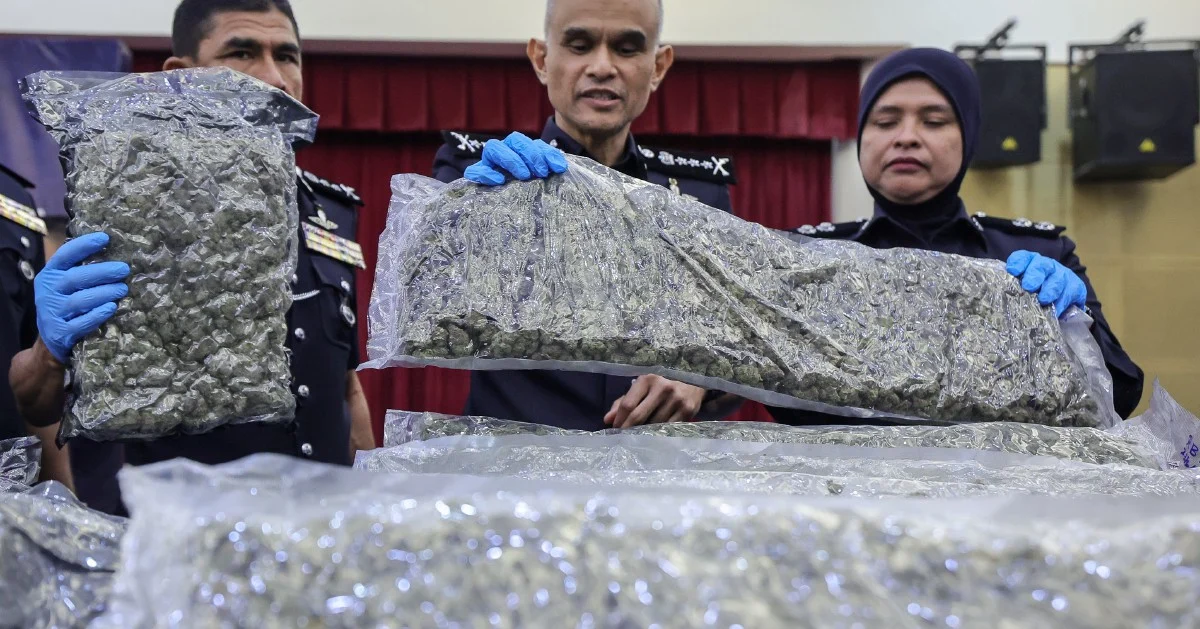
Police operations at Kuala Lumpur International Airport have intercepted a significant cache of cannabis buds exceeding half a tonne since the beginning of January, resulting in the apprehension of 38 suspects—a substantial number of whom are foreign nationals—according to Shah Alam authorities. The seizure represents one of the airport's largest drug hauls in recent years and underscores the critical vulnerabilities in Malaysia's gateway to international commerce and travel.
The scale of the seizure points to an organised trafficking operation rather than isolated smuggling attempts. The volume of contraband indicates a network capable of sourcing, packaging, and coordinating the movement of controlled substances across international borders with some degree of operational sophistication. Such quantities typically involve multiple layers of logistical planning, financial coordination, and distribution channels extending well beyond the airport itself.
The involvement of foreign nationals among those arrested suggests a transnational dimension to the trafficking scheme. Malaysia's position as a major travel hub connecting Asia, the Middle East, and beyond makes it an attractive transit point for drug syndicates seeking to move narcotics to high-value markets. The international nature of the conspiracy also complicates investigative efforts, requiring coordination with foreign law enforcement agencies and raising questions about the adequacy of existing bilateral protocols.
Cannabis trafficking represents a distinct challenge within Malaysia's broader drug enforcement landscape, which has historically concentrated resources on heroin and methamphetamine interdiction. The shifting pattern toward cannabis reflects evolving global drug markets, where decriminalisation movements in numerous countries have reduced stigma and created lucrative arbitrage opportunities for smugglers exploiting jurisdictional disparities. Law enforcement agencies must adapt their strategies and intelligence-gathering capabilities accordingly.
The KLIA seizure demonstrates the importance of passenger screening protocols and cargo inspection procedures at international airports. The massive quantities intercepted suggest that detection mechanisms, whether physical inspection, canine detection units, or intelligence-led operations, are functioning effectively in identifying smuggling attempts. However, the sheer volume also raises questions about the frequency of successful interdictions relative to total throughput and the proportion of smuggling attempts that evade detection.
For Malaysia's customs and immigration authorities, the case reinforces the need for enhanced cooperation and information-sharing systems. Airports constitute concentrated vulnerability points where numerous individuals and shipments pass through daily, creating time pressures that smugglers exploit. Optimising the balance between passenger convenience and thorough security screening remains an ongoing operational challenge for airport management and law enforcement.
The arrest of 38 individuals enables investigators to develop a more complete understanding of trafficking networks operating in Malaysia. Extended custody periods allow interrogation of suspects to identify suppliers, distributors, financiers, and storage facilities. Such intelligence can illuminate patterns of activity, identify repeat offenders, and potentially lead to the disruption of larger syndicates beyond those directly involved in the airport seizure.
The investigation's success also reflects sustained effort by law enforcement agencies in targeting drug trafficking as a priority crime category. Malaysia maintains strict drug laws with substantial penalties, including capital punishment for trafficking in quantities exceeding specified thresholds. This legal framework creates deterrents for traffickers, though clearly substantial numbers remain willing to undertake the risks involved.
Regionally, cannabis trafficking patterns warrant attention from Southeast Asian governments and ASEAN coordination mechanisms. As drug markets evolve and criminal networks adapt to enforcement pressures, the movement of substances through regional hubs affects multiple jurisdictions. Enhanced intelligence-sharing, joint task forces, and harmonised enforcement strategies could amplify the impact of individual country efforts.
The seizure occurs within a broader context of Malaysia's ongoing battles against drug syndicates operating across multiple substance categories. From fentanyl to methamphetamine to heroin, trafficking organisations continuously seek vulnerabilities in enforcement systems. The KLIA interception demonstrates that some mechanisms function effectively, yet the persistence and scale of trafficking attempts suggest that resource constraints, coordination gaps, and sophisticated criminal adaptation remain significant obstacles to comprehensive supply reduction.
For air passengers and legitimate commerce transiting KLIA, the seizure may carry limited immediate implications beyond potential minor delays if screening procedures receive increased scrutiny. However, the underlying security challenges it reveals merit consideration by airport users and operators concerned with efficient throughput and security balance. The incident also serves as a reminder of Malaysia's vulnerability to transnational crime and the necessity of sustained investment in border security infrastructure and personnel training to protect national security interests.