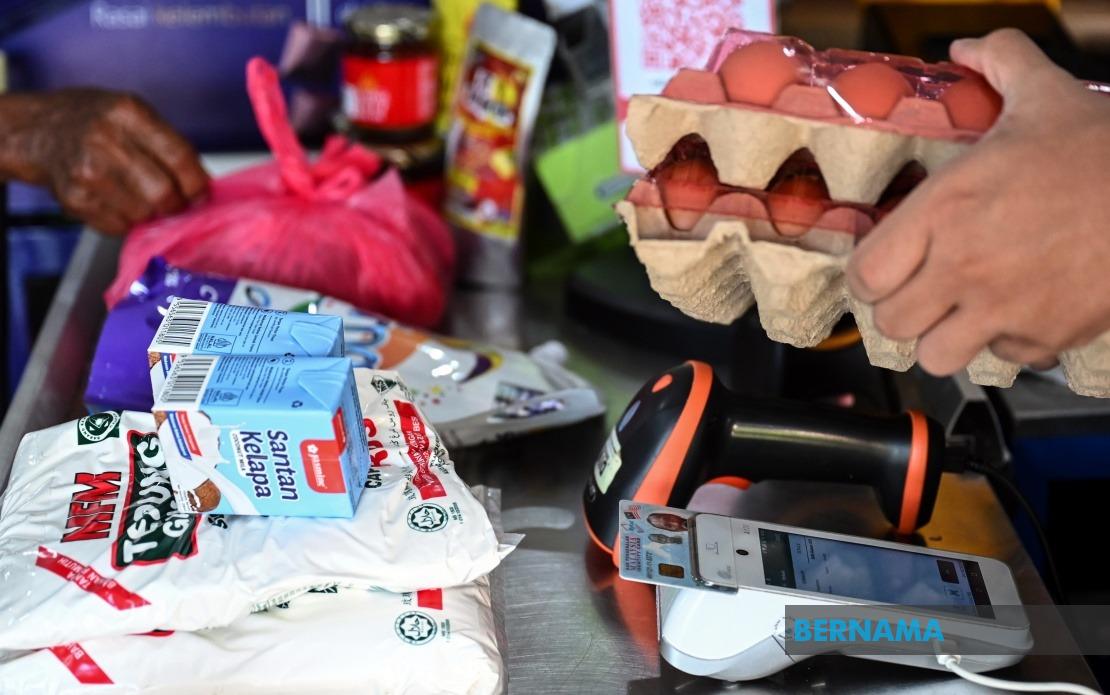
Starting today, the Ministry of Finance has initiated a staged rollout of Phase 3 payments under the Sumbangan Tunai Rahmah (STR) programme, a welfare initiative designed to cushion the financial impact of rising living costs on vulnerable segments of Malaysian society. The disbursement, which will touch approximately 5.3 million beneficiaries nationwide, represents a significant expansion of the assistance network since the year's outset, when the recipient pool numbered five million individuals. The latest cohort expansion underscores the government's recognition that economic pressures continue to mount for ordinary households across the country.
The financial commitment underpinning this phase demonstrates substantial state resource allocation to social support mechanisms. Phase 3 disbursements will total RM1.2 billion across the beneficiary pool, with individual payment amounts varying between RM150 and RM600 based on household income levels and the number of dependent children. Single senior citizens, who form a distinct category within the assistance framework, will receive a fixed RM150 per person. Combined with the previous two phases of distribution, total disbursements for the first three quarters of 2026 have now reached RM3.6 billion, reflecting an unprecedented commitment to cash welfare in recent Malaysian governance.
The composition of recipients reveals the programme's targeting strategy. Among the 5.3 million beneficiaries, approximately 3.9 million households fall within the low- and middle-income classification, while the remaining 1.4 million consist of single senior citizens without household income support. This distribution indicates a deliberate policy emphasis on two vulnerable demographic segments: working-age households struggling with inflation-driven expenses, and elderly individuals living alone without family economic backing. The expansion from 3.7 million low-income households at the year's beginning to 3.9 million in the current phase signals either stricter verification procedures identifying previously missed beneficiaries or evolving economic conditions pushing additional households into qualifying income brackets.
Accumulated benefit levels across the full assistance architecture provide perspective on total support available to qualifying recipients. Those eligible across all categories can potentially access up to RM3,300 in combined assistance by August 2026, encompassing all three phases of STR payments alongside monthly disbursements from the SARA (Sumbangan Asas Rakyat) basic income scheme. This calculation excludes one-time SARA payments distributed to all Malaysian citizens aged eighteen and above, suggesting actual total support may exceed the stated figure for many households. The structure reveals a layered welfare approach combining targeted assistance for the poorest households with universal payments for adult citizens, creating overlapping safety nets.
Structural reforms to Malaysia's welfare delivery system have fundamentally reshaped assistance architecture in 2026. Rather than concentrating cash transfers into discrete annual or biennial events, the government has adopted a more regular cadence with STR distributed quarterly and SARA providing monthly income supplements. This shift from sporadic lump-sum transfers toward sustained monthly and quarterly support reflects lessons learned from earlier Malaysian assistance programmes and international evidence on welfare programme efficacy. Prime Minister Datuk Seri Anwar Ibrahim emphasised that such restructuring enables consistent household budget planning among recipients, supporting both immediate consumption needs and longer-term economic resilience.
The prime minister's public statements situate the assistance programme within a broader economic governance narrative. Anwar acknowledged persistent cost-of-living pressures affecting Malaysian households while framing welfare expansion as a complementary measure alongside structural economic reforms intended to boost incomes and living standards. This rhetorical framing distinguishes the current approach from purely compensatory transfer policies, instead positioning assistance as temporary support while underlying economic improvements take effect. The acknowledgement that 200,000 additional households entered the low-income assistance category during 2026 implicitly recognises inflation's breadth across the Malaysian economy, affecting even households previously self-sufficient.
The historical magnitude of current welfare spending warrants emphasis for Malaysian policymakers and observers. Total 2026 allocations for STR and SARA combined have reached RM15 billion, the highest annual assistance investment in federal government history and nearly tripling the BR1M (Bantuan Rakyat 1Malaysia) expenditure from 2016. This spending escalation reflects both expanded recipient bases and increased per-capita transfer amounts, representing a fundamental shift in Malaysian social policy resource allocation. For a regional perspective, such spending levels position Malaysia among Southeast Asian countries with the most substantial direct cash transfer commitments relative to population size.
Payment delivery mechanisms accommodate Malaysia's varied banking infrastructure and financial inclusion realities. Recipients maintaining bank accounts will receive Phase 3 credits through automated electronic transfer beginning immediately, enabling rapid fund access without collection burdens. Those lacking formal banking relationships can access cash payments at Bank Simpanan Nasional branches throughout the country, ensuring geographic accessibility across urban and rural areas. This dual-channel distribution approach reflects pragmatic recognition that financial exclusion remains significant among lower-income households, requiring physical payment infrastructure alongside electronic options.
Programme administration incorporates continuous enrolment provisions designed to minimise assistance gaps and reduce leakage through exclusion. Applications and appeals for STR eligibility remain perpetually open throughout the year via the dedicated online portal at bantuantunai.hasil.gov.my, allowing individuals who missed initial registration deadlines or whose circumstances subsequently changed to apply retroactively. Comprehensive frequently asked questions sections on both the STR portal and the separate sara.gov.my website provide accessible guidance for potential beneficiaries navigating eligibility criteria and collection procedures. This transparent information architecture aims to reduce confusion that historically prevented entitled individuals from claiming assistance.
Cybersecurity and fraud prevention have emerged as concurrent administrative priorities as assistance programme expansion has accelerated digital delivery. The Ministry of Finance explicitly cautioned beneficiaries against unauthorised payment links and scams targeting STR recipients, directing all enquiries toward official government portals exclusively. Such warnings reflect the real vulnerabilities created when large-scale cash transfer schemes operate digitally; fraudsters frequently create counterfeit payment websites and SMS messages designed to harvest banking credentials from unsuspecting recipients. The government's proactive public messaging on this front acknowledges these emerging threats while attempting to build beneficiary resilience against social engineering attacks.
For Malaysian households and the broader regional economic context, STR Phase 3 represents continuing policy commitment to consumption support during a period of sustained inflationary pressure. The programme's scale, regularity, and explicit focus on lower-income households and elderly citizens distinguishes it from previous Malaysian assistance efforts and positions Malaysia's welfare response competitively within Southeast Asia. As phase disbursements proceed throughout the coming months, implementation effectiveness and beneficiary satisfaction metrics will indicate whether the restructured assistance architecture successfully translates policy ambitions into tangible household economic improvements for Malaysia's most vulnerable populations.

