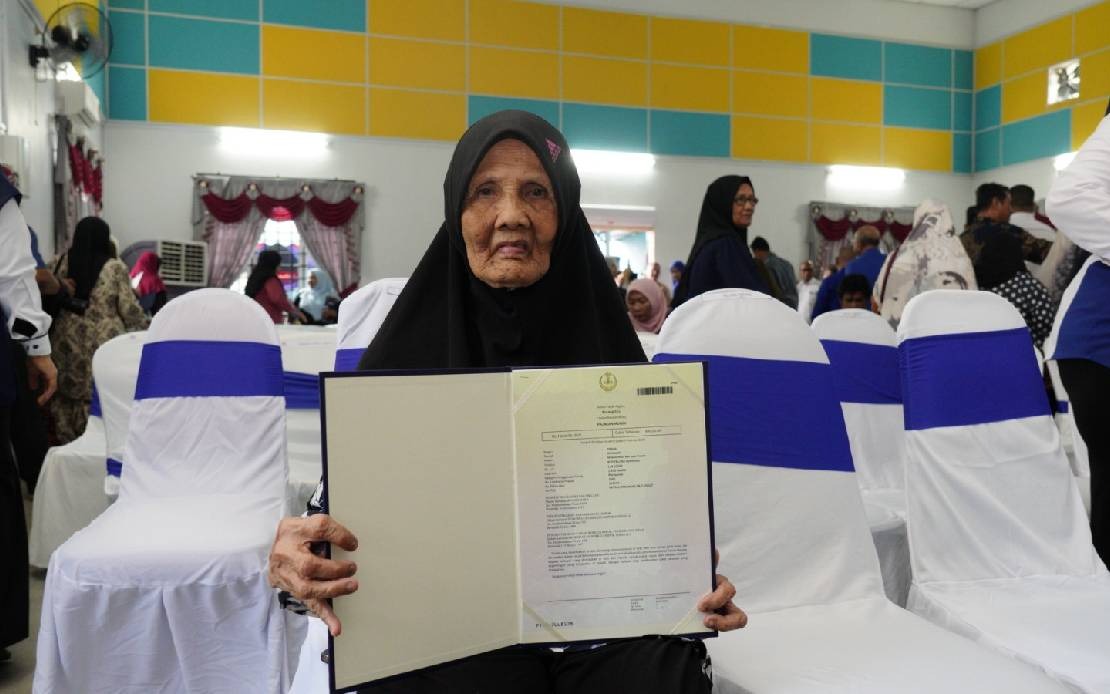
A significant milestone in Perak's rural development trajectory came this week when 47 participants in the FELCRA Berhad Seri Gala Area Village Rearrangement Programme (PPSK) formally received land ownership grants at a ceremony in Ipoh. The distribution underscores what state authorities characterise as a proven model for transforming previously marginal agricultural land into economically viable assets while simultaneously improving the financial security of rural families.
Perak Menteri Besar Datuk Seri Saarani Mohamad highlighted the symbolic importance of the occasion, framing the grant handover not as routine bureaucratic procedure but as a substantive elevation of rural citizenship and dignity. By establishing clear legal ownership of their land parcels, participating families gain enforceable property rights that can serve as collateral for agricultural financing, inheritance planning, and long-term wealth accumulation—critical foundations for generational economic progress in rural Malaysia.
The FELCRA Consolidation and Rehabilitation (P&P) Programme has emerged as one of the country's more durable rural development models, according to state leadership. Rather than concentrating solely on physical infrastructure construction, the approach integrates systematic land development with ongoing participant support, creating conditions for sustainable livelihood improvements. The programme has generated employment opportunities within farming communities, stimulated local entrepreneurial activity, and gradually restored confidence among rural residents that agricultural pursuits can deliver meaningful income levels.
Data presented at the ceremony reveals that FELCRA Berhad currently manages approximately 32,000 hectares across nearly 20,000 participant households nationwide. Perak occupies the second-largest operational footprint within this network, trailing only Pahang. This concentration reflects both the state's substantial remaining agricultural potential and the accumulated experience of FELCRA implementation teams operating in Perakian soil and climate conditions.
The expansion of the FELCRA model carries particular significance for Southeast Asian development patterns. Malaysia's experience demonstrates that conventional agricultural extension alone—providing improved seeds, fertiliser subsidies, and technical training—proves insufficient without addressing underlying issues of land tenure security and consolidated holdings. The Seri Gala initiative exemplifies how formal property documentation combined with economies of scale in farm operations can unlock productivity gains while preventing land fragmentation and speculative seizure.
Zainal Abidin Alias, FELCRA Berhad's director of participant affairs, anchored the programme's philosophy to recent remarks by Deputy Prime Minister Datuk Seri Dr Ahmad Zahid Hamidi. During World Rural Development Day 2026 celebrations in Jengka, Pahang, the Deputy Prime Minister reframed rural development discourse away from narrow physical infrastructure metrics toward comprehensive human capital strengthening. This perspective encompasses occupational skills development, institutional capacity building, household financial management, and crucially, enhanced community agency in determining local development priorities and implementation pathways.
The consolidation approach addresses a chronic challenge across rural Malaysia: the historic fragmentation of agricultural holdings into economically unviable parcel sizes. When families subdivide ancestral land across generations without formal planning frameworks, individual farm units often become too small for commercial viability using modern mechanised techniques. FELCRA's consolidation mechanism permits the grouping of scattered plots under coordinated management structures, enabling shared investment in infrastructure, equipment, and input purchasing while maintaining individual ownership recognition through formal documentation.
For Malaysian policymakers observing rural-urban economic divergence, the Seri Gala model illustrates how institutional innovation—in this case, structured land consolidation paired with formal titling—can rebalance development trajectories without requiring massive capital injection or technological leapfrogging. The programme transforms unutilised or sub-optimally employed land into productive economic resources while simultaneously providing participants with tangible property assets, thereby establishing material foundations for household wealth security that extend beyond annual income fluctuations.
The presence at the grant ceremony of State Rural Development, Plantation, Agriculture and Food Industry Committee chairman Datuk Mohd Zolkafly Harun, alongside FELCRA Berhad chairman Datuk Seri Ahmad Jazlan Yaakub, signals sustained high-level political commitment to consolidating rural development gains. This institutional alignment proves essential for navigating the regulatory, financial, and logistical complexities inherent in multi-year land consolidation initiatives spanning dozens of villages and hundreds of family holdings.
Looking forward, the Seri Gala distribution suggests momentum in translating accumulated FELCRA operational experience into systematic formal documentation of participant rights. Previous consolidation initiatives sometimes achieved economic productivity gains without immediately formalising ownership through complete legal titling, potentially leaving families vulnerable to future land claims or administrative complications during inheritance proceedings. By prioritising comprehensive grant documentation for current programme beneficiaries, FELCRA appears to be addressing this vulnerability.
The initiative also carries implications for property tax administration and local government finance planning. When previously informal or ambiguously titled land becomes formally registered, it enters the formal taxation base, potentially generating revenue streams for local authorities to reinvest in rural infrastructure, though careful implementation remains essential to avoid pricing participating families beyond their expanded income capacity.
For rural communities across Malaysia and the broader Southeast Asian region contending with agricultural land scarcity and youth outmigration, the Seri Gala programme offers a demonstrable pathway combining property rights security with economic viability enhancement. By treating rural development as multidimensional—encompassing tenure clarity, operational scale optimisation, technical capability, and community decision-making authority—such initiatives address root causes rather than symptoms of rural economic stagnation.

