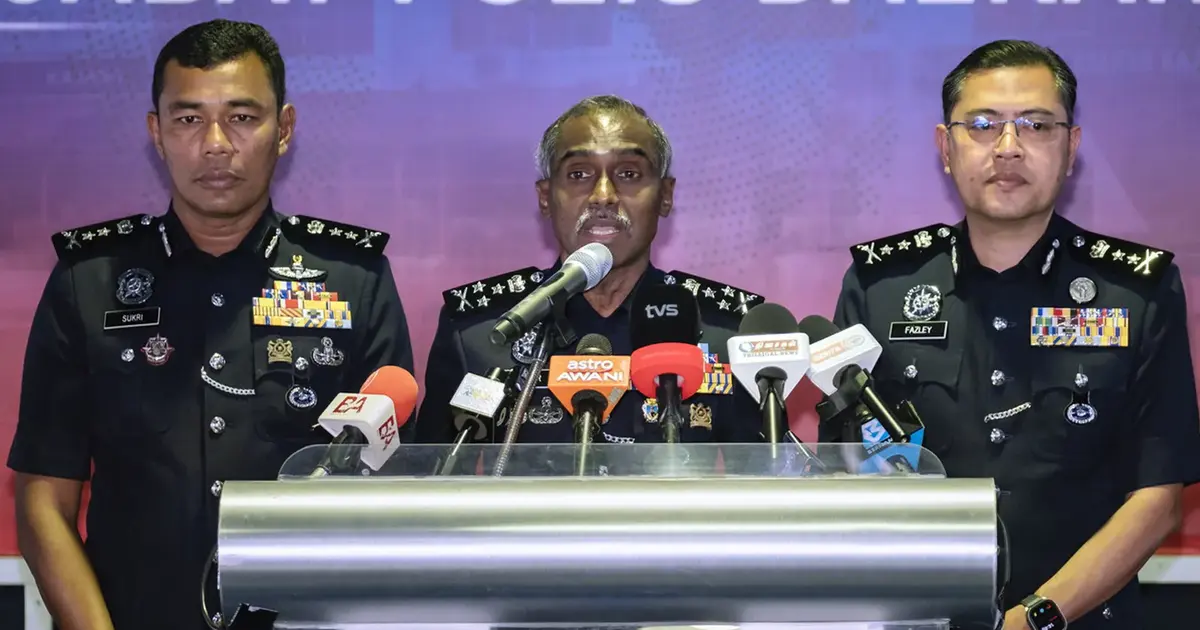
Malaysian police concluded a four-day intensive operation across Selangor on Monday that saw the apprehension of 39 individuals listed as wanted persons. The operation, coordinated through multiple police divisions, targeted outstanding suspects across the nation's most populous state and reflected escalating enforcement efforts against serious criminal elements operating in the region.
According to Bukit Aman CID chief M Kumar, the arrested individuals comprised two distinct categories reflecting different law enforcement priorities. The majority—34 suspects—faced investigation or prosecution for conventional criminal offences centring on violent crime and property-related misdemeanours. These charges typically encompass robbery, assault, burglary, and theft offences that form the backbone of street-level crime affecting communities across Selangor's urban and suburban areas.
The remaining five detainees were apprehended under the Security Offences (Special Measures) Act, commonly referred to as Sosma. This legislative framework represents Malaysia's primary counter-terrorism and national security instrument, and its invocation signals police assessment that these individuals posed threats extending beyond ordinary criminal activity. The act grants authorities enhanced investigative powers and detention provisions specifically calibrated for security-related offences, though human rights advocates have periodically raised concerns regarding procedural safeguards.
Selangor's prominence in this operation reflects the state's position as an operational frontier for Malaysian law enforcement. As the economic engine surrounding Kuala Lumpur, Selangor hosts a concentration of commercial infrastructure, densely populated residential zones, and significant transient populations—factors that simultaneously create criminal opportunities and complicate enforcement operations. The state's relative size and complexity necessitate sustained police commitment to maintain public order and community confidence.
The four-day duration of the sweep suggests coordinated planning across multiple police districts and operational units. Such sustained operations require logistical coordination, intelligence gathering, and interagency communication to identify and locate suspects who may deliberately obscure their movements. The timing and execution indicate preparation rather than opportunistic enforcement, suggesting police had consolidated intelligence on these individuals' likely whereabouts.
The categorisation between conventional crime and security offences reflects contemporary Malaysian law enforcement priorities. Street crime and property offences generate direct community impact through victimisation and fear, whilst security-related charges address asymmetrical threats to national stability. The relatively modest Sosma figure—five among thirty-nine—suggests that whilst security concerns informed aspects of the operation, conventional criminality remained the dominant focus.
Bukit Aman's involvement through its Criminal Investigation Department underscores the operation's significance within Malaysia's police hierarchy. The Federal CID oversees major criminal investigations and coordinates complex enforcement across state boundaries, indicating this sweep involved coordination transcending individual district capabilities. Such centralized oversight typically applies to cases involving organised crime networks, repeat offenders with inter-state connections, or individuals evading previous apprehension efforts.
For Selangor residents, the operation represents police responsiveness to outstanding warrants and unresolved criminal cases cluttering the investigative system. Suspects remaining at large perpetually complicate law enforcement, consume investigative resources, and undermine victim confidence in the justice system. Clearing wanted lists improves police operational efficiency and demonstrates tangible progress in case resolution.
The implications for Southeast Asia's broader security environment merit consideration. Malaysia, as the region's most developed multicultural democracy, faces endemic street crime alongside emerging transnational criminal networks and security threats. Domestic law enforcement sweeps generate data and operational patterns relevant to regional intelligence sharing mechanisms, particularly through Asean police cooperation frameworks.
International criminal justice observers monitor how Malaysia deploys both conventional and exceptional legal frameworks. The parallel use of standard criminal procedures alongside Sosma detention powers illustrates contemporary democratic states' navigation between security imperatives and civil liberties. The proportionality and application of these measures attract scrutiny from human rights monitors concerned with safeguarding due process rights.
Criminal enforcement effectiveness depends substantially upon sustained follow-up. Arrest represents merely the initial phase; subsequent investigation, prosecution, and adjudication determine whether these apprehensions translate into meaningful crime reduction. Court congestion and investigative backlogs remain persistent challenges within Malaysia's criminal justice system, potentially limiting the operational impact of intensive sweeps.
Looking forward, such operations likely represent recurring enforcement patterns. Systematic wanted-person sweeps constitute standard police practice across high-crime jurisdictions, enabling periodic reduction of outstanding warrant backlogs whilst simultaneously projecting police presence and deterrent capacity. Selangor's continued prominence in such operations reflects both its crime challenges and its concentration of police resources.
The operation underscores Malaysia's commitment to addressing criminal elements through sustained enforcement activity. Whether complemented by community policing initiatives, prevention programmes, or intelligence-driven strategies determines whether tactical operations translate into sustainable public safety improvements across Selangor's diverse and dynamic communities.
%22%2F%3E%3C%2Fpattern%3E%3C%2Fdefs%3E%3Crect%20width%3D%22100%25%22%20height%3D%22100%25%22%20fill%3D%22url(%23ph188wlg)%22%2F%3E%3Crect%20width%3D%22100%25%22%20height%3D%22100%25%22%20fill%3D%22url(%23ph188wlp)%22%2F%3E%3Ctext%20x%3D%2250%25%22%20y%3D%2250%25%22%20text-anchor%3D%22middle%22%20dominant-baseline%3D%22central%22%20fill%3D%22rgba(255%2C255%2C255%2C0.95)%22%20font-family%3D%22Georgia%2C%20'Times%20New%20Roman'%2C%20serif%22%20font-weight%3D%22700%22%20font-size%3D%22151%22%20letter-spacing%3D%22-0.02em%22%3EMalaysian%3C%2Ftext%3E%3C%2Fsvg%3E)
%22%2F%3E%3C%2Fpattern%3E%3C%2Fdefs%3E%3Crect%20width%3D%22100%25%22%20height%3D%22100%25%22%20fill%3D%22url(%23ph3r8z5g)%22%2F%3E%3Crect%20width%3D%22100%25%22%20height%3D%22100%25%22%20fill%3D%22url(%23ph3r8z5p)%22%2F%3E%3Ctext%20x%3D%2250%25%22%20y%3D%2250%25%22%20text-anchor%3D%22middle%22%20dominant-baseline%3D%22central%22%20fill%3D%22rgba(255%2C255%2C255%2C0.95)%22%20font-family%3D%22Georgia%2C%20'Times%20New%20Roman'%2C%20serif%22%20font-weight%3D%22700%22%20font-size%3D%22226%22%20letter-spacing%3D%22-0.02em%22%3EPolice%3C%2Ftext%3E%3C%2Fsvg%3E)
%22%2F%3E%3C%2Fpattern%3E%3C%2Fdefs%3E%3Crect%20width%3D%22100%25%22%20height%3D%22100%25%22%20fill%3D%22url(%23ph3ngs4g)%22%2F%3E%3Crect%20width%3D%22100%25%22%20height%3D%22100%25%22%20fill%3D%22url(%23ph3ngs4p)%22%2F%3E%3Ctext%20x%3D%2250%25%22%20y%3D%2250%25%22%20text-anchor%3D%22middle%22%20dominant-baseline%3D%22central%22%20fill%3D%22rgba(255%2C255%2C255%2C0.95)%22%20font-family%3D%22Georgia%2C%20'Times%20New%20Roman'%2C%20serif%22%20font-weight%3D%22700%22%20font-size%3D%22320%22%20letter-spacing%3D%22-0.02em%22%3EIran%3C%2Ftext%3E%3C%2Fsvg%3E)