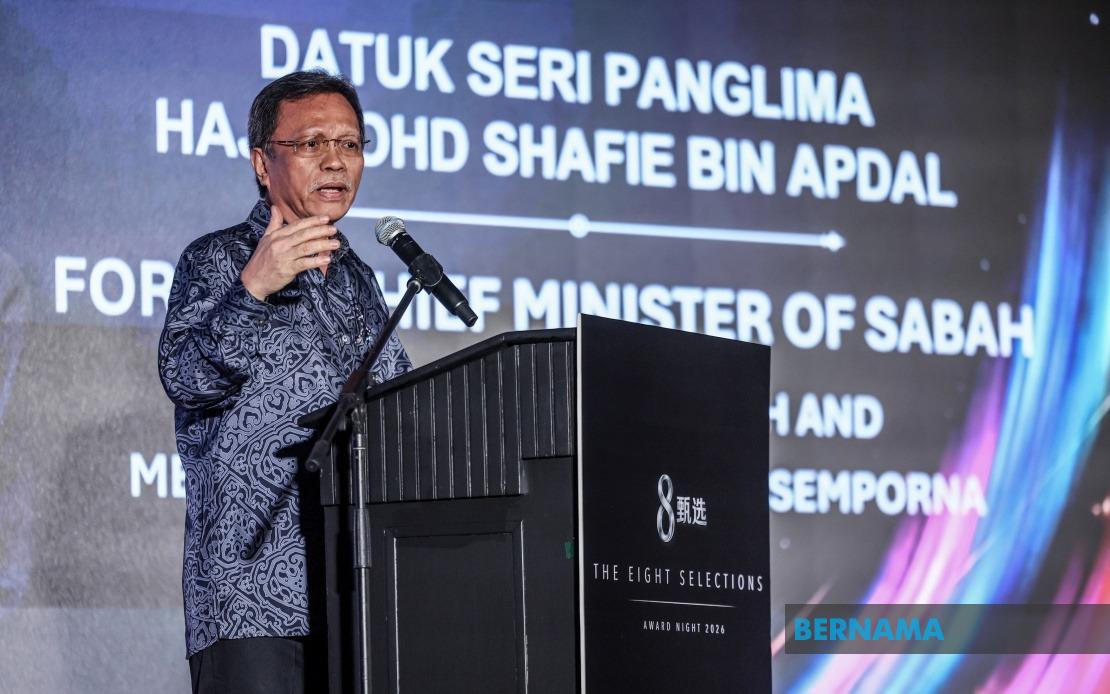
A celebration of Malaysia's entrepreneurial achievements took centre stage in Kuala Lumpur as 28 business leaders, brand founders and distinguished individuals received recognition for shaping the country's commercial landscape. The G Forty Top 40 The Eight Selections Award 2026 ceremony, held last night, assembled approximately 300 guests representing a cross-section of Malaysia's corporate world, including senior executives, professionals and entrepreneurs spanning multiple industries. The event underscored the nation's commitment to acknowledging those driving innovation and growth across diverse sectors.
G Media Asia, the organiser, partnered with Media Prima OMNiA to deliver the honours programme, which has emerged as a significant platform for documenting and celebrating the trajectories of business leaders and the brands they have built. The ceremony benefited from the official presence of former Sabah Chief Minister Datuk Seri Mohd Shafie Apdal, while G Media Asia chairman Datuk Wira Dr Calvin Khiu and Media Prima OMNiA Chief Operating Officer of Agency Solutions Stephanie Wong lent their support to the proceedings.
The awards framework encompasses eight principal categories designed to recognise different dimensions of entrepreneurial excellence. Young Entrepreneur of the Year, Male Entrepreneur of the Year and Female Entrepreneur of the Year honour individual achievement across demographic lines. Parallel categories for brand excellence include Brand Heritage of the Year, Brand Innovation of the Year, Brand Influence of the Year and Brand Social Value of the Year, reflecting the contemporary emphasis on how companies embed themselves within society. The Era Influence Representative of the Year category recognises individuals who embody and champion the values of their generation.
Complementing the core awards, a special tier of recognition emerged through the Icons of the Era Honours category, which encompasses both the G Icon Legacy Award and G Icon Award. These distinctions specifically celebrate organisations and leaders that have demonstrated sustained competitive advantage, shaped their industries over time, and contributed meaningfully to long-term economic and social value. Such categorisation reflects an evolving understanding that entrepreneurial success extends beyond revenue generation to include legacy and influence.
Cathy Ooi, Chief Executive Officer of G Media Asia, articulated a distinctive philosophy underpinning the awards initiative during her address. She cautioned against measuring entrepreneurial impact solely through trophies and formal recognition, arguing instead that genuine influence operates on a broader register. Her remarks centred on the evolving role of media organisations in authenticating and disseminating business narratives, ensuring that commercial achievements gain widespread acknowledgment while building public confidence in the entrepreneurs themselves.
Ooi emphasised that contemporary business competition has transcended traditional parameters. In an environment where consumers evaluate companies based not merely on products and services but on brand credibility and demonstrated values, the mediation of business stories becomes strategically significant. She positioned G Media Asia as an institutional custodian of entrepreneurial narratives, tasked with preserving accounts of achievement and innovation for subsequent generations whilst simultaneously lending credibility to Malaysian commercial endeavour on a global stage.
The broader implications of such recognition frameworks merit consideration for Malaysia's economic development trajectory. As the nation navigates evolving regional competition and seeks to position itself as a centre of innovation and enterprise, the formal acknowledgment of successful entrepreneurs serves multiple functions simultaneously. It provides role models for aspiring business leaders, validates particular approaches to commerce and management, and generates narrative momentum around Malaysian achievement that can influence investor perceptions and consumer confidence.
The participation of 300 industry stakeholders suggests that such awards carry weight within Malaysia's corporate community. The attendance of former political figures alongside current business leaders and media executives indicates that entrepreneurship occupies a respected position within the broader national discourse, linking business success to themes of social progress and national development. This intersection of commerce, media attention and political engagement reflects a sophisticated ecosystem where entrepreneurial activity is understood as contributing to collective advancement.
For entrepreneurs and brands seeking validation and visibility within Malaysia's competitive marketplace, awards initiatives of this scale function as gatekeeping mechanisms—they shape narratives about which companies embody excellence and which leaders merit emulation. The structured categorisation of achievement, from heritage to innovation to social value, suggests that recognition criteria extend beyond financial performance to encompass organisational character and societal contribution. This multidimensional approach to celebrating entrepreneurial success resonates with contemporary expectations that businesses should demonstrate purpose beyond profit.
The emphasis on documenting and sharing business stories reflects an understanding that entrepreneurial culture itself requires cultivation and transmission. By formalising recognition of achievement and providing media platforms for celebrating business leaders' journeys, Malaysia creates conditions for entrepreneurial ambition to flourish. Aspiring entrepreneurs gain concrete examples of success pathways, while established leaders receive social validation that can strengthen consumer loyalty and stakeholder confidence. The awards mechanism thus functions as a form of cultural infrastructure supporting broader economic objectives.

