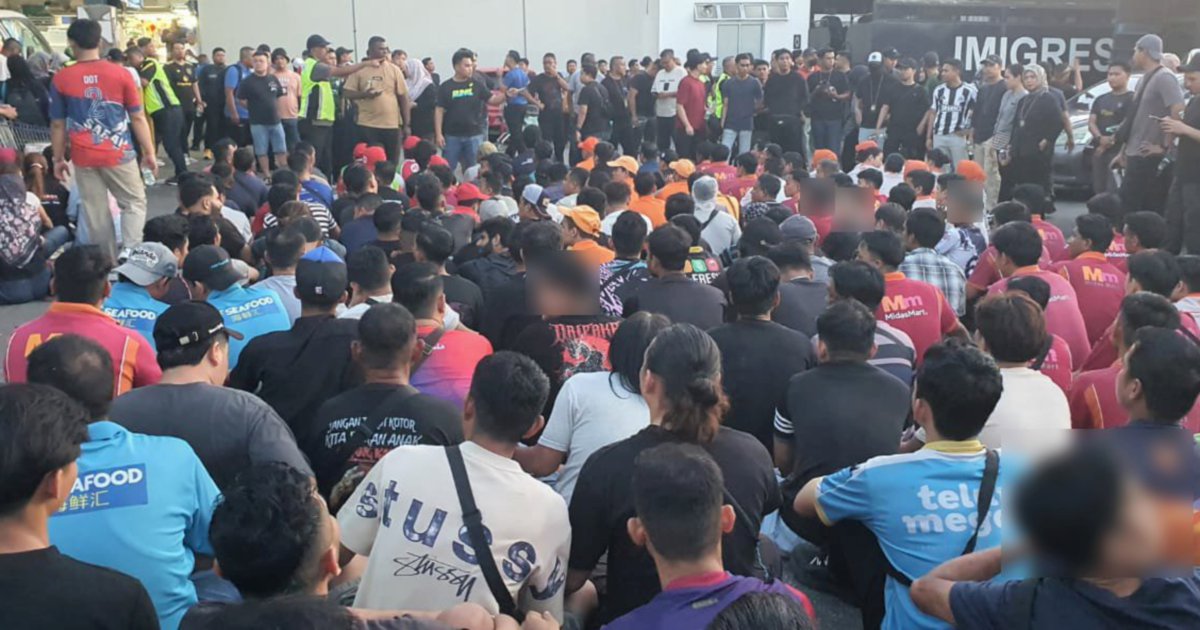
A major crackdown by Malaysian immigration authorities in Johor has exposed a sophisticated operation that allowed undocumented workers to evade detection for years through a deliberate pattern of border crossings and passport manipulation. The raid, which led to the detention of 226 migrants, uncovered what enforcement officials describe as a systematic scheme designed to create the illusion of legal compliance while facilitating widespread illegal employment across the state.
At the centre of this network was an Indonesian fishmonger who had perfected a deception that authorities now recognize as far more common than previously understood. For four consecutive years, the man would cross into neighbouring countries at regular monthly intervals specifically to have his passport stamped by immigration officials, then return immediately to Malaysia to continue working without the necessary authorizations. This cyclical pattern allowed him to maintain what appeared on paper as legitimate border documentation while operating outside all legal employment frameworks.
The systematic nature of the operation suggests coordination beyond individual initiative. Authorities investigating the case have identified that this month-by-month border-stamping methodology was not an isolated workaround but part of a larger facilitation network. The scheme exploited a critical vulnerability in how immigration data is processed across the region: short border visits that create official entry and exit records do not necessarily trigger employment verification checks, leaving a dangerous gap between documentary evidence and actual work authorization.
This revelation carries significant implications for Malaysia's broader immigration enforcement strategy. The Johor raid demonstrates that traditional measures focusing on workplace inspections and random checks have proven insufficient against organized operations that manipulate the documentary system itself. By maintaining technically valid passport stamps, irregular workers could present seemingly compliant records to employers and evade detection during standard compliance reviews. The strategy was particularly effective because it did not require forged documents—only the strategic use of legitimate border procedures.
The detection and dismantling of this network highlights growing sophistication within migrant smuggling and labour trafficking operations throughout Southeast Asia. Rather than relying solely on false papers or bribery, operators increasingly exploit technical loopholes in how regional authorities share and verify immigration information. The monthly border-stamping approach essentially weaponized the legitimate movement of persons across borders to mask illegal employment, a tactic that challenges conventional enforcement assumptions.
For Malaysia specifically, this pattern reflects broader challenges in managing irregular migration across its land and maritime borders. As a regional economic hub with substantial wage differentials compared to neighbouring countries, Malaysia remains an attractive destination despite stringent official policies. The discovery that determined migrants and their facilitators have developed methods to navigate around immigration controls using the systems themselves rather than circumventing them entirely suggests that enforcement approaches require fundamental rethinking.
The 226 individuals detained in the Johor operation now face immigration proceedings and likely deportation, though such outcomes represent only the enforcement endpoint of a much larger labour market phenomenon. Behind each detained migrant lies a demand-side reality: Malaysian employers, particularly in informal sectors like fishing, agriculture, and domestic work, continue recruiting undocumented workers despite legal prohibitions. Without addressing this employer demand and the economic incentives that make irregular employment attractive, enforcement operations will remain cyclical exercises without permanent deterrent effect.
The passport-stamping scheme also underscores inadequacies in how Malaysia and its regional neighbours share real-time immigration intelligence. If border officials in neighbouring countries had flagged the pattern of a worker entering and exiting purely for documentation purposes, the scheme could have been disrupted earlier. Enhanced regional cooperation in identifying suspicious movement patterns and sharing information about individuals engaging in apparent visa-run behaviour could significantly strengthen enforcement capacity across Southeast Asia.
Author prosecution efforts will likely extend beyond the workers themselves to the facilitators and employers involved. The coordination required to execute monthly border crossings while maintaining continuous employment suggests organized criminal involvement, with potential links to broader human trafficking networks. Authorities investigating the case have indicated that establishing the full scope of the operation and identifying all participants remains ongoing.
For Malaysian policymakers, the Johor raid provides concrete evidence supporting arguments for more comprehensive immigration reform. Current enforcement relies heavily on reactive raids and penalties for workers themselves, an approach that addresses symptoms rather than structural causes. The discovered scheme suggests that forward-looking policy should incorporate better employer accountability mechanisms, enhanced data-sharing with regional partners, and technological solutions that make it more difficult to maintain the appearance of compliance while working illegally.
The incident also carries implications for how Malaysian society understands irregular migration. Public discourse often focuses on security and crime risks, yet this case demonstrates that many undocumented workers successfully integrate into economic activity through systematic deception rather than criminal violence. This distinction matters for policy design: creating genuine pathways for temporary labour migration might prove more effective than expanding enforcement capacity, particularly for sectors where documented labour shortages persist.
As authorities process the 226 detainees and investigate the network's full extent, the Johor operation serves as a reminder that immigration enforcement operates within a broader regional context. Workers move because economic opportunity gaps persist; employers hire irregularly because labour costs matter; facilitators profit because demand and supply remain disconnected from legal channels. Until Malaysia and the region address these underlying drivers alongside tactical enforcement, similar schemes will almost certainly emerge in modified forms.

