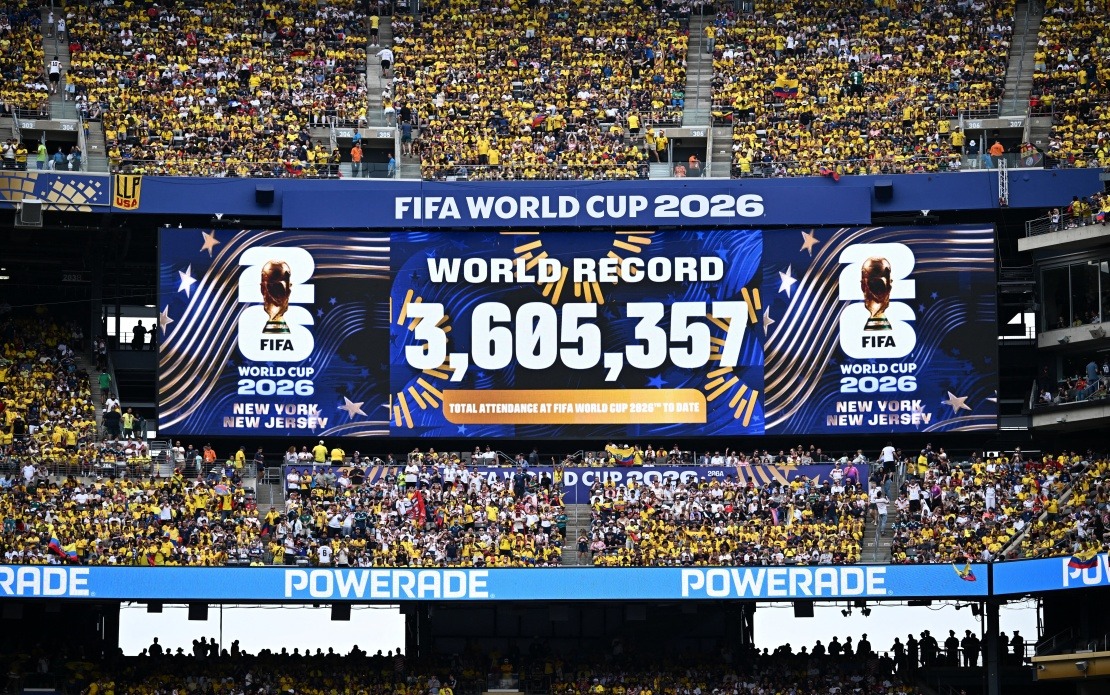
The 2026 FIFA World Cup has etched its name into football history by becoming the most heavily attended World Cup tournament ever held. The milestone was reached on Thursday during the match between Germany and Ecuador at East Rutherford in New Jersey, when the cumulative attendance figure surpassed the previous record of nearly 3.6 million set in 1994. The announcement came via FIFA, with the exact attendance figure reaching 3,605,357 as displayed on giant screens within the stadium, prompting roaring approval from the assembled supporters.
The significance of this achievement becomes even more apparent when considering the tournament's stage of completion. With 48 matches still scheduled to be played, the total attendance could potentially approach double the 1994 benchmark. This projection carries substantial weight given that the 1994 tournament was structured around just 52 total matches. The current format's expansion has clearly resonated with football enthusiasts across the host nations, demonstrating that the sport's global appeal continues to strengthen rather than diminish.
The tournament's stadium utilisation rates underscore the extraordinary enthusiasm surrounding the event. Across all venues, stadiums have maintained an average occupancy exceeding 99 percent, indicating that virtually every match has attracted near-capacity crowds. This consistency speaks to the careful venue selection and scheduling by FIFA, as well as the pent-up demand for international football among fans across the three host nations: the United States, Canada, and Mexico. The diversity of host countries appears to have broadened the geographic reach of ticket sales and fan engagement.
From a Southeast Asian perspective, this record-breaking attendance reflects broader trends in global football consumption. The success of the 2026 tournament may influence how future tournaments are structured and promoted, potentially affecting participation and viewership patterns in the region. Malaysian fans and administrators closely monitor World Cup trends as indicators of evolving preferences in international football engagement. The exceptional attendance figures suggest that expanding tournament formats can successfully drive higher overall participation rather than diluting individual match experiences.
FIFA President Gianni Infantino characterised the achievement as emblematic of football's universal ability to unite diverse populations through shared passion and celebration. His statement emphasised that the scenes witnessed across the 16 host cities and their respective stadiums have been remarkable in scope and emotional intensity. This sentiment reflects the strategic importance FIFA places on attendance metrics as validation of tournament success beyond purely financial or competitive measures. The president's comments underscore how major tournaments serve as cultural phenomena capable of transcending traditional sports consumption.
The infrastructure investments made across North American cities to support the tournament appear to have yielded meaningful results in fan accessibility and experience. Modern stadium amenities, strategic transportation planning, and pricing strategies that balanced revenue generation with fan affordability likely contributed to the near-universal capacity crowds. These operational successes provide templates that other football-developing nations and sporting bodies might examine when planning major events. For Malaysian stakeholders in sports administration and venue management, the 2026 model offers lessons in balancing commercial interests with genuine public engagement.
The Germany versus Ecuador match where this record was announced holds additional symbolic weight. Both nations carry football traditions that command passionate following, and their contest drew the attention required to broadcast this milestone globally. The timing of the announcement during match action maximised its impact, converting a statistical achievement into a memorable moment for those in attendance and those watching worldwide. This ceremonial approach demonstrates FIFA's understanding of how records function beyond mere numbers—they become shared cultural memories.
Looking forward, the remaining 48 matches will almost certainly continue adding substantially to the total attendance figure. If current averaging rates persist, the tournament could conclude with unprecedented total figures that will remain unmatched for decades. This trajectory raises questions about future tournament formats and whether the successful expansion model employed in 2026 will become the template for subsequent World Cups. Such evolution could reshape how football's premier international competition is structured and experienced globally.
The record-breaking attendance also reflects demographic shifts in football fandom and changing consumption patterns. Younger generations appear increasingly willing to attend live matches compared to previous cohorts, suggesting that the sport's global expansion efforts have successfully cultivated broader fan bases. This trend holds particular relevance for Southeast Asian football development, as it demonstrates that expanding access and opportunities for live sports consumption can generate genuine increases in demand rather than merely redistributing existing enthusiasm.
Beyond the numerical achievement, the 2026 World Cup's attendance success serves as a powerful indicator of football's continued centrality in global popular culture. In an era of fragmented media consumption and competing entertainment options, the ability to draw nearly capacity crowds across 16 different host cities speaks to the sport's unique power to mobilise people across cultural and national boundaries. For Malaysia and other Southeast Asian nations aspiring to host major sporting events, the 2026 experience provides compelling evidence that well-executed tournaments can generate transformative economic and social benefits.

