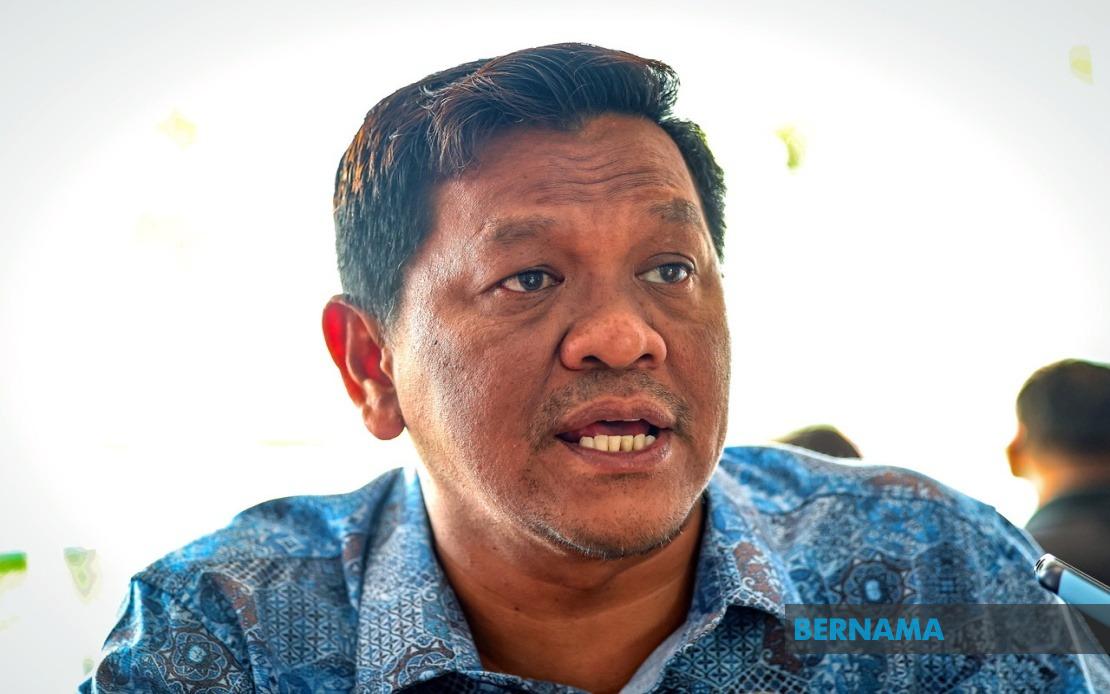
Two hundred motorcyclists in the Renggam area of Kluang received RM5 fuel vouchers on June 25, marking the latest instalment of a government initiative designed to provide direct relief to working-class Malaysians facing mounting daily expenses. The distribution took place during the Jiwa@Komuniti MADANI Sembang Santai World Cup Edition programme, which served as both a support mechanism for individual riders and a broader platform for official engagement with rural communities.
Abdullah Izhar Mohamed Yusof, political secretary to the Communications Minister, characterised the voucher scheme as reflecting deeper government commitment to the welfare of ordinary citizens. According to his remarks, the National Security Council's decision to implement the programme demonstrates an understanding of the pressing financial challenges confronting motorcyclists who depend on two-wheeled transport for their livelihood. This framing positions the initiative not merely as a stopgap measure, but as evidence of state responsiveness to grassroots concerns.
The programme itself extended beyond simple cash distribution, incorporating what officials described as crucial dialogue components. Participants attended briefing sessions on current national issues and participated in community discussion forums where they could voice concerns and offer suggestions on matters affecting their immediate surroundings. The involvement of multiple government agencies—the National Security Council, Information Department, and Department of Community Communications—underscored official intent to coordinate messaging across different arms of the bureaucracy.
Abdullah Izhar articulated a strategic vision for such outreach activities, framing them as regular undertakings rather than one-off gestures. He emphasised that these initiatives were designed to sustain engagement at the grassroots level, implying a programmatic approach to strengthening the relationship between government institutions and ordinary Malaysians. This emphasis on regularity addresses a common criticism of government assistance schemes, which recipients often experience as sporadic or inconsistent.
The official narrative stressed the importance of ensuring accurate information flows to all segments of the population. Abdullah Izhar highlighted how the programme provided community members with reliable guidance on government policies and schemes, while simultaneously collecting feedback that might inform future policy decisions. This two-way communication model represents an approach to governance that values listening alongside broadcasting official positions.
The voucher recipients themselves provided candid perspectives on the assistance. M. Raja, a 56-year-old father of five from Taman Sri Jaya, expressed gratitude while acknowledging the limitations of the RM5 support. His comment that monthly vouchers would be preferable—while remaining appreciative of what was offered—reflected the reality that such assistance, though welcome, represents only partial relief from the financial pressures motorcycle users face. His remarks hinted at expectations for programme expansion or enhancement, suggesting community receptiveness to the initiative combined with recognition of its modest scope.
Hee Eeck Kwe, a 66-year-old resident of Kampung Baru, focused on a different dimension of the programme: the symbolic significance of government attention to rural communities. His comment that the assistance demonstrated governmental awareness of outlying populations' needs speaks to a concern among non-urban Malaysians that state initiatives sometimes concentrate benefits in metropolitan areas. This perception, whether statistically justified or not, influences how rural communities assess government responsiveness.
The timing and location of the initiative merit consideration within broader Malaysian political and economic contexts. Renggam sits within Johor, a state with significant motorcycle-dependent populations, particularly among lower-income workers for whom motorised two-wheelers represent the primary affordable transport option. The programme's focus on this demographic reflects an understanding of mobility patterns and economic realities among working-class Malaysians.
From a policy perspective, the initiative raises questions about sustainability and scalability. While RM5 vouchers provide tangible benefit to individual recipients, their broader economic impact remains modest. For motorcycle users earning modest daily incomes, however, even small reductions in fuel costs accumulate meaningfully across weeks and months. The programme's regular scheduling, if maintained, could establish a predictable support mechanism that riders might factor into their financial planning.
The integration of information-sharing with material assistance represents an interesting administrative approach. Rather than treating the fuel vouchers as a standalone welfare measure, officials embedded them within a broader communication strategy designed to improve government transparency and gather community input. This multifaceted approach acknowledges that rural communities value both concrete assistance and meaningful dialogue with decision-makers.
Looking forward, the success of this initiative may influence how other government agencies approach grassroots engagement in non-urban areas. The combination of targeted financial support, community briefings, and dialogue sessions provides a template that other departments might adapt. For motorcyclists and other working-class Malaysians, the establishment of regular outreach programmes offers hope for sustained official attention, even if individual benefit remains incremental.

