Two hundred alumni from Malaysia's revived National Service Training Programme (PLKN 3.0) will make history on August 31 when they march before the King, Prime Minister, and Cabinet members during the National Day celebration in Putrajaya. This marks the first occasion that graduates from the reimagined mandatory training initiative will participate in the country's highest-profile civic ceremony, reflecting the government's confidence in the programme's capacity to produce disciplined and patriotic young citizens.
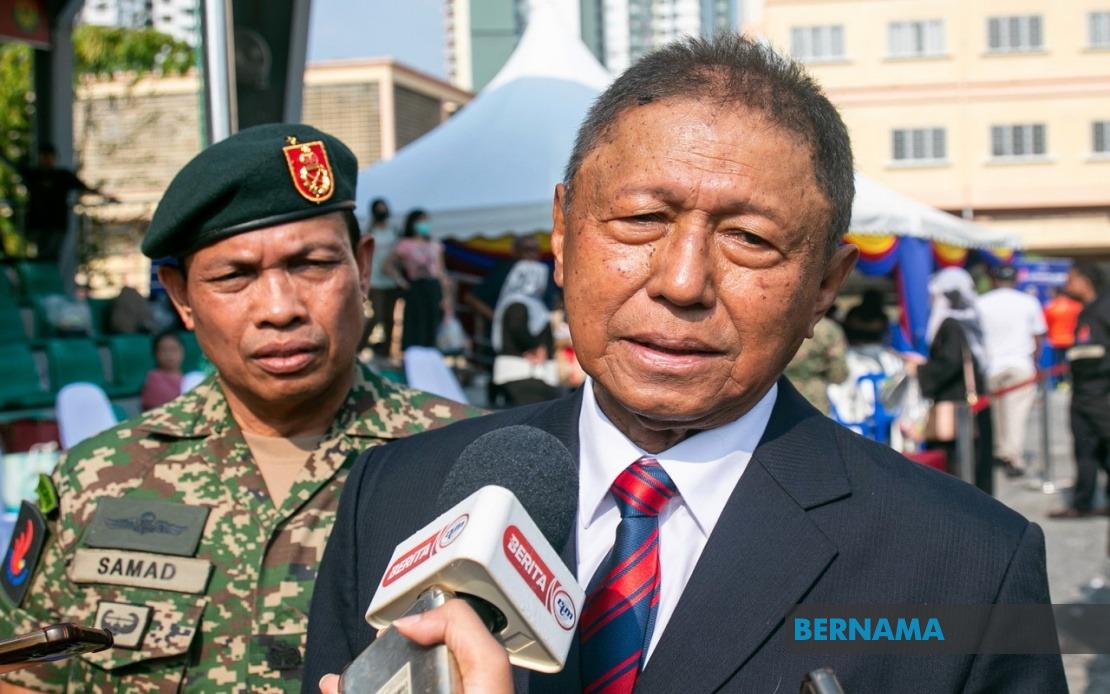
General (Rtd) Tan Sri Dr Abdul Aziz Zainal, chairman of the National Service Training Council (MLKN), announced the participation following the passing-out ceremony for PLKN 3.0 Series 3/2026 trainees held today at the 515 Territorial Army Camp in Kuala Lumpur. The selected participants will commence rehearsals in Putrajaya beginning August 25 to prepare for the ceremonial march. Abdul Aziz emphasized that this national platform serves a dual strategic purpose: allowing the community to witness firsthand the calibre of recruits emerging from the training pipeline, whilst simultaneously demonstrating the tangible outcomes that forty-five days of structured military-style instruction can achieve.
The latest training cohort represents a significant milestone for the reinstated programme. A total of 795 trainees successfully completed the Series 3/2026 course, which commenced on July 11 across three designated training camps strategically positioned throughout the peninsula. The Camp 504 AW facility at Bukit Keteri in Perlis accommodated 106 female recruits, whilst Camp 505 AW in Pekan, Pahang, hosted 442 male trainees. A further 247 female participants trained at Camp 515 AW in Kuala Lumpur, underscoring the programme's inclusive approach to gender representation within its structure.
Recognition of outstanding performers within each cohort highlights the competitive standards maintained across the training infrastructure. An'nur Najiha Muhammad, an 18-year-old from Ipoh, Perak, earned top honours among female trainees at the Perlis installation. Muhammad Firdaus Muhammad Said, also eighteen and hailing from Kuantan in Pahang, distinguished himself as the leading male participant at the Pekan camp. Meanwhile, Cheyenne Alessandra Michael, eighteen and based in Kuala Lumpur, emerged as the highest achiever among participants at the capital's training facility. These distinctions carry symbolic weight in a nation attempting to rebrand youth service as a pathway to leadership and national contribution.
Expansion plans for the forthcoming PLKN 3.0 Series 4/2026 reveal the government's ambitions to scale up the initiative substantially beyond current capacity thresholds. Abdul Aziz disclosed that the recruitment apparatus will establish five additional training camps across different regions, extending the programme's geographical footprint and enabling simultaneous training of larger intake numbers. The new installations will operate at Camp 503 in Hutan Melintang, Perak; Camp 506 in Sungai Durian, Kelantan; and Camp 513 in Bukit Pinang, Kedah. Two further locations utilising facilities operated by the Public Training Institute will activate in Sungai Petani, Kedah, and Tuaran, Sabah, functioning as backup installations to accommodate overflow numbers.
The infrastructure expansion strategy incorporates a novel partnership dimension through engagement with the Malaysian Volunteer Corps Department (RELA). By leveraging RELA's existing training infrastructure and instructor personnel, the MLKN calculates that it can accommodate more than 1,000 trainees simultaneously across the expanded camp network. This collaborative approach demonstrates pragmatic resource utilisation and signals broader institutional acceptance of PLKN 3.0 as a permanent fixture within Malaysia's youth development apparatus. The integration of RELA capabilities represents a significant operational evolution compared to earlier iterations.
For Malaysian observers tracking the programme's trajectory since its 2023 reintroduction, such expansion figures carry considerable political weight. The PLKN initiative has historically attracted considerable public debate regarding compulsory service, generational expectations, and resource allocation. The magnitude of scaling suggests confidence from policymakers that the remodelled version has overcome earlier criticisms and emerged as a viable instrument for fostering national cohesion among young Malaysians from diverse backgrounds.
Personal testimonies from participating trainees provide insight into the subjective experience driving the programme's appeal to its participants. Cheyenne Alessandra Michael, who undertook training voluntarily rather than through mandatory enrolment, articulated how the intensive forty-five-day exposure catalysed her patriotic consciousness. She emphasized that proximity to Territorial Army personnel within the camp environment created daily exposure to military professionalism and sacrifice, fundamentally altering her worldview regarding national defence and citizen responsibility. Her observation that the experience illuminated the historical sacrifices underlying national independence reflects the MLKN's educational objectives beyond purely physical training.
The psychological and civic dimensions of national service training extend beyond regimentation and physical conditioning. Trainees emerge reporting enhanced pride in Malaysia's independence achievements and heightened awareness of generational obligations toward social peace and security. For Cheyenne and cohorts alike, the structured environment catalysed reflection on personal responsibility within the broader national project. Such attitudinal shifts, whether temporary or enduring, represent the intangible returns that proponents cite when justifying public resource allocation toward PLKN 3.0.
The August 31 parade participation carries symbolic significance extending beyond ceremonial protocol. Positioning young trainees before the nation's highest constitutional authorities during the most important civic calendar event effectively broadcasts state commitment to youth mobilisation and national integration. For Malaysian observers internationally, the spectacle reinforces messaging regarding generational renewal and institutional capacity-building. For participating trainees, marching before the King constitutes pinnacle validation of their two-month investment.
As PLKN 3.0 matures from experimental reintroduction toward established programme status, its trajectory warrants sustained scrutiny. The expansion to five new camps and integration with RELA resources represents quantitative scaling, but outcomes assessment regarding durability of attitudinal change and measurable civic participation remains outstanding. The August 31 parade provides opportunity for public observation of the programme's products, though ceremonial performance necessarily differs from longitudinal evaluation of sustained behavioural or attitudinal change among alumni.

