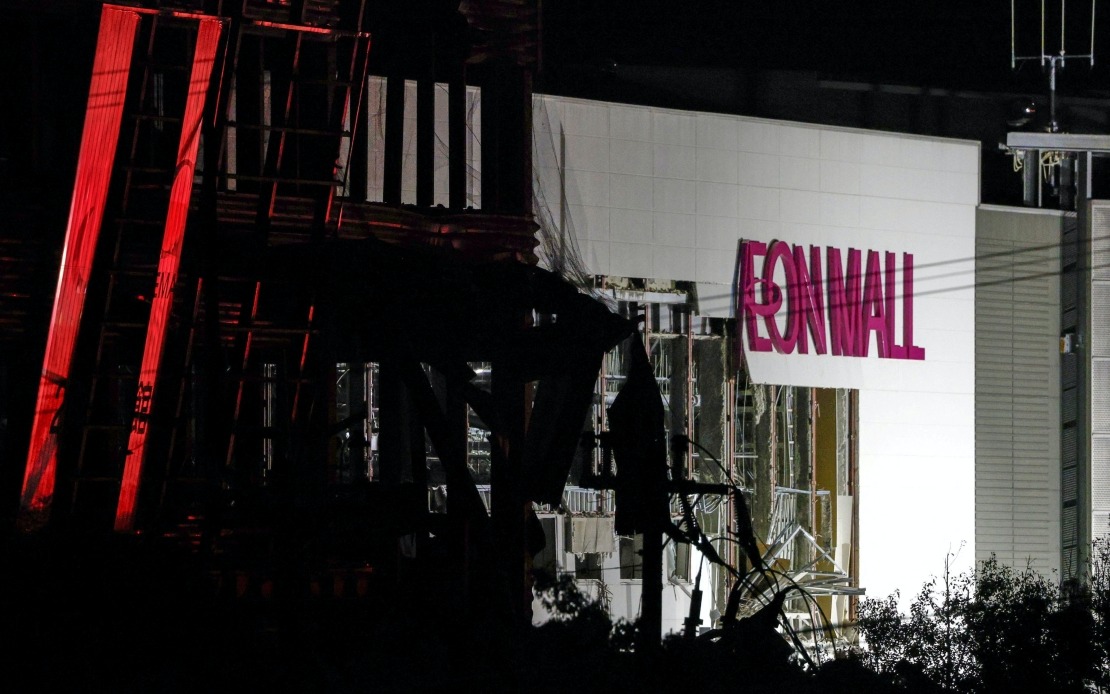
A shopping mall explosion in southwestern Japan has triggered a major search and rescue operation, with authorities reporting between 20 and 30 employees of the facility missing and feared trapped inside the damaged structure. The incident unfolded at Aeon Mall Kumamoto in Kashima Town following a significant seismic event that shook the region earlier on Tuesday, compounding an already precarious situation.
The explosion occurred at approximately 6 pm local time at the major shopping complex, with the blast catching employees on the premises as emergency responders were still assessing damage from the earlier earthquake. Japanese police and fire services immediately launched a coordinated effort to locate the missing workers, working against the clock as authorities feared the worst about their safety. The National Police Agency confirmed that contact had been lost with multiple workers at the facility, though their exact location within the sprawling mall remained uncertain.
The powerful earthquake that preceded the blast struck Kumamoto Prefecture at 4:27 pm local time with a magnitude of 7.1, triggering widespread alarm across the southwestern region. The seismic activity appeared to have set the stage for the subsequent explosion, though investigators were still working to determine whether the blast was a direct consequence of structural damage or a separate mechanical failure. The timing of the two disasters created a chaotic scenario for emergency management, as responders had to address both the earthquake's aftermath and the explosion's immediate aftermath simultaneously.
Most mall customers had been evacuated to outdoor areas by the time the explosion occurred, suggesting emergency protocols were at least partially effective in clearing public spaces. However, the unclear status of customers among the missing highlighted the difficulty authorities faced in accounting for all persons who may have been inside the building when the blast took place. The focus on locating employees reflected the immediate concern that workers may have been in less accessible areas of the facility during the incident.
Authorities were conducting intensive searches of the damaged building's interior, attempting to determine whether any of the missing employees remained trapped in rubble or inaccessible sections. Police and firefighting units continued systematic sweeps of the structure, working under the assumption that some individuals could still be alive in pockets within the damaged mall. The complexity of searching a major shopping complex with multiple levels, back corridors, and storage areas presented significant operational challenges for rescue teams.
Separate reports indicated that fewer than ten additional people were unaccounted for in other locations throughout Kumamoto Prefecture as a result of the earthquake, though the mall explosion clearly represented the most serious incident in terms of scale and immediate human toll. The distinction between casualties and missing persons remained unclear, as authorities had not yet been able to fully access all sections of the damaged mall to assess the situation comprehensively.
Broadcasters including TBS reported grave concerns about fatalities resulting from the explosion, with police officials warning the public to prepare for confirmed deaths once rescue operations concluded and victims could be properly counted. A police official stated that authorities anticipated a significant number of deaths, though the exact toll could only be determined after search and rescue efforts were substantially complete. The cautious language reflected the difficulty of making definitive statements while rescue operations were still ongoing and the full scope of damage remained unclear.
The incident carries particular significance for regional disaster management in Southeast Asia, where shopping malls remain popular public gathering spaces. Malaysia, with its own history of dealing with seismic activity in Sabah and Sarawak, as well as structural emergencies in densely populated shopping complexes, underscores the importance of robust evacuation procedures and building safety standards. The Kumamoto situation demonstrates how natural disasters can cascade into secondary emergencies, with initial seismic activity potentially triggering secondary hazards like explosions, gas leaks, or structural collapses.
The explosion at Aeon Mall Kumamoto highlights vulnerabilities in maintaining operational safety during seismic events, raising questions about building codes, emergency response coordination, and the adequacy of workforce protection measures in large commercial facilities. For Malaysian building authorities and mall operators, the incident serves as a sobering reminder of the complex challenges posed by sequential disasters and the importance of comprehensive emergency preparedness that anticipates not just primary natural hazard impacts but also secondary mechanical failures.
Japan's response to the Kumamoto situation will likely influence how other countries in the region approach seismic safety in commercial settings. The coordination between police, firefighters, and other emergency services demonstrated in the rescue efforts represents best practice, though the scale of missing persons suggests gaps may have existed in emergency protocols or communication systems. As rescue operations continued and the full situation became clearer, the incident would provide valuable lessons for disaster management professionals across Asia.

