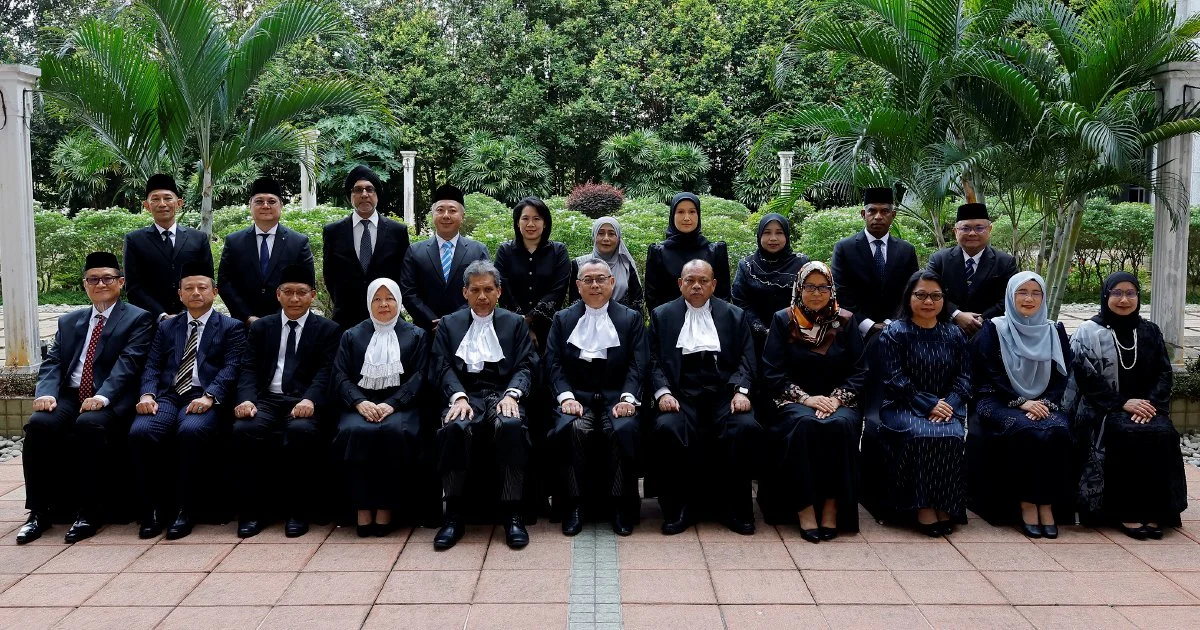
Malaysia has promoted 17 lawyers and serving judicial and legal service officers to the position of judicial commissioner in Putrajaya, strengthening the bench with a fresh cohort of legal talent. The appointments represent the latest iteration of the judiciary's systematic expansion efforts, with one appointee notably being the daughter of a former president of the Court of Appeal, underscoring the judiciary's deep institutional continuity and the role of legal families in shaping Malaysia's judicial architecture.
Judicial commissioners occupy a critical rung in the Malaysian judicial hierarchy, functioning as intermediate judges who handle significant cases before potential elevation to permanent judicial posts. Their appointment signals readiness to assume expanded responsibilities within the high court system, where caseload pressures have intensified across civil, commercial, and criminal divisions. The scale of this appointment round reflects ongoing efforts to address capacity constraints within the judiciary and ensure timely case resolution across the country's various judicial venues.
The inclusion of the daughter of a former Court of Appeal president carries symbolic weight within Malaysia's legal establishment, where judicial experience often spans generations within families. Such appointments illustrate how institutional knowledge and legal acumen are transmitted through professional networks and familial lines, a pattern particularly visible in Malaysia's legal and judicial sectors. The family connection does not diminish the appointee's individual qualifications, but rather highlights the interconnected nature of Malaysia's senior legal profession and the judiciary's reliance on established networks of competence.
The composition of judicial appointments typically draws from practising lawyers with established track records, in-house counsel from government and private sectors, and officers within the judicial and legal service. This mixed-source approach ensures that the bench benefits from diverse professional backgrounds and perspectives. The variety of experience represented among the 17 new commissioners should theoretically enhance judicial decision-making by incorporating practitioners' practical knowledge alongside traditional judicial expertise.
Malaysia's judiciary has faced mounting pressure to clear backlogs and reduce case disposal times, particularly following the COVID-19 pandemic's disruption to court operations. The appointment of additional judicial commissioners helps expand hearing capacity and potentially accelerate the resolution of pending matters. Each new commissioner can theoretically hear additional cases, thereby distributing the workload more evenly across the bench and relieving strain on established judges managing heavy dockets.
The timing of such appointments often reflects broader judicial reform initiatives and capacity planning within the Malaysian legal system. Regular elevation of qualified lawyers to judicial office ensures a steady pipeline of judicial talent and prevents talent drain to private practice or foreign jurisdictions. For ambitious legal professionals, the pathway to judicial appointment remains competitive, and success signals recognition of both legal expertise and suitability for the bench's responsibilities.
From a regional perspective, Malaysia's judicial appointments garner attention from other Southeast Asian legal communities, where parallel pressures and challenges within the judiciary are keenly observed. The ways in which Malaysia addresses judicial capacity, recruitment, and succession planning offer insights to neighbouring jurisdictions grappling with similar structural questions about judicial reform and modernisation.
For practitioners and litigants, the expansion of the judicial commissioner bench carries immediate practical implications. More available judges mean potentially shorter waiting periods for hearings, particularly in civil cases where delays have become a persistent frustration. Commercial litigants and private parties relying on court processes stand to benefit from improved scheduling and faster case progression. Similarly, government entities managing significant litigation portfolios may experience more expeditious handling of administrative and constitutional matters.
The judicial commissioner rank also serves as a testing ground for future elevation to the High Court and Court of Appeal. Appointments at this level allow the judiciary to assess judges' performance, temperament, and legal reasoning across a range of cases and issues before considering them for more senior positions. This graduated approach to judicial advancement builds a more robust evaluation system than relying solely on private practice credentials.
Women's representation in Malaysia's judiciary has been a persistent policy focus, and the presence of a female appointee among this cohort continues slow but meaningful progress toward gender balance on the bench. While far from parity, female judicial commissioners and judges remain numerically limited, reflecting both historical barriers to women's advancement in the legal profession and ongoing efforts to broaden recruitment and retention strategies.
The appointments underscore the judiciary's ongoing institutional evolution and its need to remain responsive to Malaysia's expanding economy, increasingly complex commercial landscape, and growing population. As caseload demands mount and legal complexity deepens across civil litigation, commercial disputes, and regulatory matters, the pool of judicial talent must continuously expand to maintain the system's credibility and efficiency.
Looking ahead, the pace and scope of judicial appointments will likely continue tracking Malaysia's socioeconomic development and the corresponding evolution of legal disputes. Future rounds of appointments will probably emphasise expertise in specialised areas such as technology law, environmental disputes, and commercial arbitration, reflecting the judiciary's need to adapt to emerging legal frontiers. The 17 new judicial commissioners thus represent both an immediate capacity response and part of a longer institutional trajectory shaping Malaysia's judicial future.

