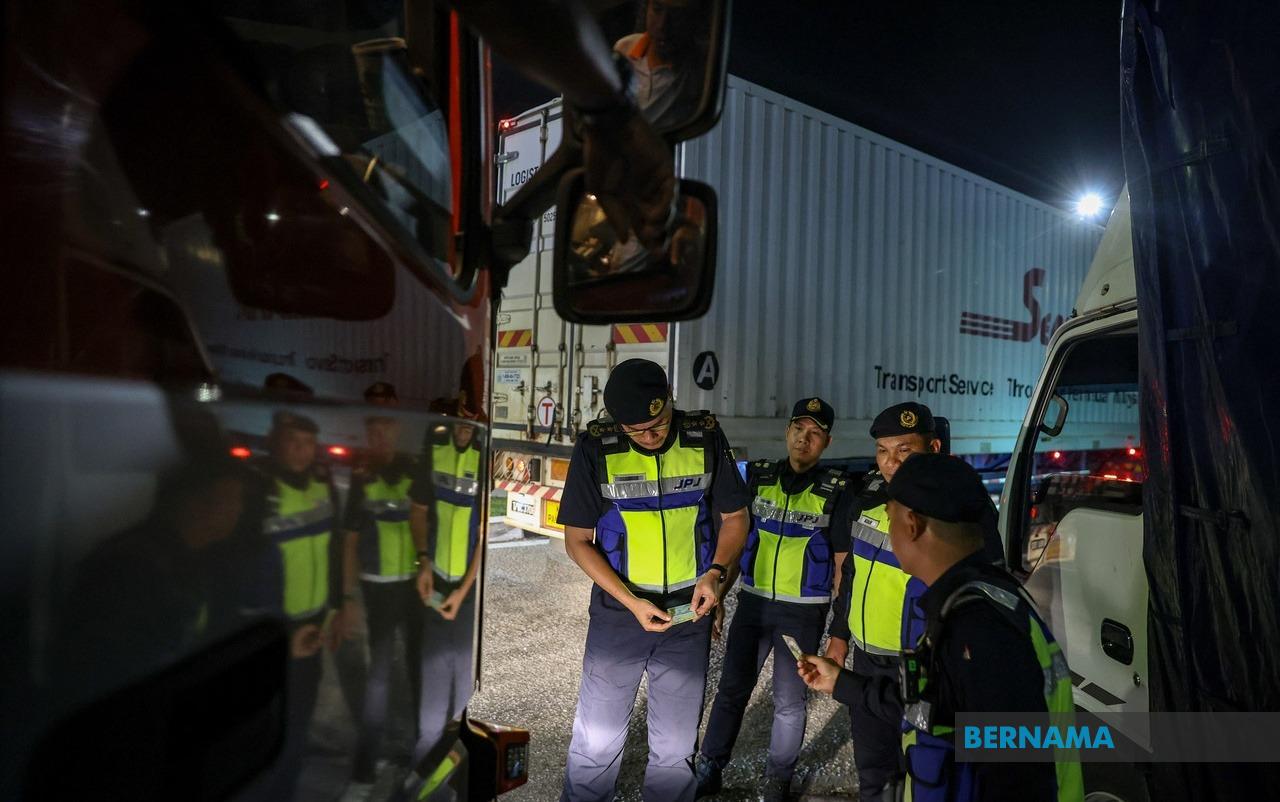
Authorities in Johor have intensified their assault on impaired driving, uncovering a troubling prevalence of substance abuse among commercial vehicle operators in a major enforcement push that wrapped up on July 10. The Johor Road Transport Department, working alongside the Royal Malaysia Police, National Anti-Drug Agency and PLUS Malaysia Berhad, discovered that 16 of 164 drivers subjected to urine screening had tested positive for controlled substances during an operation spanning the first ten days of July.
The multi-agency initiative targeted drivers of goods and public transport vehicles at multiple strategic points throughout Johor state, with screening stations positioned at highway rest areas, the JPJ Enforcement Station and bus terminals. Zulkarnain Yasin, the Johor JPJ director, outlined the scope of the operation during an address to media at the Pagoh rest area on the southbound section of the highway. The coordinated approach reflects growing concerns about drug use among professionals whose lapses in judgement could endanger road users across the entire region.
Methamphetamine emerged as the dominant substance among those detected, with ten drivers testing positive for either methamphetamine or crystal methamphetamine, commonly known as ice. The screening also identified three individuals under the influence of cannabis, along with one case each involving morphine and ganja. These findings underscore a persistent challenge facing Malaysian transport authorities: the ability of substance abusers to operate vehicles despite regulatory frameworks explicitly designed to prevent such situations. The diversity of drugs detected suggests that supply chains serving commercial transport workers remain robust and problematic.
Beyond the narcotics component, the operation revealed a startling catalogue of regulatory violations that paint a picture of deteriorating compliance across Johor's commercial transport sector. Authorities recorded 707 instances of drivers operating without valid driving licences, while 626 vehicles carried expired road tax stickers and 574 lacked current insurance coverage. These breaches represent fundamental safety failures that expose not only the drivers themselves but the general public to substantially elevated accident and injury risks. The sheer volume of violations suggests that enforcement mechanisms, despite this intensive operation, may struggle to maintain consistent compliance pressure.
Goods vehicle licensing proved another major problem area, with 128 vehicles discovered without proper Goods Vehicle Licences. Additionally, inspectors detected 113 overloaded vehicles, 30 instances of expired driving licences, 14 expired GVL certificates and 51 missing or expired PUSPAKOM safety inspection discs. The compilation of these findings indicates systemic shortcomings in the transport industry's self-regulation and suggests that operators either lack awareness of requirements or deliberately disregard them to cut operational costs. The prevalence of overloaded vehicles particularly concerns road safety specialists, as excess weight significantly impairs braking performance and vehicle stability.
Technical violations rounded out the enforcement action, with 39 vehicles having undergone unauthorised modifications and 30 exhibiting substandard tyres that failed to meet regulatory specifications. An additional 928 technical offences were documented, alongside 490 miscellaneous breaches of road transport regulations. These mechanical deficiencies create cascading risks, especially during emergency manoeuvres or adverse weather conditions. A vehicle with compromised braking systems or improperly specified tyres becomes a mobile hazard, potentially causing collisions that could involve multiple vehicles and innocent civilian casualties.
The consequences for offenders will be substantial. Zulkarnain Yasin confirmed that the JPJ would pursue suspension or revocation of vocational licences for all drivers who tested positive for drugs, invoking Section 56(4) of the Road Transport Act 1987. This enforcement measure aims to remove habitual abusers from professional driving roles, at least temporarily, although rehabilitation and reinstatement pathways remain available. For other offenders, a combination of fines and administrative penalties will apply depending on the nature and severity of each breach.
For Malaysian readers, particularly those in Johor and surrounding states, this operation carries immediate relevance. The commercial transport sector represents a critical economic and social infrastructure, ferrying goods and passengers across the country daily. When drivers operate under the influence of drugs or in vehicles with safety deficiencies, the risks percolate through society. Families travelling on highways, motorcyclists sharing road space with heavy vehicles, and other motorists face statistically elevated dangers. The operation demonstrates that authorities possess the capability and resolve to conduct thorough enforcement, yet the volume of violations discovered raises questions about the frequency and effectiveness of routine checks between such integrated operations.
Regionally, Johor's experience reflects broader Southeast Asian challenges with commercial vehicle safety and driver compliance. Transport sectors across Thailand, Indonesia and the Philippines have reported similar issues with drug use among long-distance drivers, often exacerbated by demanding schedules, long night drives and limited rest enforcement. Malaysia's approach of coordinating multiple agencies offers a model for other nations, though sustainability and regular implementation remain critical. The cooperation between the Road Transport Department, police and anti-drug agencies demonstrates how siloed enforcement structures can achieve greater impact through alignment.
Moving forward, observers note that one-off intensive operations, while valuable for generating deterrence and media attention, cannot substitute for systematic enforcement infrastructure. The 707 instances of unlicensed driving alone suggest that routine traffic stops throughout Johor may not be intercepting violators with sufficient consistency. Transport industry bodies may face pressure to implement internal compliance systems, while the JPJ faces implicit questions about resource allocation and preventive strategies. The positive drug tests among commercial drivers also point toward the need for occupational health initiatives addressing substance abuse in the transport sector, including counselling, rehabilitation and screening programmes that could prevent dangerous situations before they develop.
The operation underscores that Malaysia possesses the legal tools and inter-agency mechanisms needed to address transport safety comprehensively. What remains to be determined is whether authorities can sustain such efforts at a level sufficient to achieve meaningful reductions in dangerous driving practices. For Johor's commuters and commercial users of the highway system, the findings offer both reassurance that enforcement exists and a sobering reminder that risks remain present on the roads they travel daily.

