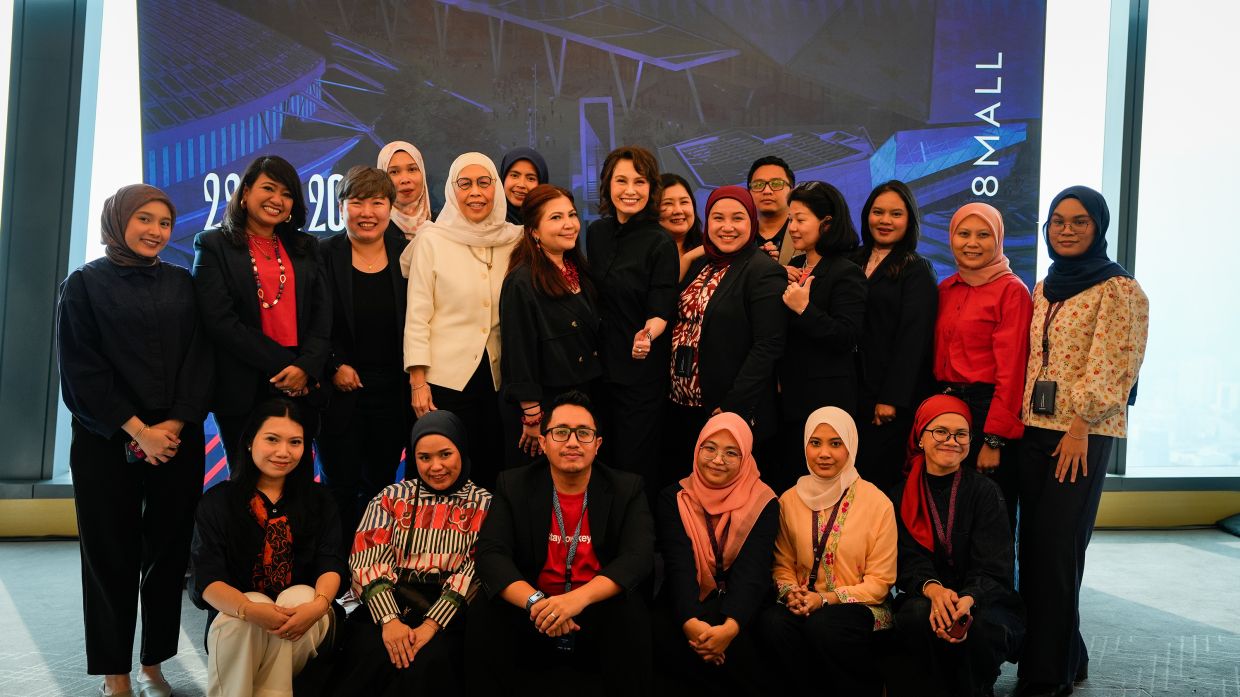
118 Mall has convened its first major retailers' meeting, bringing together more than 200 commercial partners to coordinate preparations for the shopping centre's planned opening in November 2026. The event, held at Park Hyatt Kuala Lumpur, signalled a critical inflection point in the development of what promises to be one of Kuala Lumpur's most significant mixed-use landmarks, clustering retail, hospitality, tourism, heritage and corporate spaces within a single ecosystem.
PNB Merdeka Ventures Sdn Bhd orchestrated the gathering to facilitate knowledge-sharing and operational alignment among diverse retail categories spanning fashion, food and beverage, lifestyle services and speciality retail. The participating merchants included established international names such as adidas, Converse, Foot Locker, Guess and Lacoste, alongside regional and local operators including Village Grocer, Makanism Foodhall, Benjamin Barker, CHAGEE Signature and Best Denki, plus independent outlets forming the Malaysian Artisan District collective. This blend of global and homegrown brands underscores the mall's ambition to cater to both cosmopolitan tastes and local entrepreneurial enterprise.
The seven-storey structure, positioned adjacent to the Merdeka 118 tower in central Kuala Lumpur, will house more than 300 retail outlets once operational. The Malaysian Artisan District component carries particular significance for the local creative economy, providing curated visibility for domestic designers, craftspeople and specialty producers who might otherwise struggle to secure premium retail real estate. This dedicated space represents a conscious effort to blend aspirational international commerce with authentic regional identity—a formula increasingly attractive to modern urban consumers seeking distinctive experiences beyond standardised global offerings.
PNB Merdeka Ventures chief executive officer Datuk Ir. Ts. Izwan Ibrahim framed the venture as fundamentally different from conventional standalone shopping malls, emphasising the synergistic advantages generated by its integration within the broader Merdeka 118 precinct. The surrounding ecosystem encompasses a luxury hotel component, corporate office space, hospitality venues and heritage attractions, creating multiple visitor streams beyond traditional retail shoppers. This multifunctional integration addresses a persistent challenge facing shopping centres in mature markets: the need to generate consistent, diversified footfall rather than relying solely on discretionary consumer spending.
The anticipated visitor projection of 22 million annually during the inaugural year reflects considerable ambition. This figure would position 118 Mall among Malaysia's highest-traffic retail destinations, contingent upon the realisation of the broader precinct's visitor appeal. The projection incorporates three distinct customer streams—international tourists drawn by the heritage and hospitality components, corporate workers utilising the adjacent office facilities, and local residents seeking convenient shopping and dining. Each demographic carries different spending patterns and frequency expectations, reducing seasonal volatility compared to tourism-dependent retail properties.
Sue Wang, heading 118 Mall's retail operations, articulated a deliberate strategy centred on sustained commercial value creation for merchant partners rather than short-term rent maximisation. This philosophy acknowledges that retailer success directly determines landlord performance, incentivising collaborative approaches to marketing, tenant mix optimisation and customer experience enhancement. The announcement of coordinated digital marketing infrastructure and branded event spaces signals professionalised management of the retail environment, moving beyond passive landlord functions toward active merchandising partnership.
The gathering served a crucial secondary function as a reassurance mechanism for retail partners, many of whom have committed significant capital to fit-out and inventory commitments ahead of an uncertain opening. In Malaysia's competitive retail landscape, where several major shopping centre projects have encountered delays or underperformance, merchant confidence depends substantially on transparent communication from project developers. PNB Merdeka Ventures' decision to convene retailers collectively, share operational roadmaps and outline promotional frameworks sends deliberate signals about management competence and project momentum.
The timing of this inaugural retailer meeting, approximately two years before the scheduled November 2026 opening, aligns with established development timelines for major shopping centres. This window permits retailers to complete detailed planning, negotiate lease terms, design store concepts and arrange supply chains without compressing timelines to crisis-driven acceleration. The methodical approach contrasts with rushed openings that have occasionally characterised Malaysian retail development, where retail quality sometimes suffers from condensed preparation periods.
For the Malaysian retail sector more broadly, 118 Mall represents a test case in integrating heritage preservation, urban tourism and commercial development within a single property framework. The success or struggle of this model will influence how future major developers approach mixed-use urban properties in Kuala Lumpur and other Southeast Asian cities. Should the project deliver on its ambitious visitor and revenue projections, it may catalyse a broader shift toward less hermetically sealed shopping experiences and more genuine integration of retail with cultural, hospitality and office components.
The retailers assembled at this inaugural gathering—spanning multinational corporations, regional chains and local artisans—have effectively placed collective bets on the Merdeka 118 precinct's ability to generate the quality and volume of consumer traffic necessary to sustain profitable operations. Whether the November 2026 opening fulfils this shared confidence depends not merely on the physical completion of the facility but on the broader urban attraction of the heritage and hospitality components, traffic patterns through the surrounding precinct, and the shopping centre's ability to differentiate itself in an increasingly crowded Kuala Lumpur retail market dominated by established centres in Pavilion KL, Suria KLCC and The Gardens.

