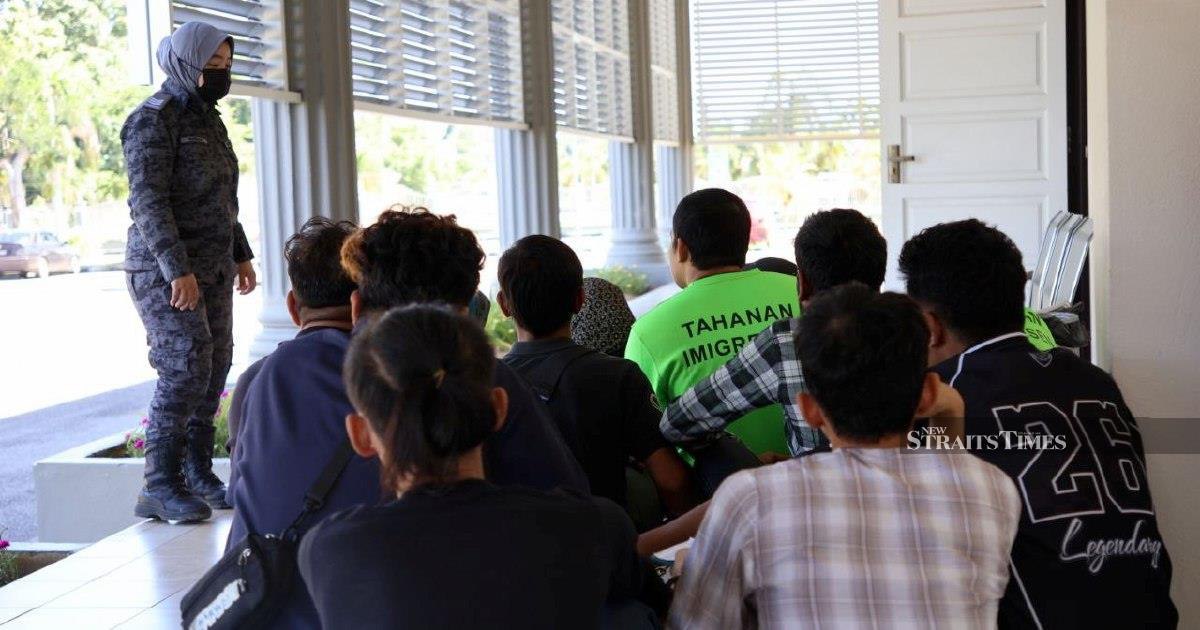
Immigration authorities in Pasir Mas have moved against ten undocumented migrants brought before the Sessions Court on charges relating to their unlawful presence in Malaysia. Among those facing charges are three foreign women, with the remaining seven defendants comprising male migrants from various nations. The proceedings underscore growing enforcement efforts against immigration violations in the northeastern Kelantan state, a region bordering Thailand that has long served as a transit point for irregular migration flows into Malaysia.
The charges encompass three primary offences under Malaysian immigration law: unauthorised overstaying beyond the terms of lawful entry, fraudulent use or misappropriation of social visit passes, and clandestine entry into Malaysian territory without going through official checkpoints. These violations carry significant penalties under the Immigration Act 1959/63, reflecting the government's hardened stance on undocumented migration following years of mounting pressure from both public sentiment and labour sector concerns.
Pasir Mas, situated in the northern reaches of Kelantan along the porous Thailand-Malaysia border, has emerged as a focal point for immigration enforcement operations. The district's geography and accessibility make it vulnerable to trafficking networks and informal crossing routes that bypass Bukit Kayu Hitam and other official immigration checkpoints. Local communities have repeatedly flagged concerns about irregular migrants settling in informal urban settlements and agricultural areas, straining municipal services and housing resources.
Misuse of social visit passes represents a particularly troubling avenue for illegal labour and extended unauthorised residence. These documents, legitimately issued for tourism and temporary visits, are increasingly intercepted by enforcement teams being used to circumvent work permit requirements or extended stay provisions. The phenomenon suggests sophisticated networks facilitating false documentation or deliberate regulatory evasion, prompting immigration authorities to intensify screening procedures at border posts and conducting targeted raids on high-risk areas.
The broader context of Malaysia's migration challenge remains complex. The country hosts Southeast Asia's largest migrant population outside the Philippines and Thailand, with estimates approaching two million documented workers alongside significant undocumented populations. While Malaysia's economy depends substantially on migrant labour across construction, agriculture, domestic work, and manufacturing, successive governments have struggled to balance labour market needs against public concerns about crime, disease transmission, and social strain.
Enforcement campaigns targeting overstaying migrants have accelerated markedly since 2022, when the government announced stricter penalties and expanded operations by the Immigration Department and federal police task forces. These crackdowns have yielded thousands of arrests annually, creating logistical challenges for detention facilities and sparking periodic tensions with labour-importing nations over deportation protocols and worker treatment standards.
For female migrants, the vulnerabilities are compounded. Foreign women in Malaysia without proper documentation face heightened exposure to labour exploitation, trafficking, and sexual assault within informal sectors including domestic work and entertainment. Law enforcement agencies have documented cases where women overstayed or entered illegally specifically to escape abusive employment situations, highlighting how immigration violations often emerge from deeper protection gaps within the labour system rather than straightforward regulatory breaches.
The charges in Pasir Mas reflect routine enforcement activity, yet carry implications extending beyond individual prosecutions. Courts across Malaysia consistently impose fines and imprisonment for overstaying violations, with sentences varying from mere weeks to several months depending on duration and aggravating circumstances. Following conviction, migrants typically face deportation orders upon completion of sentences, though some nations maintain complex repatriation protocols that can extend detention periods.
Thailand's proximity to Pasir Mas creates particular enforcement complexity. Burmese, Cambodian, and Thai nationals constitute substantial proportions of Malaysia's migrant workforce and undocumented populations. Many transiting through the northern border maintain limited documentation even in their home countries, complicating verification procedures and repatriation logistics. Immigration officials must coordinate with Thai authorities and UNHCR representatives when cases potentially involve trafficking victims or persons fleeing persecution.
The Sessions Court proceedings also highlight Malaysia's dualistic approach to migration governance. While enforcement actions dominate headlines, the country simultaneously operates regularisation programmes permitting certain categories of undocumented workers to formalise status through payment of levies and medical screening. This pragmatic tension—between removal-focused enforcement and labour-market pragmatism—defines contemporary policy, with periodic amnesties and crackdowns reflecting shifting political calculations around worker supply and public tolerance.
For Malaysia's growing Southeast Asian migrant communities, the Pasir Mas cases serve as stark reminders of enforcement risks accompanying undocumented status. Many migrants deliberately avoid authorities despite employment protections they might otherwise access, perpetuating cycles of exploitation and regulatory evasion. Breaking these cycles requires not merely intensified prosecution but equally sustained efforts to simplify legal pathways, clarify workers' rights, and address root vulnerabilities driving irregular migration flows from source countries across the region.
The ten defendants' outcomes will depend on individual circumstances including duration of overstaying, employment status during illegal residence, and prior enforcement records. However their cases resolve, Pasir Mas's enforcement activity signals intensified monitoring along Malaysia's northern border, where irregular migration pressures show no sign of diminishing amid broader regional displacement and economic disparities driving cross-border movement.

