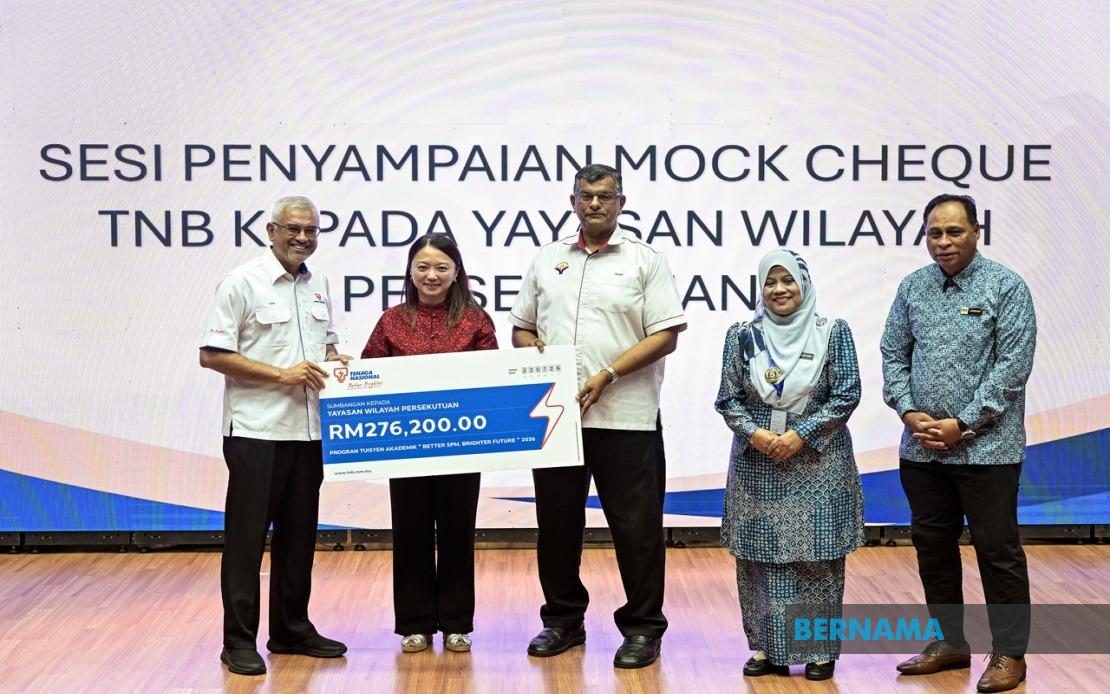
The Better SPM Brighter Future Programme has officially commenced its rollout across the Federal Territories, extending free tuition services to 1,600 Sijil Pelajaran Malaysia candidates preparing for their year-end examinations. The initiative, launched at Sekolah Seni Malaysia Kuala Lumpur on July 23, encompasses 40 secondary schools throughout Kuala Lumpur and represents a significant intervention in public education access as Malaysia continues to grapple with educational equity challenges.
The programme addresses a persistent challenge within Malaysia's education system: the growing reliance on private tuition to bridge gaps in school-based instruction. Parents, particularly those with limited financial means, often face considerable pressure to enrol their children in expensive coaching classes to improve examination performance. By providing free tuition support directly through government-backed channels, the initiative seeks to level the playing field for students whose families cannot afford supplementary education services, potentially reducing inequality in academic outcomes across different socioeconomic backgrounds.
Minister in the Prime Minister's Department (Federal Territories) Hannah Yeoh, who chairs Yayasan Wilayah Persekutuan, articulated that the programme's primary objective is enabling students to undertake thorough examination preparation without imposing financial strain on households. This framing reflects broader policy conversations within government circles about the relationship between educational access and household finances. The cost of private tuition has become a significant family expense in Malaysia, consuming resources that could otherwise support other aspects of child development or family welfare.
The financial backbone of the initiative comes from Tenaga Nasional Berhad, which channelled RM276,200 to Yayasan Wilayah Persekutuan specifically for programme execution. This corporate contribution demonstrates how state-linked enterprises continue to play roles in social development initiatives beyond their primary business functions. The collaboration between TNB, YWP, and the Kuala Lumpur Federal Territories Education Department illustrates the multi-stakeholder approach increasingly adopted for education-related programmes in Malaysia.
Curricular focus has been strategically narrowed to four critical subjects: Bahasa Melayu, English, History, and Mathematics. This selection reflects the core knowledge areas assessed in SPM examinations and those subjects where students historically demonstrate the greatest variance in performance. By concentrating resources on these foundational subjects rather than spreading support thinly across the entire curriculum, the programme maximizes the pedagogical impact of its allocated budget. English and Bahasa Melayu remain particular pain points in Malaysian education, with ongoing concerns about language proficiency among school leavers.
The programme's timing is particularly relevant for Kuala Lumpur, a federal territory that encompasses diverse student populations with varying educational backgrounds and resource access. Schools participating span different zones and communities, suggesting efforts to ensure geographic equity in programme distribution. This geographic inclusivity is important given that Kuala Lumpur contains both affluent urban neighbourhoods and lower-income settlements where educational support gaps are most pronounced.
Yeoh also took the opportunity to address recent public commentary regarding waste management at Dataran Merdeka following the World Cup final screening event. She characterised her earlier remarks not as criticism but as educational messaging about public responsibility and civic consciousness. This reflects tension between official acknowledgement of infrastructure and cleanliness challenges while avoiding direct attribution of fault to any particular agency. Her emphasis on cultivating public behavioural change through adult modelling suggests recognition that technical infrastructure improvements alone cannot resolve cleanliness issues without corresponding shifts in community attitudes.
The Minister's remarks about Dataran Merdeka as a recreational space requiring responsible use indicate ongoing efforts to maintain public spaces as accessible facilities for diverse activities. The venue's hosting of large-scale public events—in this case, World Cup screenings—reflects its strategic importance within Kuala Lumpur's urban landscape. Balancing public access with maintenance requirements represents an ongoing challenge for city authorities managing high-traffic recreational areas.
The Better SPM Brighter Future Programme sits within Malaysia's broader examination support ecosystem. While SPM remains the primary qualification pathway for secondary school completion, concerns about examination performance and university entrance pathways persistently influence both student anxiety and parental investment in tuition. Government initiatives that reduce dependence on private tuition services may contribute to moderating these pressures while improving educational outcomes for lower-income cohorts.
For students across the 40 participating schools, the programme represents direct access to structured academic support during the critical final year of secondary education. The availability of free tuition could prove particularly valuable for students whose schools may lack adequate subject specialist teachers or where classroom instruction alone has proven insufficient for examination readiness. This targeted support may particularly benefit students from linguistically diverse backgrounds struggling with English and Bahasa Melayu instruction.
The initiative also carries broader implications for how federal governments in Malaysia approach educational equity through the corporate social responsibility channel. By leveraging TNB's resources and YWP's institutional platform, the programme demonstrates mechanisms through which public-private collaboration can extend government education capacity without requiring substantial budget allocation increases. This model could potentially be replicated across other states or expanded to additional cohorts if programme evaluation proves positive.
Moving forward, monitoring of student outcomes across participating schools will be essential to determine whether free tuition translates into measurable improvements in SPM results. Comparative analysis between programme participants and control cohorts would provide valuable evidence about the intervention's effectiveness. Such data could inform future decisions about scaling similar initiatives, particularly if results demonstrate meaningful improvements in examination performance or improved access equity.

