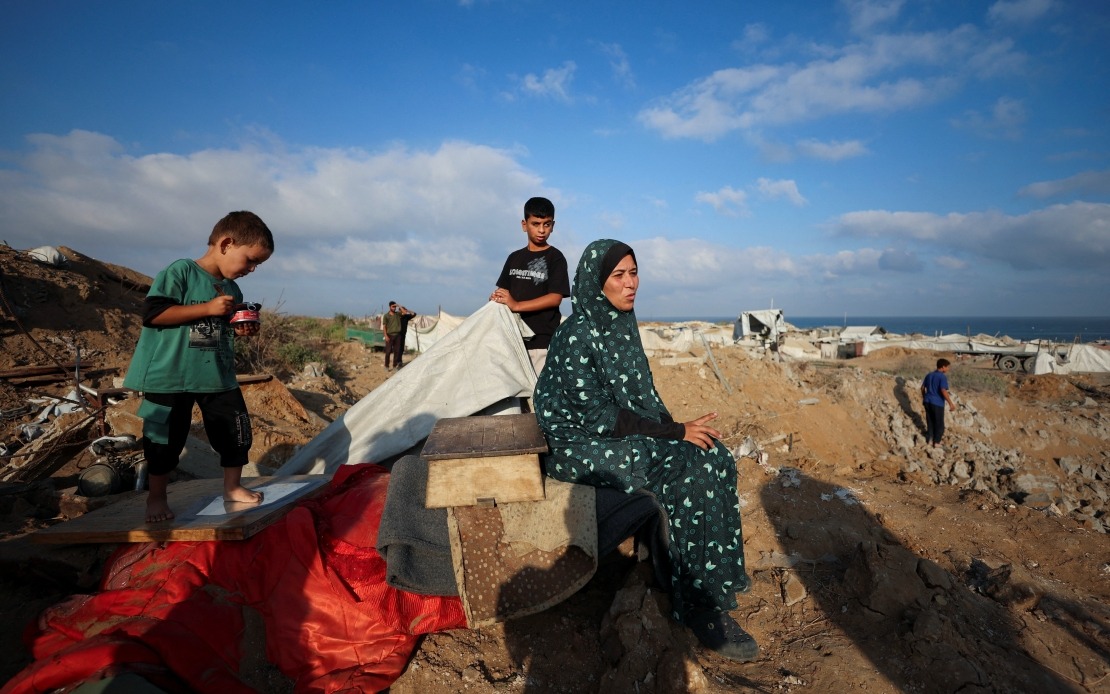
The humanitarian crisis in Gaza is deepening despite modest gains from international food assistance, according to an updated food security assessment released this week. An estimated 1.4 million Palestinians are now projected to endure critical shortages of food through the end of 2026, representing a concerning rise from the 1.2 million documented during the April-to-June period. The finding underscores the precarious nature of relief efforts in the territory and raises urgent questions about the sustainability of current aid mechanisms in a region where basic survival depends entirely on external intervention.
The analysis, conducted using the Integrated Food Security Phase Classification (IPC) methodology, paints a stark picture of deprivation across Gaza's population. According to the assessment, two-thirds of the territory's inhabitants—approximately 67 per cent—are now expected to experience crisis-level hunger or worse conditions. Within this alarming cohort, around 212,000 individuals face emergency-phase food insecurity, the most severe category short of famine conditions. Significantly, all five governorates in Gaza have been classified as operating within crisis thresholds, indicating that the food emergency is not concentrated in isolated pockets but is instead a comprehensive, territory-wide phenomenon affecting every administrative region.
Some incremental progress has been achieved following the October 2025 ceasefire agreement, which temporarily halted major hostilities and opened limited humanitarian corridors. Food assistance programmes managed to reach approximately 1.49 million people during May alone, suggesting that when access is permitted, aid delivery can reach a substantial portion of the population. This temporary expansion of food aid has contributed to measurable improvements in overall food security indicators and nutritional status in certain communities. However, the IPC assessment cautions that these gains remain extraordinarily fragile and vulnerable to reversal, dependent as they are on the continuation of active humanitarian operations and stable funding streams.
The structural collapse of Gaza's economy continues to undermine any lasting recovery in food security. An overwhelming 83 per cent of households report having no reliable source of income whatsoever, forcing families into almost total dependence on external humanitarian assistance. Agricultural livelihoods have been decimated, markets have ceased functioning normally, and employment opportunities have virtually vanished across the territory. Without income-generating activities, families cannot purchase even subsidised food, meaning that aid provision is not supplementary to household strategies but rather the sole mechanism preventing mass starvation. This absence of economic activity distinguishes the Gaza crisis from many other humanitarian emergencies, where some degree of local market function and livelihood recovery remains possible.
Recent months have witnessed a troubling contraction in the scale of humanitarian assistance, contrary to what might be expected in an escalating crisis. Since February, food aid deliveries have declined measurably, a development directly attributable to reduced international funding and mounting complications surrounding the operational capacity of international aid organisations working in Gaza. The funding constraints reflect donor fatigue and competing global priorities, while organisational difficulties stem from access restrictions, security concerns, and the sheer logistical challenges of delivering aid in a densely populated, largely destroyed urban environment. This combination has created a dangerous situation where the fragile improvements achieved in 2025 are now being eroded by insufficient resources.
Without the continuation of humanitarian food assistance, the situation would rapidly become catastrophic. The IPC estimates that approximately 1.9 million people—virtually 90 per cent of Gaza's entire population—would be thrust into acute food insecurity should external aid cease. This projection underscores the complete economic collapse of the territory and the total dependency that has become the defining characteristic of life for ordinary Gazans. The figure represents not a worst-case scenario but rather a mathematical assessment of what occurs when aid simply stops, indicating the narrow margin between current conditions and mass hunger.
The humanitarian crisis extends beyond general food shortages to encompass severe nutritional deficiencies, particularly among the most vulnerable groups. The IPC analysis projects that approximately 74,200 children under five years of age will require treatment for acute malnutrition by April 2027, with an estimated 11,432 cases classified as severe. These figures carry profound implications for child development, cognitive function, and long-term health outcomes. Additionally, some 24,600 pregnant and breastfeeding women require urgent nutritional support, as malnutrition during pregnancy and lactation carries severe consequences for both mothers and infants. The concentration of nutritional deficiency among children and expectant mothers suggests that an entire generation faces elevated risk of developmental impairment.
The IPC has issued a comprehensive set of recommendations aimed at reversing the current trajectory. Sustained humanitarian access—both in terms of physical passage of aid and the operational freedom of international organisations—remains the immediate priority. Simultaneously, nutrition-specific programmes must be expanded to address the acute malnutrition affecting children and women. Most fundamentally, the assessment emphasises that a permanent cessation of hostilities is essential to any durable improvement in food security. Without an end to active conflict and the restoration of some degree of normalcy in daily life, even dramatically expanded humanitarian assistance would struggle to overcome the underlying conditions perpetuating hunger and malnutrition.
For Malaysia and other Southeast Asian nations, this crisis carries several implications. As members of the United Nations and signatories to humanitarian conventions, regional countries face pressure to contribute to relief efforts, whether through financial donations, technical expertise, or diplomatic engagement. The scale and visibility of the Gaza humanitarian emergency have made it a touchstone issue in global and regional politics, affecting diplomatic relationships and public sentiment. Malaysian policymakers, in particular, must navigate the intersection of humanitarian concerns, geopolitical realities, and domestic political considerations as they formulate responses to the ongoing crisis.

